Not medical advice — always check with your doctor before starting a new supplement.

Tossing and turning at 3am, drenched in sweat, wide awake for the fourth night in a row — if that sounds familiar, you’re far from alone. Sleep disruption during perimenopause affects up to 60% of women in some studies, with estimates ranging widely depending on how it’s measured. Not all magnesium works the same way, and that’s where most women waste money — the wrong form, at the wrong dose, at the wrong time of day. Magnesium glycinate has become one of the more talked-about, evidence-informed options for improving sleep quality without the side effects of prescription sedatives. This breaks down why it works, how it compares to magnesium citrate, and which forms are actually worth buying.
Quick Takeaways
- Sleep disruption is common in perimenopause — estimates range widely, up to 60% in some studies, and dropping progesterone is a key driver
- Magnesium glycinate is generally better tolerated than citrate for sleep and anxiety — gentler on the stomach with strong absorption
- Typical dose: 200–400mg taken 30–60 minutes before bed, ideally with a small protein snack
- Available in capsules and gummies — both work; consistency matters more than format
The Link Between Perimenopause, Progesterone, and Sleep
Why Dropping Progesterone Wrecks Your Sleep
Progesterone isn’t just a reproductive hormone — it also acts on GABA receptors in the brain, the same receptors targeted by anti-anxiety medications, producing a natural calming, sleep-promoting effect. When progesterone drops during perimenopause, that calming signal weakens, and the brain has a harder time switching off at night.
Add night sweats and temperature dysregulation to that, and it’s a rough combination for sleep. Magnesium works partly by stepping in where progesterone left off — it supports GABA activity, helps regulate melatonin production, and can help lower core body temperature to support deeper sleep.
Does magnesium help with low progesterone specifically?
Magnesium doesn’t raise progesterone directly, but it compensates for some of its sleep-disrupting effects by supporting the same GABA pathways. It also supports melatonin regulation and helps calm the nervous system — making it a practical option for women who aren’t on hormone therapy.
Why Magnesium Glycinate Is Often Recommended for Sleep and Anxiety
Magnesium Glycinate Benefits for Women
Not all magnesium supplements work the same way. Magnesium glycinate is magnesium bonded to glycine — an amino acid with its own calming, sleep-supporting properties. That pairing is why glycinate is generally favored over other forms specifically for sleep and anxiety relief.
The benefits for women in perimenopause go beyond sleep. It may support muscle relaxation, help with cortisol reactivity during the day, contribute to bone density maintenance as estrogen declines, and carries a meaningfully lower risk of digestive upset compared to other forms.
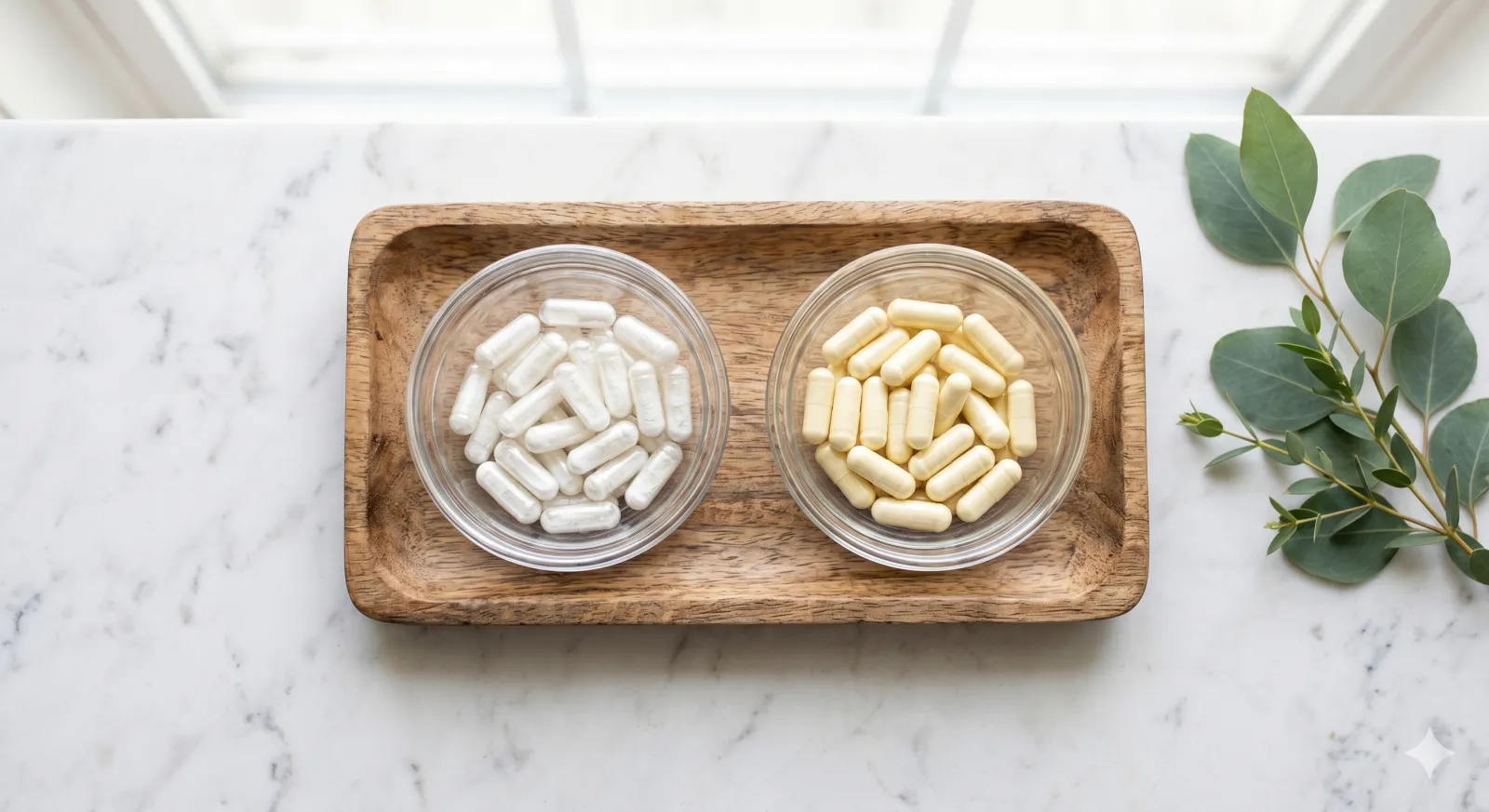
Magnesium Glycinate vs Citrate: Which Is Better for Perimenopause?
The Honest Comparison
If you’ve tried magnesium citrate and spent the night running to the bathroom, you already know the difference. Citrate is effective for constipation relief — but that laxative effect makes it a poor fit for nighttime sleep support. This isn’t really a close call when sleep and anxiety are the goal.
| Magnesium Glycinate | Magnesium Citrate | |
|---|---|---|
| Main benefit | Sleep + anxiety support | Constipation relief |
| Absorption | Very high | High |
| Digestive side effects | Very low | Laxative effect common |
| Best for perimenopause sleep | ✅ Yes | ⚠️ Not recommended |
| Anxiety support | ✅ Stronger | Minimal |
Is magnesium glycinate or citrate better for menopause?
For sleep, anxiety, and classic perimenopause symptoms, glycinate is generally the better fit. Citrate is a good choice if constipation is the primary concern — but for nighttime use, glycinate absorbs well, doesn’t cause digestive issues for most people, and the glycine component adds sleep-supporting benefits citrate doesn’t have.
How Much Magnesium Glycinate Per Day for Perimenopause?
Dosage Guide for Women
The NIH recommends 310–320mg of elemental magnesium daily for adult women. For perimenopause sleep support specifically, many clinicians suggest 200–400mg of magnesium glycinate taken 30 to 60 minutes before bed. Starting at the lower end — around 200mg — for the first two weeks is a reasonable way to assess tolerance before increasing.
Dosage Checklist
- Start with 200mg — increase to 400mg if needed after 2 weeks
- Take 30–60 minutes before bed
- Pair with a small protein snack for better absorption
- Choose capsules or gummies — consistency matters more than form
- If you have kidney disease, talk to your doctor before starting
💪 Pro Tip
Take magnesium glycinate with a small protein-rich snack — a handful of almonds or a hard-boiled egg — 30 to 60 minutes before bed. Absorption on a slightly full stomach tends to be better than on an empty one. The mistake is usually much simpler than people expect: taking it on an empty stomach at the wrong time of day, then assuming it “doesn’t work.”

Not all magnesium supplements work the same way during perimenopause.
Best Magnesium Glycinate Supplements: Capsules and Gummies
What to Look for When Buying
A good magnesium glycinate supplement lists elemental magnesium content clearly, uses a chelated or bisglycinate form for better absorption, and is third-party tested for purity. Brands like Thorne, Pure Encapsulations, and Doctor’s Best consistently rank well in independent testing, and none are dramatically pricier than drugstore options.
Gummies have become popular for good reason — a gummy taken consistently outperforms a “better” capsule that gets skipped half the time. The key is checking that gummies actually contain magnesium glycinate, not cheaper magnesium oxide dressed up in gummy form.
Pairing magnesium glycinate with an existing anti-aging skincare routine for your 40s and 50s rounds out a broader perimenopause wellness approach, since sleep quality affects skin repair and collagen production too. For layering in more recovery support, red light therapy at home has some evidence behind supporting melatonin production and circadian rhythm. And if stress is what’s keeping you up, a Japanese head spa routine at home can help lower tension before bed.
Frequently Asked Questions
Which magnesium is best for sleep and anxiety during perimenopause?
Magnesium glycinate is generally the preferred choice for sleep and anxiety in perimenopause. The glycine component adds calming effects on top of magnesium’s usual role, and the chelated form absorbs better than oxide or carbonate. It’s also typically the gentlest form on the digestive system, making it practical for nightly use.
How much magnesium glycinate should a woman take for sleep?
Many clinicians suggest 200–400mg of elemental magnesium glycinate taken 30 to 60 minutes before bed. Starting at 200mg for the first two weeks and increasing if needed is a reasonable approach. Taking it with a small protein-rich snack tends to improve absorption compared to an empty stomach.
What are the side effects of taking magnesium glycinate every night?
Magnesium glycinate has relatively few side effects at recommended doses. Occasional mild digestive discomfort can occur at higher doses. People with kidney disease should talk to a doctor before supplementing, since impaired kidneys can’t filter excess magnesium as efficiently. For most healthy women, nightly use at 200–400mg is generally considered reasonable, but check with your doctor first.
Is magnesium glycinate or citrate better for menopause?
For sleep specifically, glycinate is the better fit. Citrate is effective for constipation, a common menopause complaint, but its laxative effect makes it a poor choice for nighttime use. Some women use glycinate at night and a small dose of citrate in the morning if both sleep and constipation are concerns.
Does magnesium help with perimenopause symptoms like low progesterone?
Magnesium doesn’t directly replace progesterone, but it compensates for some of its sleep-disrupting effects by supporting the same GABA pathways progesterone normally engages. The NIH Magnesium Fact Sheet supports its role in sleep regulation and nervous system function, making it a reasonable, low-risk option for women managing perimenopause without hormone therapy.
Not medical advice — always check with your doctor before starting a new supplement, especially if you have kidney disease or take other medications.
Perimenopause doesn’t have to steal your sleep. A magnesium glycinate routine, taken consistently and at the right time, is a reasonable place to start. 🌙
You May Also Like
 Perimenopause Diet Nobody Tells You About — 7 Tips That Work
 High Cortisol Symptoms in Women: 10 Warning Signs to Know
 Oral Minoxidil for Women: Dosage, Side Effects & Results
 Hormone Test for Women: 7 Essential Panels You Need
 Best Menopause Supplements for Hot Flashes Over 50: Proven Options That Work
 Somatic Exercises for Weight Loss: Free 28-Day Plan
 Do 2 Cups of Beans a Day Really Work Like Ozempic? The GLP-1 Bean Trend, Explained
 7 Free Nervous System Regulation Exercises at Home