Not medical advice — for significant stress or trauma, a licensed somatic therapist can help more than any at-home routine.

Pushing harder at the gym but stubborn belly fat won’t budge? The problem isn’t always effort — chronically high cortisol can work against exactly that kind of high-intensity push.
Somatic exercises for weight loss work differently: instead of pushing the body harder, they aim to calm the nervous system and lower stress. No app, no equipment — these can be done at home, even in bed. Here are four moves and a free 28-day plan to try.
Key Takeaways
- Somatic exercises help with stress and cortisol regulation — the link to belly fat specifically is real but indirect, not a direct fat-burning mechanism
- The 4 moves: Somatic Hip Release, Gentle Somatic Yoga, Somatic Exercises in Bed, Full Body Tension Release
- Completely free — no app or subscription required
- Works well alongside frameworks like 30-30-30, though pairing them isn’t a guarantee of faster results
- Sleep and stress management matter as much as the exercises themselves
Do Somatic Exercises Actually Help With Weight Loss?
What the Evidence Actually Shows
Somatic exercises don’t burn calories the way a spin class does — that’s not really the point. For a lot of women in their 30s, 40s, and 50s, stubborn belly fat has more to do with chronically elevated cortisol than a lack of cardio, and pushing harder with high-intensity training doesn’t fix a cortisol problem — it sometimes makes it worse.
When cortisol stays elevated, the body tends to shift toward storing energy as abdominal fat, breaking down muscle, raising hunger signals, and disrupting sleep. A study published in PMC found that stress-reduction interventions were associated with reduced cortisol secretion and abdominal fat in overweight women, without changes to diet or intense exercise — which is part of the reasoning behind why somatic exercises for weight loss get recommended as a stress-focused complement rather than a standalone fat-loss method.
FACTLY9 Evidence Snapshot
Known
- ✔ Chronically elevated cortisol is linked to increased abdominal fat storage and appetite changes
- ✔ Somatic practices can measurably reduce perceived stress and support nervous system regulation
Indirect, Not Direct
- • The connection between somatic exercise and actual fat loss is real but indirect — it works mainly by lowering stress, which may support better sleep, less emotional eating, and more consistency with other habits
- • Direct clinical evidence that somatic exercise alone causes measurable fat loss is limited; most experts describe it as one supportive piece, not a standalone fat-loss method
Do somatic workouts really work for weight loss?
They can help, but mostly indirectly — by lowering cortisol and stress, which supports better sleep and can reduce stress-driven eating. They’re not a direct calorie-burning workout, and they work best paired with other habits like nutrition and consistent movement, not as a standalone fix.
How Nervous System Regulation Fits In
Why Lowering Stress Matters for Weight Management
Chronic sympathetic activation — the fight-or-flight state a lot of people live in without realizing it — can slow things down metabolically and increase cravings, regardless of how clean someone eats or how hard they exercise.
This is part of why nervous system regulation matters for a lot of women over 40. Somatic exercises engage the vagus nerve through slow breathing, body awareness, and deliberate movement. When that’s engaged, cortisol tends to ease, digestion and sleep often improve, and those changes can support weight management indirectly.
The real difference between somatic exercise and regular stretching is intention — noticing where tension lives, where breath gets held, where the body braces without realizing it. That internal attention is what shifts the nervous system over time.

4 Free Somatic Exercises to Try at Home
Step-by-Step
You don’t need twenty exercises. These four cover the basics — no equipment needed beyond a mat or a bed.
1. Somatic Hip Release
The hips often hold physical tension from daily stress. Lie on your back, knees bent, feet flat. Let your feet touch and slowly allow your knees to fall open to either side — don’t force it, just let gravity do the work. One hand on the belly, breathe slowly. Hold 2 minutes, 3 sets. The goal is release, not stretch.
2. Gentle Somatic Yoga
Slow spinal movement paired with breath awareness. Come to hands and knees. Inhale, arch the spine and lift the head (cat-cow). Exhale, round the spine and tuck the chin. Move at half normal speed, pausing at each end for a full breath. 10 rounds, twice daily.
3. Somatic Exercises in Bed
For the low-energy days — which matter most. Lie on your back, hands on the belly. Breathe in for 4 counts, hold for 7, exhale for 8 (the 4-7-8 method). After 5 rounds, draw both knees to the chest, hold 30 seconds, lower, repeat 3 times. About 10 minutes total.
4. Full Body Tension Release
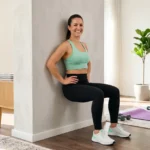
Inspired by TRE (Trauma Release Exercises). Back against a wall, slide down into a wall sit, hold 30 seconds, rise slowly. Slight shaking in the legs is normal — that’s the nervous system releasing tension. Pairs well with wall pilates for beginners as part of a longer home routine.
What are the 4 somatic exercises for weight loss?
Somatic Hip Release, Gentle Somatic Yoga, Somatic Exercises in Bed, and Full Body Tension Release. Each approaches the nervous system from a different angle — hip tension, spinal movement, sleep-time recovery, and full-body release — and together they support the stress-reduction piece of a broader weight management approach.
Before You Start
- Yoga mat or folded blanket ready
- 15 quiet minutes set aside — morning or before bed
- This page bookmarked
- Start date marked in a calendar
- Week 1: just 10 minutes a day — no pressure to do more
A Free 28-Day Plan
Building the Habit Gradually
The 30-30-30 framework — 30g protein within 30 minutes of waking, then 30 minutes of low-intensity movement — has become popular in women’s health circles. Somatic exercises fit well into that movement window since they’re gentle by design. Some people also use a simpler 3-3-3 structure: 3 sessions a week, 3 exercises per session, 3 minutes each — a manageable entry point without overwhelm.
Week 1 (Days 1–7)
Hip Release + 4-7-8 breathing. 10 minutes daily. Focus on body awareness only.
Week 2 (Days 8–14)
Add Somatic Yoga. 15 minutes. Start noticing where tension shows up.
Week 3 (Days 15–21)
All 4 moves in rotation. 20 minutes. Pair with a morning movement routine if using 30-30-30.
Week 4 (Days 22–28)
Full integration — morning movement plus bedtime somatic exercises in bed.
💪 Pro Tip
These exercises are about internal experience, not performance. The slower the movement, the more effective it tends to be. Rushing through the hip release or the breathing usually means the nervous system is resisting — slowing down further is where the actual shift happens.
A free follow-along somatic routine, no app required.
Making the Routine Work Harder
Sleep and Recovery Matter Too
These exercises tend to work best alongside solid recovery. During deep sleep, cortisol drops to its lowest point and the body does much of its repair work — which is part of why the “somatic exercises in bed” option matters, not just the daytime ones.
For anyone still waking up tired despite a consistent wind-down routine, magnesium glycinate for perimenopause sleep is worth reading about — it supports the sleep and cortisol-regulation side directly, which complements what these exercises are aiming for.

Frequently Asked Questions
Do somatic workouts really work for weight loss?
Indirectly, for many people — they lower stress and cortisol, which can reduce stress-driven eating and support better sleep. They won’t replace cardio for calorie burn, and the direct evidence for fat loss specifically is limited, but as part of a broader routine they can genuinely help.
What is the 30-30-30 rule?
Eating 30 grams of protein within 30 minutes of waking, then doing 30 minutes of low-intensity movement. Somatic exercises fit well into that movement window since they’re gentle enough not to spike cortisol.
What is the 3-3-3 rule for exercise?
Three sessions a week, three exercises per session, three minutes each. It’s a simple structure that removes decision fatigue for beginners getting started with a somatic routine.
Does a 12-hour overnight fast help?
A consistent overnight fasting window (for example 7pm–7am) may support insulin regulation and give the body a clearer signal for rest. Combined with somatic exercises before bed, it can support better sleep — though it’s a complementary habit, not a requirement.
What free somatic exercises can I do at home?
Somatic Hip Release, Gentle Somatic Yoga, Somatic Exercises in Bed, and Full Body Tension Release all need nothing but a mat or a bed. Free video guidance is widely available online for anyone who wants a follow-along option.
Not medical advice — for significant stress or trauma, a licensed somatic therapist can help more than any at-home routine.
Tonight, lie down, hands on the belly, and breathe for ten minutes. That’s really where this starts. 🌙
You May Also Like
 7 Free Nervous System Regulation Exercises at Home
 7 Best Exercises for Bad Knees: Safe & Low Impact Guide
 Wall Pilates for Beginners: The Free 28-Day Challenge Plan
 High Cortisol Symptoms in Women: 10 Warning Signs to Know
 Government Grants for Individuals: 5 Free Programs
 How to Find Unclaimed Money from the Government for Free
 Japanese Head Spa: 5 Benefits & At-Home Routine Guide
 How to Apply for SNAP Food Stamps Online and Get Approved Fast