Not medical advice — always check with your doctor before making any treatment decisions.
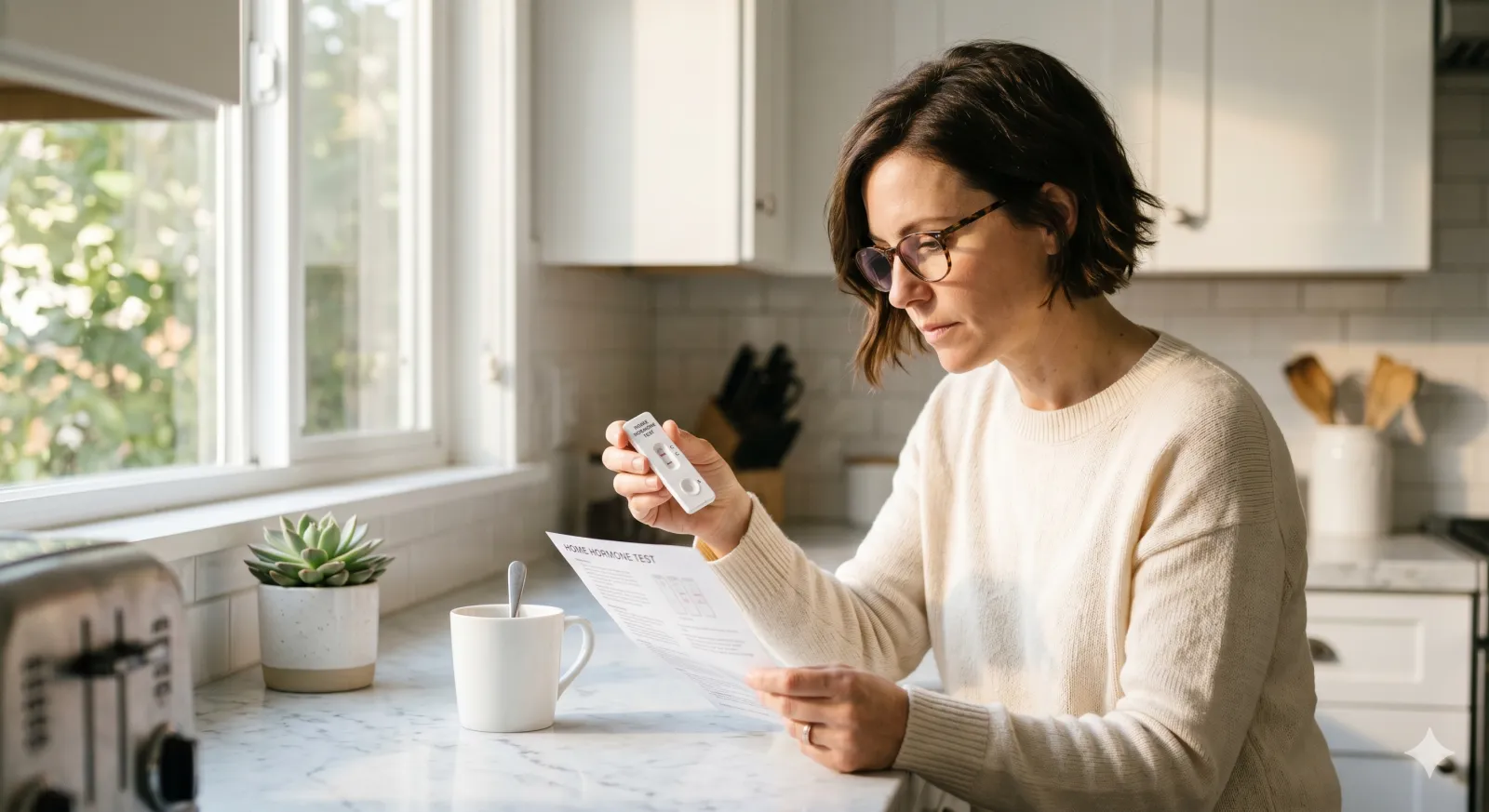
An at-home hormone test for women can reveal key imbalances before your next doctor visit.
Exhausted after a full eight hours of sleep. Gaining weight with no change in diet. Mood swings that feel out of proportion, hair coming out in the shower more than it used to. Sound familiar?
Millions of women in their 40s go through this exact experience and get told it’s just stress or aging. A hormone test can cut through the guesswork and show what’s actually happening inside the body, in real numbers worth acting on.
Key Takeaways
- A hormone panel is the most reliable way to know what’s actually causing symptoms like fatigue, hair loss, or weight gain
- PCOS affects roughly 1 in 10 women of reproductive age, and most cases go undiagnosed simply because no one tested for it
- At-home kits have improved significantly in accuracy and are a reasonable first step before a doctor’s visit
- The thyroid panel is the most commonly overlooked test — and one of the most important for women over 40
- Timing matters: testing on days 3–5 of the cycle gives the most reliable baseline
Why a Hormone Panel Matters More Than Most Women Realize
The Symptoms Rarely Announce Themselves Clearly
Hormones function as the control system for energy, weight, mood, sleep, and skin. When even one falls out of range, the effects ripple across the whole body.
The real problem isn’t that hormonal imbalance is rare — it’s that it rarely looks like one thing. The symptoms creep in slowly, a little more tired here, a little more emotional there, until it adds up to feeling like a different person entirely. By the time most women get tested, they’ve already spent months or years wondering what was wrong.
PCOS affects roughly one in ten women of reproductive age worldwide, yet the vast majority of those cases go completely undiagnosed. The reason is rarely the condition itself — it’s that no one ran the test.
How can a woman check her hormone levels?
The most accurate method is a blood test through a doctor or lab, covering estradiol, progesterone, FSH, LH, testosterone, DHEA-S, and TSH. At-home kits from established providers have also improved significantly in accuracy and are a solid starting point before an appointment.
11 Signs a Hormone Panel Is Worth Considering
What the Body Is Actually Signaling
If two or more of these sound like daily life, it may be worth stopping and testing rather than waiting it out.
- 1. Persistent, unexplained fatigue — even after a full night’s sleep
- 2. Mood swings that feel out of proportion to what’s happening
- 3. Trouble falling asleep or waking at 3am for no clear reason
- 4. Weight gain, especially around the belly, with no dietary changes
- 5. Hair thinning or more hair in the shower drain than usual
- 6. Dry skin that doesn’t respond to moisturizer the way it used to
- 7. A noticeable drop in libido
- 8. Irregular periods or cycles that have suddenly changed
- 9. Brain fog — difficulty concentrating or remembering things
- 10. Hot flashes or night sweats that interrupt sleep
- 11. Stiff or achy joints that appeared out of nowhere
Once these symptoms start stacking up, they rarely resolve on their own. Declining estrogen affects bone density, cardiovascular health, and brain function over time — the window for easy correction narrows the longer it’s left unchecked.
FACTLY9 Evidence Snapshot
Based on the clinical reasoning and Endocrine Society guidance cited above — not a substitute for a doctor’s interpretation of individual results.
The 7 Panels a Complete Hormone Test Typically Covers
What Each Marker Actually Measures
Here’s what a full female hormone panel looks at, and why each marker matters.
| Hormone Test | What It Checks | Why It Matters |
|---|---|---|
| Estradiol (E2) | Main form of estrogen | Bone density, mood, menopause status |
| Progesterone | Luteal phase function | Sleep quality, cycle regularity |
| FSH | Ovarian reserve signal | Early menopause detection |
| LH | Ovulation trigger | PCOS screening, fertility |
| Testosterone | Androgen levels | Energy, libido, muscle mass |
| DHEA-S | Adrenal function | Fatigue, androgen imbalance |
| TSH | Thyroid stimulation | Metabolism, energy, weight |
Getting just one or two of these tested is like reading every other page of a book — the most important parts of the story get missed.
Timing matters too. Testing on days 3 to 5 of the menstrual cycle gives the baseline numbers a doctor needs. For anyone in perimenopause or with irregular cycles, a doctor can advise on the best timing. More detail on what these markers mean is available at the Endocrine Society’s hormone guide.
Thyroid Panel: The Part Most Basic Tests Miss
Why a Standalone TSH Test Often Isn’t Enough
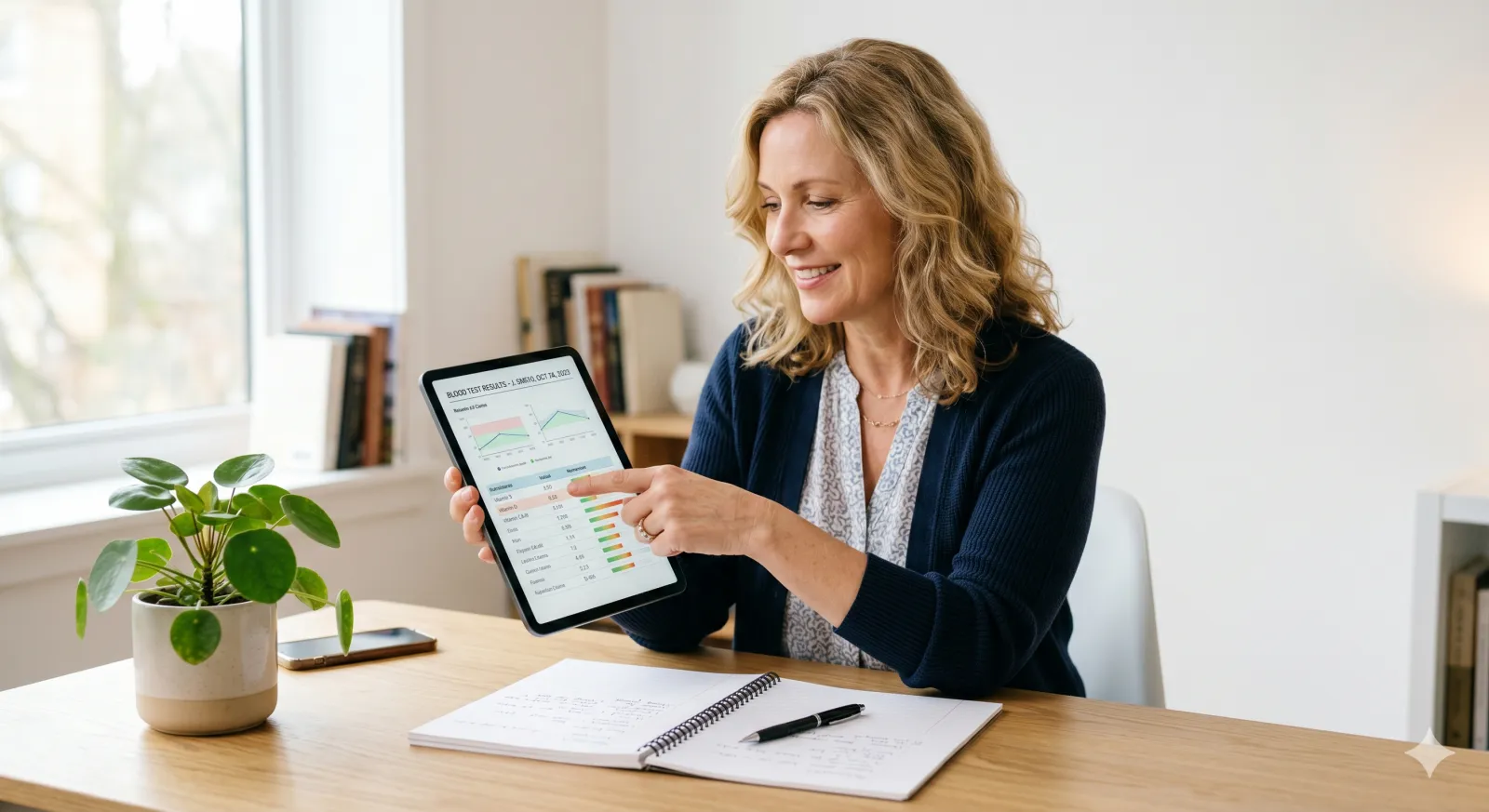
A full thyroid panel goes beyond TSH — Free T3, Free T4, and TPO antibodies fill in the rest of the picture.
A standard thyroid test typically checks one number: TSH. A complete thyroid panel tells a more detailed story, and for women over 40 that detail can matter.
Thyroid problems are more common in women than in men, and the symptoms overlap almost perfectly with other hormonal complaints — fatigue, weight gain, dry skin, brain fog, hair loss. A “normal” TSH result doesn’t automatically rule out a thyroid issue.
| Test | What It Measures |
|---|---|
| TSH | How hard the pituitary is working to stimulate the thyroid |
| Free T3 | The active thyroid hormone cells actually use |
| Free T4 | The inactive precursor that converts to T3 |
| TPO Antibodies | Autoimmune marker — flags Hashimoto’s thyroiditis |
TPO antibodies matter more than most people realize. Hashimoto’s thyroiditis is an autoimmune condition that quietly damages thyroid tissue over years, and women in their 40s are particularly vulnerable — many don’t find out until meaningful damage has already occurred.
Anyone dealing with hair thinning over 40 should rule out an underactive thyroid early. It’s also closely linked to sleep disruption during perimenopause — two issues that tend to show up together.
What are the first signs of low estrogen?
The earliest signs are often subtle — hot flashes, night sweats, sleep disruption, and mood changes. Periods may become shorter or less regular, and vaginal dryness or a drop in libido can follow. These are frequently dismissed as stress, but they’re the body’s early signal that estrogen is declining.
Action Checklist
- Last blood test was more than a year ago → book an appointment this week
- Only TSH has been checked → ask a doctor to add Free T3, Free T4, and TPO antibodies
- Fatigue, hair loss, and weight gain together → prioritize the thyroid panel first
- Periods have become irregular → request FSH, LH, and estradiol as a package
- Want to test before seeing a doctor → start with a home hormone test kit
Lab Test or At-Home Kit: Which Fits Better?
An Honest Comparison

Balanced hormones tend to mean better energy, sleep, and mood.
Searching for at-home options makes sense — scheduling an appointment, waiting weeks, then waiting again for results feels designed to discourage follow-through. At-home kits exist because women got tired of waiting for answers that should have been simple to get.
| Factor | Lab Blood Test | At-Home Kit |
|---|---|---|
| Accuracy | Gold standard | Very good — improving steadily |
| Convenience | Requires appointment | Done at home, any time |
| Cost | Insurance may cover | $99 to $299 out of pocket |
| Results time | 1 to 3 days | 2 to 5 days |
| Doctor review | Included | Some kits include telehealth |
| Best for | Comprehensive diagnosis | Initial screening, convenience |
The honest downside of at-home kits is timing. Results are only meaningful when tested at the right point in the cycle — testing randomly can produce numbers that look alarming or falsely reassuring. The kit itself usually isn’t the problem. The timing is.
Still, a quality kit is a reasonable first step. Many women use one to walk into a doctor’s appointment already knowing the right questions to ask. Pairing results with some nervous system regulation techniques can also help with how the body responds, since stress and cortisol interact closely with hormone levels.
💡 Pro Tip
Test on days 3 to 5 of the cycle, first thing in the morning, before eating or drinking anything except water — that’s when hormone levels sit at their most stable baseline. For thyroid testing specifically, cycle timing doesn’t matter; a fasting morning sample is what counts.
Frequently Asked Questions
How can a woman check her hormone levels?
A blood test through a doctor is the most accurate method. Request a full female hormone panel covering estradiol, progesterone, FSH, LH, testosterone, DHEA-S, and TSH. At-home kits are also a solid starting option. Test on days 3 to 5 of the cycle for the most reliable baseline results.
What are the 5 signs of hormonal imbalance?
The five most common signs are persistent fatigue that sleep doesn’t fix, unexplained weight gain especially around the belly, sleep disruption or insomnia, mood swings that feel disproportionate, and noticeable hair thinning. If two or more apply, a hormone panel is a logical next step.
What is the 7 hormone test?
The 7 hormone test refers to a comprehensive female hormone panel measuring estradiol, progesterone, FSH, LH, testosterone, DHEA-S, and TSH in a single blood draw. Together, these seven markers give a full picture of reproductive health, adrenal function, and thyroid status.
What are the first signs of low estrogen?
Hot flashes and night sweats are usually the first signals most women notice. Low estrogen can also show up as disrupted sleep, mood changes, brain fog, and irregular or shorter periods. Vaginal dryness and reduced libido often follow. These symptoms frequently start years before menopause, during perimenopause.
What are the 11 signs your hormones are out of whack?
The 11 most common signs are extreme fatigue, mood swings, insomnia, belly weight gain, hair thinning, dry skin, low libido, irregular periods, brain fog, hot flashes or night sweats, and joint stiffness. Three or more at once is a strong signal a hormone panel is worth considering.
Not medical advice — always check with your doctor before making any treatment decisions.
A hormone panel takes one morning and one blood draw, and the answers can change how the next several years feel. Ask a doctor for a full female hormone panel — and don’t leave without requesting the thyroid panel too.
Learn More About Hormones →You May Also Like
 High Cortisol Symptoms in Women: 10 Warning Signs to Know
 Perimenopause Diet Nobody Tells You About — 7 Tips That Work
 Hair Thinning Women Over 40: 5 Proven Ways to Stop It for Good
 Best Menopause Supplements for Hot Flashes Over 50: Proven Options That Work
 Hormonal Acne Chin: 5 Proven Treatments That Actually Clear It
 Oral Minoxidil for Women: Dosage, Side Effects & Results
 Do 2 Cups of Beans a Day Really Work Like Ozempic? The GLP-1 Bean Trend, Explained
 7 Red Light Therapy at Home Secrets for Ozempic Face & Acne