Not medical advice — check with a doctor before starting any new scalp routine, especially during pregnancy or with a scalp condition.
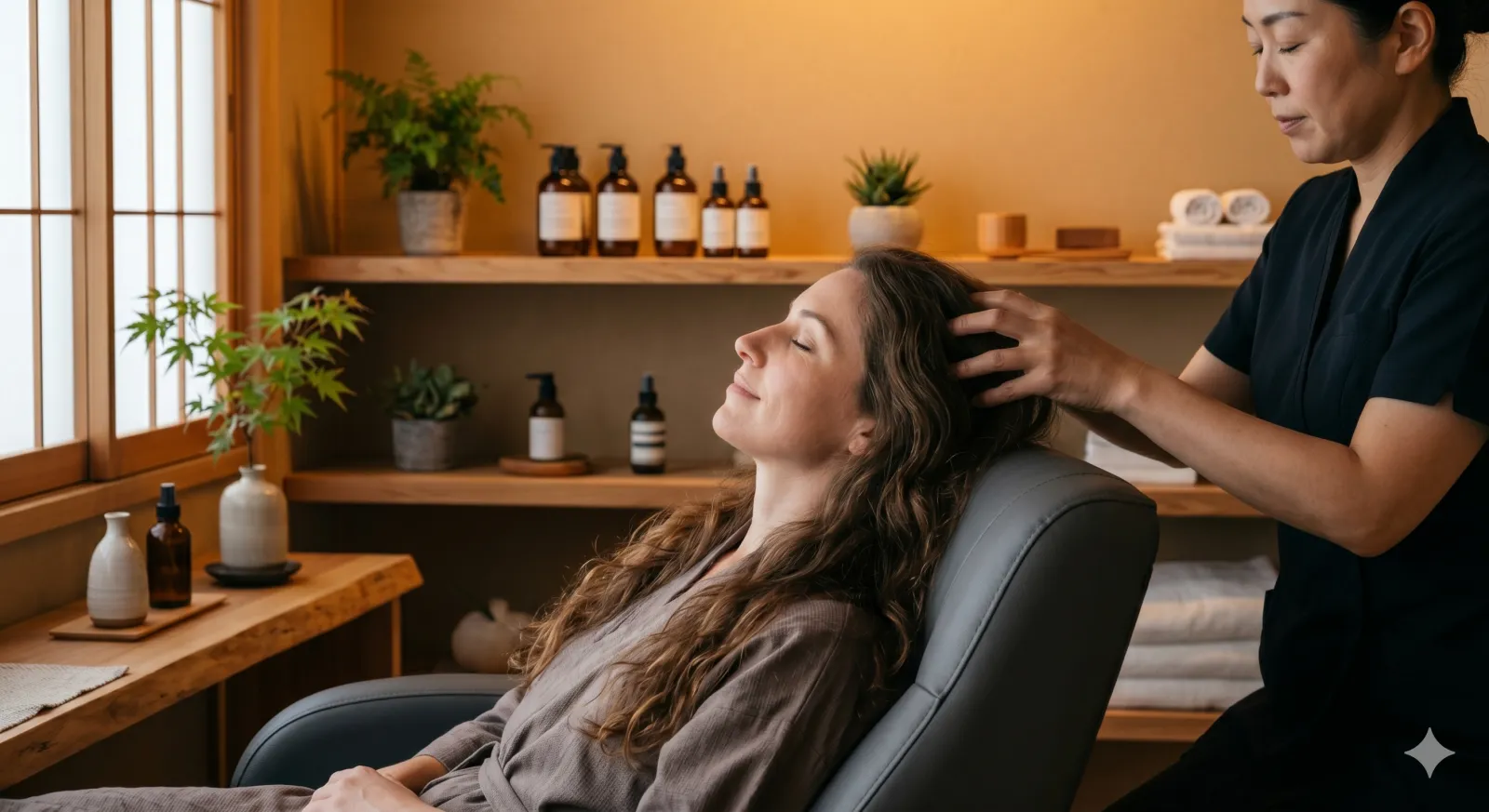
Someone leaning back in a salon chair, eyes closed, while a therapist works slowly through their scalp — that’s the Japanese head spa experience, and it’s become one of the faster-growing beauty treatments in the US lately. The catch: a single session runs $100 to $200. The part worth knowing isn’t just what it costs — it’s whether the $30 version at home gets you anywhere close.
Key Takeaways
- A Japanese head spa combines deep cleansing, steam, scalp massage, and treatment — more involved than a typical scalp massage
- US salon visits run $100–200 per session; a home setup costs $50–80 upfront and lasts months
- A small study found scalp massage increased hair strand thickness after 24 weeks of daily practice — promising, though based on a small sample
- A weekly home routine tends to outperform one expensive monthly salon visit for long-term scalp health
What Happens in a Japanese Head Spa Treatment?
How It Differs From a Regular Scalp Massage
A Japanese head spa isn’t just someone rubbing your head. It’s typically a multi-step process — deep cleansing, steam, a scalp serum, and precision massage techniques developed in Japanese hair salons — usually taking 60 to 90 minutes total.
If a regular scalp massage is a light jog, this is closer to a full recovery session. The goal isn’t just relaxation but working toward better scalp health from the root up, which is part of why it’s moved from niche to mainstream fairly quickly.
Is a Japanese head spa the same as a regular head spa?
Not quite. “Head spa” is a general term for scalp-focused treatments. The Japanese version specifically refers to techniques rooted in Japanese salon culture — water pressure, steam, and layered treatments in a precise sequence, generally more structured than a typical spa scalp massage.
What the Research Actually Shows
Scalp Massage and Hair Health
The benefits aren’t purely anecdotal, though the research base is smaller than the marketing suggests.
FACTLY9 Evidence Snapshot
Known
- ✔ A small 2016 study in Eplasty found that men who received a standardized scalp massage 4 minutes daily for 24 weeks showed increased hair strand thickness — though the study involved only 9 participants
- ✔ A 2015 randomized trial in Skinmed (Panahi et al.) found rosemary oil produced hair count improvements comparable to 2% minoxidil over 6 months, with less scalp itching, in 100 participants
Worth Keeping in Mind
- • Neither study has been replicated at scale — both are single trials, promising but not the same evidence base as decades-long minoxidil research
- • Claims about scalp massage lifting facial skin are more speculative and less directly studied
The proposed mechanism for massage benefits is fairly straightforward: improved blood flow to the follicles supports better delivery of oxygen and nutrients to the hair root. A consistent practice may also help with deep cleansing of sebum buildup, stress reduction (the scalp carries a high concentration of nerve endings), and general follicle maintenance over time.
Is It Worth the Money? Salon vs. At-Home
The Real Cost Breakdown
A professional session in the US typically runs $100 to $200 depending on the city and salon — $1,200 to $2,400 a year on a monthly schedule, which isn’t sustainable for most people.
A professional session is genuinely a different experience — technique, equipment, and setting are hard to fully replicate at home. But consistency tends to matter more than one expensive monthly session. A weekly home routine will often outperform a monthly salon visit for long-term scalp health.
| Salon Visit | At-Home | |
|---|---|---|
| Cost per session | $100–200 | $5–10 |
| Upfront cost | None | $50–80 (equipment) |
| Annual cost (weekly) | $1,200–2,400 | $60–120 |
| Convenience | Appointment needed | Anytime |
| Long-term consistency | Harder to sustain | Easier to sustain |
Do I wash my hair before a head spa?
At a salon, the therapist handles everything — arriving with dry hair is normal since cleansing is part of the treatment. At home, start with dry hair for the scalp scrub step, then move through the routine. Washing first reduces the effectiveness of the scrub and serum steps.
How to Do It at Home: Step-by-Step
What You Need
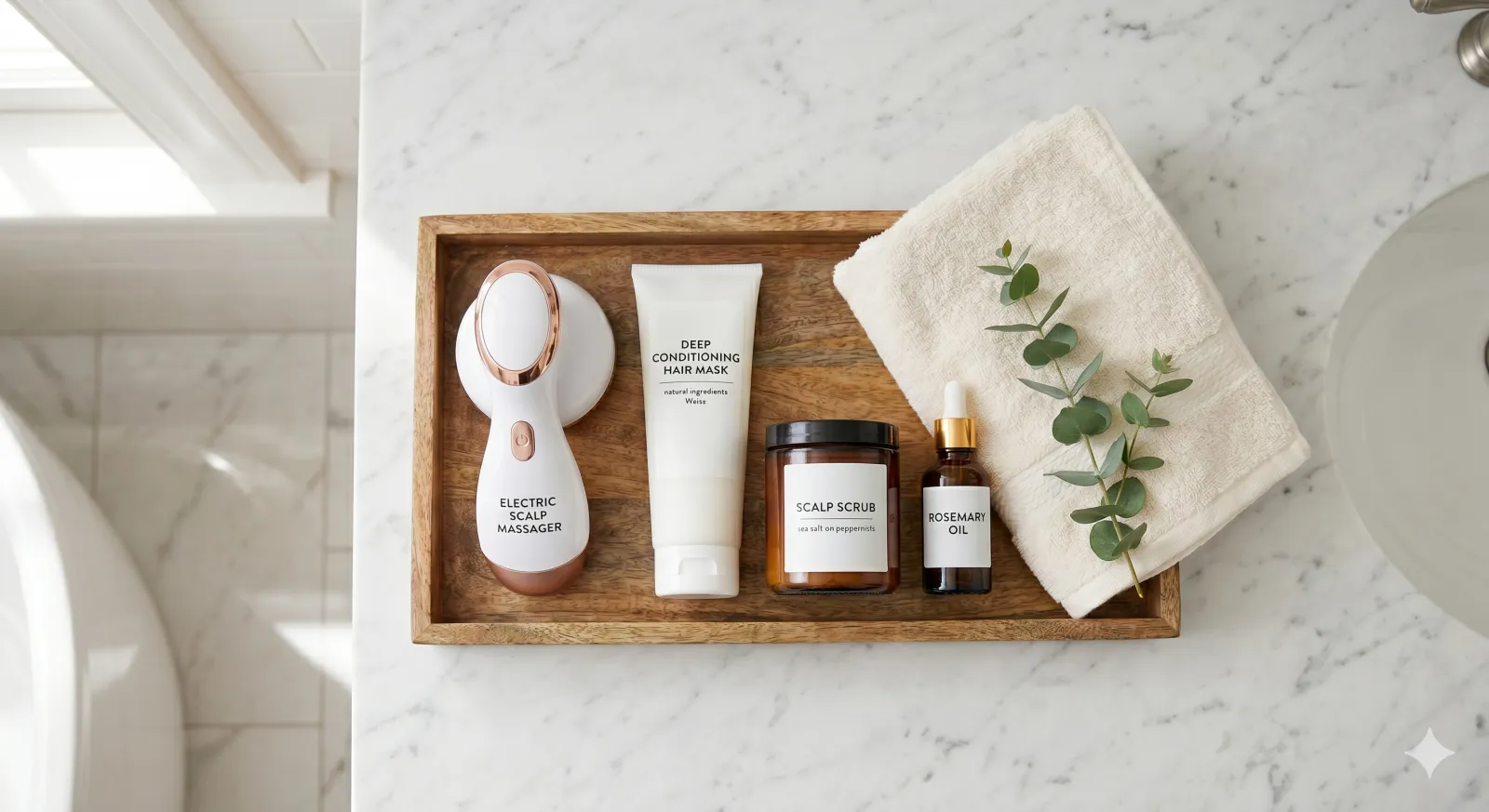
Five tools cover most of what a professional session delivers, and most last months before needing to restock.
Home Setup Checklist
- Waterproof electric scalp massager ($15–40)
- Scalp scrub — sugar or salt base with peppermint or rosemary oil
- Scalp serum or oil — rosemary oil is among the better-researched options
- Warm towel or steam towel for the heat wrap step
- Deep conditioning hair mask for the final step
Step 1 — Apply scalp scrub to dry hair, massage in slow circles for 5 minutes. Lifts sebum buildup before water touches the hair.
Step 2 — Shampoo thoroughly, then wrap the scalp in a warm towel for 5 minutes to open follicles and prime for the serum.
Step 3 — While the scalp is still slightly damp, apply scalp serum or rosemary oil and press in with fingertips.
Step 4 — Use the electric scalp massager for 10 minutes, moving from the nape of the neck toward the crown.
Step 5 — Apply a deep conditioning mask from mid-length to ends, leave 15–20 minutes, then rinse.
💪 Pro Tip
Apply scalp serum while hair is still slightly damp, not soaking wet or dry — absorption tends to be noticeably better on damp skin. A common mistake is applying serum on dry hair and wondering why it doesn’t seem to work.
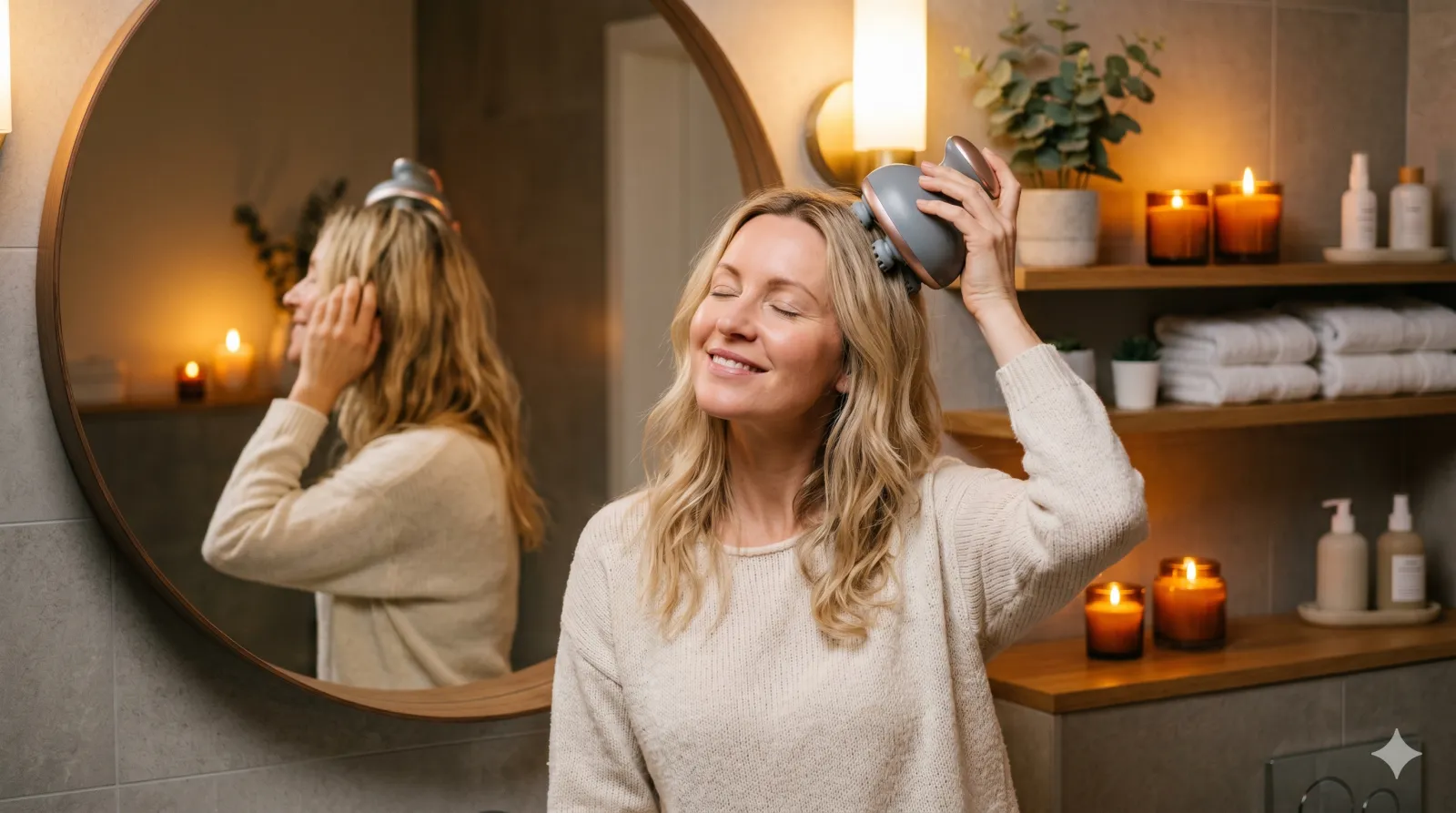
A relaxing look at the ASMR side of head spa treatments.
Best Equipment for Home Use
What’s Worth Buying
For a scalp massager, a waterproof model with silicone nodes that works in the shower and feels firm without scratching covers what’s needed — the $15 to $40 range is generally sufficient, and pricier options are often mostly branding.
For scalp scrub, a sugar or salt base with rosemary or peppermint oil works well, used once a week at most — overdoing it can dry out the scalp. For scalp serum, rosemary oil diluted in a carrier oil like jojoba or argan is among the more researched natural options, based on the single Panahi et al. trial noted above.
Pairing this with a consistent anti-aging skincare routine for the 40s and 50s rounds out a broader approach, since scalp circulation connects to facial skin tone. For those interested in adding light therapy, red light therapy at home pairs well with a head spa routine.
Frequently Asked Questions
What happens in a Japanese head spa?
Typically a multi-step process: deep scalp cleansing, steam to open follicles, a nutrient-rich scalp serum, and a precision massage from the nape of the neck to the crown. Sessions usually last 60 to 90 minutes, aiming to improve scalp health and reduce tension, not just relax.
Is a Japanese head spa worth the money?
For a special occasion or a reset, often yes — the professional experience is hard to replicate at home. For ongoing scalp health, frequency tends to matter more than intensity, so a weekly at-home routine often outperforms a monthly salon visit for most people, at a fraction of the cost.
What does a Japanese head spa cost?
In the US, a professional session typically runs $100 to $200 depending on the salon and city, adding up to $1,200–$2,400 annually on a monthly schedule. A home setup costs roughly $50 to $80 upfront and covers months of weekly sessions.
Is a head spa safe during pregnancy?
Gentle scalp massage is generally considered fine during pregnancy, though it’s worth avoiding deep pressure around the neck and temples, skipping essential oils that are contraindicated in pregnancy, and checking with a healthcare provider before starting anything new.
Do I wash my hair before a head spa?
At a salon, no — arriving with dry hair is normal since cleansing is part of the treatment. At home, start with dry hair for the scrub step before shampooing, apply serum on damp hair, massage, then finish with a conditioning mask.
Not medical advice — check with a doctor before starting any new scalp routine, especially during pregnancy or with a scalp condition.
The scalp is the foundation of healthy hair. Pick one step from this guide and start this weekend. 💆
You May Also Like
 Hair Thinning Women Over 40: 5 Proven Ways to Stop It for Good
 Oral Minoxidil for Women: Dosage, Side Effects & Results
 7 Free Nervous System Regulation Exercises at Home
 Hormone Test for Women: 7 Essential Panels You Need
 Magnesium Glycinate for Perimenopause Sleep: What Works
 High Cortisol Symptoms in Women: 10 Warning Signs to Know
 Jjimjilbang Seoul: The Complete Guide for First-Timers
 Anti Aging Skincare: Best 40s & 50s Routine