Not medical advice — check with a dermatologist before starting active ingredients like retinol, especially with sensitive or reactive skin.
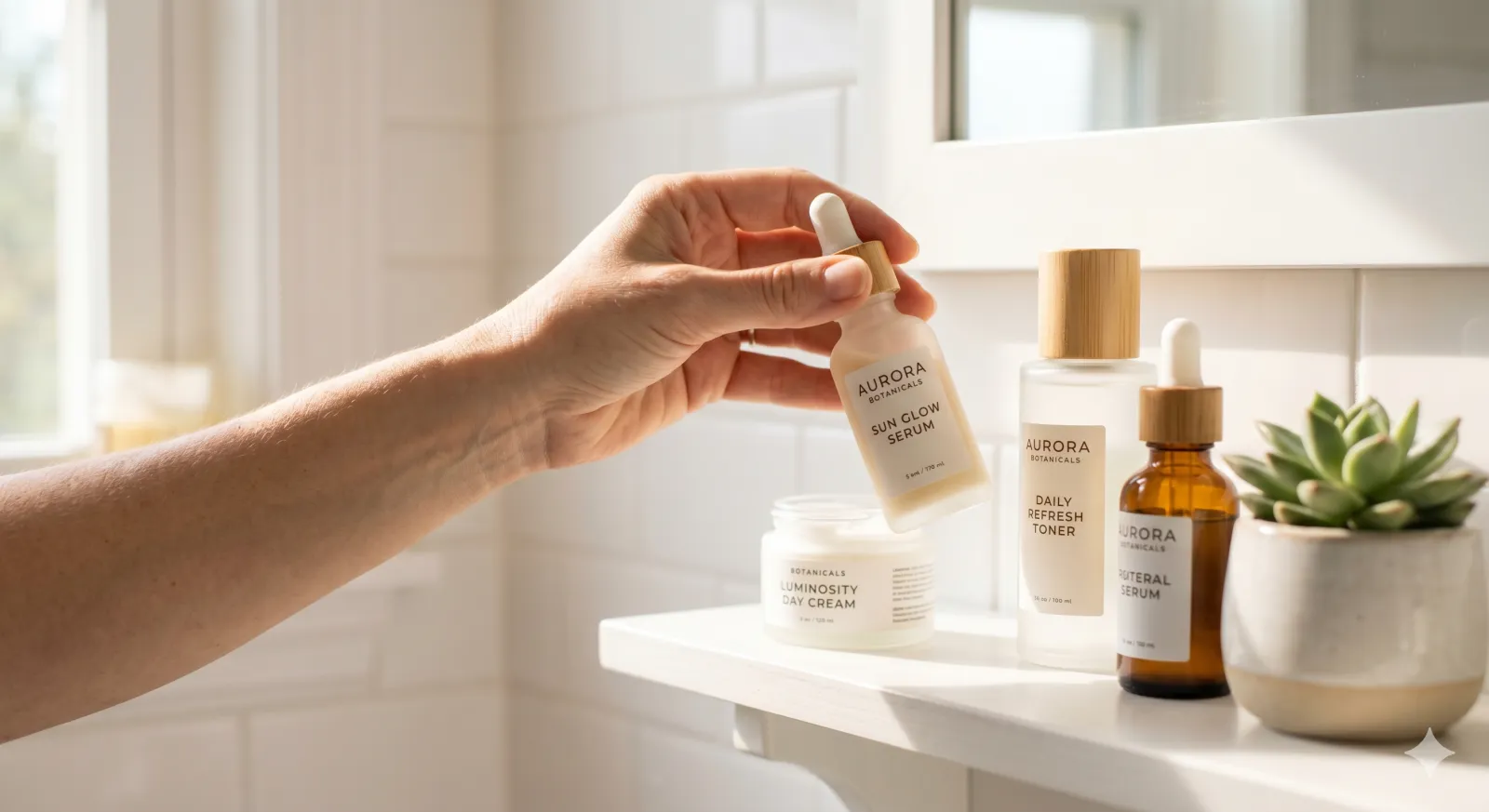
The right anti-aging skincare routine in your 40s and 50s makes a bigger difference than any single product.
Most people don’t need more skincare. They need fewer, better choices — even with thousands of anti aging skincare products on the market. The real problem usually isn’t too many choices — it’s not knowing which ingredients and routines actually fit a given age and skin type.
Skin in the 40s and 50s behaves differently than it did in the 20s. Collagen production slows, the skin barrier weakens, and moisture retention drops. Here’s what dermatologists generally recommend, which brands have a track record, and how Korean skincare fits into an effective routine — broken down by decade.
Key Takeaways
- Retinol and peptides become foundational after 40 — not optional extras
- Sun protection matters more than any single serum; UV exposure is widely cited as responsible for a large share of visible aging
- 40s: correction begins. 50s–60s: hydration and barrier repair take priority
- Dermatologist brands (La Roche-Posay, CeraVe) and Korean skincare work well together, not as competing philosophies
- Consistency with 2–3 well-chosen products beats a complicated routine used sporadically
Why Skin Needs a Different Approach After 40
The Case for Retinol and Peptides
A routine built for skin in its 30s often isn’t equipped for what’s happening after 40. Cell turnover slows, and the gap left by declining collagen becomes more visible. Active ingredients like retinol and peptides tend to become foundational rather than optional at this stage.
Retinol is one of the most studied anti-aging ingredients available without a prescription — it supports cell turnover and collagen production. Starting low (0.1–0.3%), applied at night two to three times a week, gives skin time to adjust before increasing frequency.
Peptides work differently — signaling skin cells to produce more collagen, generally with less irritation than retinol. For sensitive skin, or when just starting out, a peptide serum is a reasonable alternative or complement, often alternated with retinol on different nights rather than layered together.
Building a Routine for the 40s
Essential Steps and Active Ingredients
The 40s are often when the shift from prevention to correction becomes relevant — collagen loss accelerates, elasticity starts to drop, and fine lines around the eyes and mouth become more noticeable.
Mornings can focus on two essentials: antioxidant protection and sun defense. A vitamin C serum after cleansing helps brighten and support collagen, followed by SPF 30 or higher every morning. UV exposure is widely cited as responsible for a large share of visible skin aging — one commonly referenced study estimated around 80% in a population with high cumulative sun exposure — which is part of why daily sunscreen tends to matter more than any single serum.
Evenings: a gentle, non-stripping cleanser, then a retinol or peptide serum, followed by a ceramide-rich moisturizer. CeraVe’s Skin Renewing Retinol Serum is a commonly recommended option that pairs retinol with ceramides, aiming to combine correction with barrier support.
Simple 40s Routine
- ☀️ Morning: Gentle cleanser → Vitamin C serum → Moisturizer → SPF 30+
- 🌙 Evening: Gentle cleanser → Retinol or peptide serum → Ceramide moisturizer
- Start retinol at 0.1–0.3%, two to three nights a week
- Alternate retinol and peptide serum on different nights
- Daily SPF matters more than any single serum
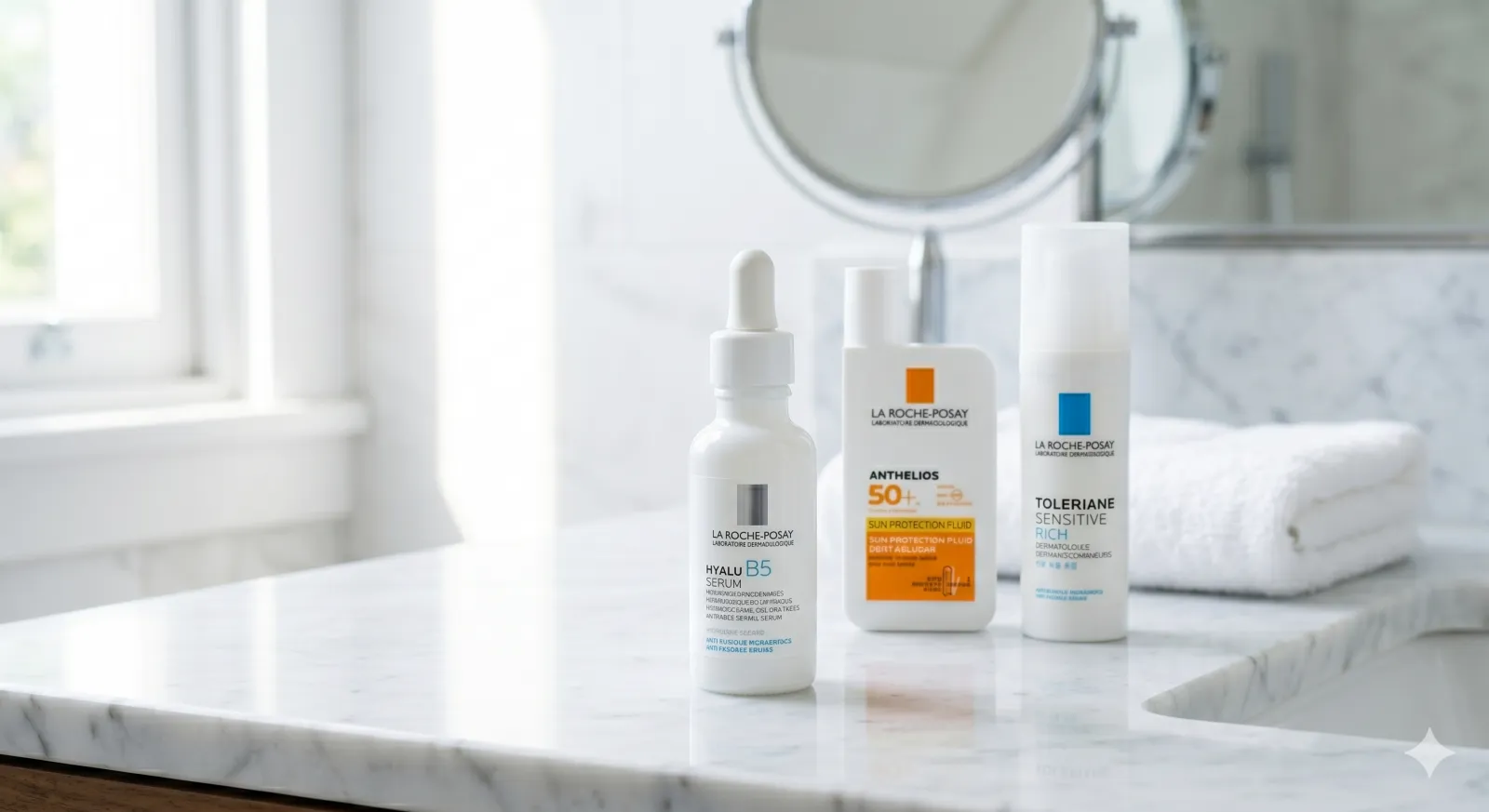
La Roche-Posay’s anti-aging line is a common dermatologist recommendation for sensitive, mature skin.
What Changes in the 50s and 60s
Deep Hydration Over Surface Correction
The 50s and 60s aren’t just about adding more products — often it’s about choosing differently. Hyaluronic acid levels in skin tend to drop after menopause, which is part of why deeper wrinkles and sagging become more prominent.
A high-concentration hyaluronic acid serum layered under a peptide-rich cream addresses both hydration and structural support. La Roche-Posay Redermic R is commonly recommended for this decade, formulated to deliver retinol benefits on skin that may be more reactive than it once was.
By the 60s, priorities often shift further toward recovery — reducing retinol to once or twice weekly and increasing peptides and barrier-repairing ingredients. Eye creams with caffeine and peptides also become more worthwhile as the delicate under-eye area tends to lose volume fastest.
Dermatologist Brands vs. Korean Skincare
Complementary, Not Competing
This isn’t really an either/or question — dermatologist-recommended brands and Korean skincare tend to complement each other rather than compete.
La Roche-Posay and CeraVe are consistently among the more recommended anti-aging brands in the US. La Roche-Posay’s thermal spring water base is associated with anti-inflammatory and antioxidant properties, often positioned toward reactive or sensitive mature skin. CeraVe builds around a trio of ceramides for barrier repair; its Skin Renewing line uses MVE technology to release moisturizing ingredients gradually. Both are widely available at pharmacies, which makes consistent use more sustainable than some luxury alternatives.
Korean skincare has shifted how a lot of people approach anti-aging — starting with building a healthy, well-hydrated skin barrier rather than treating visible damage after the fact. Well-hydrated skin tends to reflect light more evenly and can make fine lines look less pronounced.
Brands like Medicube, Beauty of Joseon, and Anua have grown quickly among 40s and 50s audiences in the US, UK, and Australia. For Korean skincare inspiration beyond products, Korean jjimjilbang (sauna) culture is part of the picture too — regular heat exposure has long been part of how skin and circulation are cared for in Korea. For shopping at the source, visiting Seoul’s Olive Young stores is worth adding to an itinerary.
Layer Korean + Western
Try a Korean hydrating toner (Beauty of Joseon or Anua) before a CeraVe anti-aging cream. The toner adds moisture first, which can help actives absorb more efficiently. It’s a combination that costs less than most single luxury serums.
Skincare and nutrition connect more than most routines acknowledge — a high protein meal prep routine provides amino acids that support collagen synthesis, something no topical product fully replaces on its own.
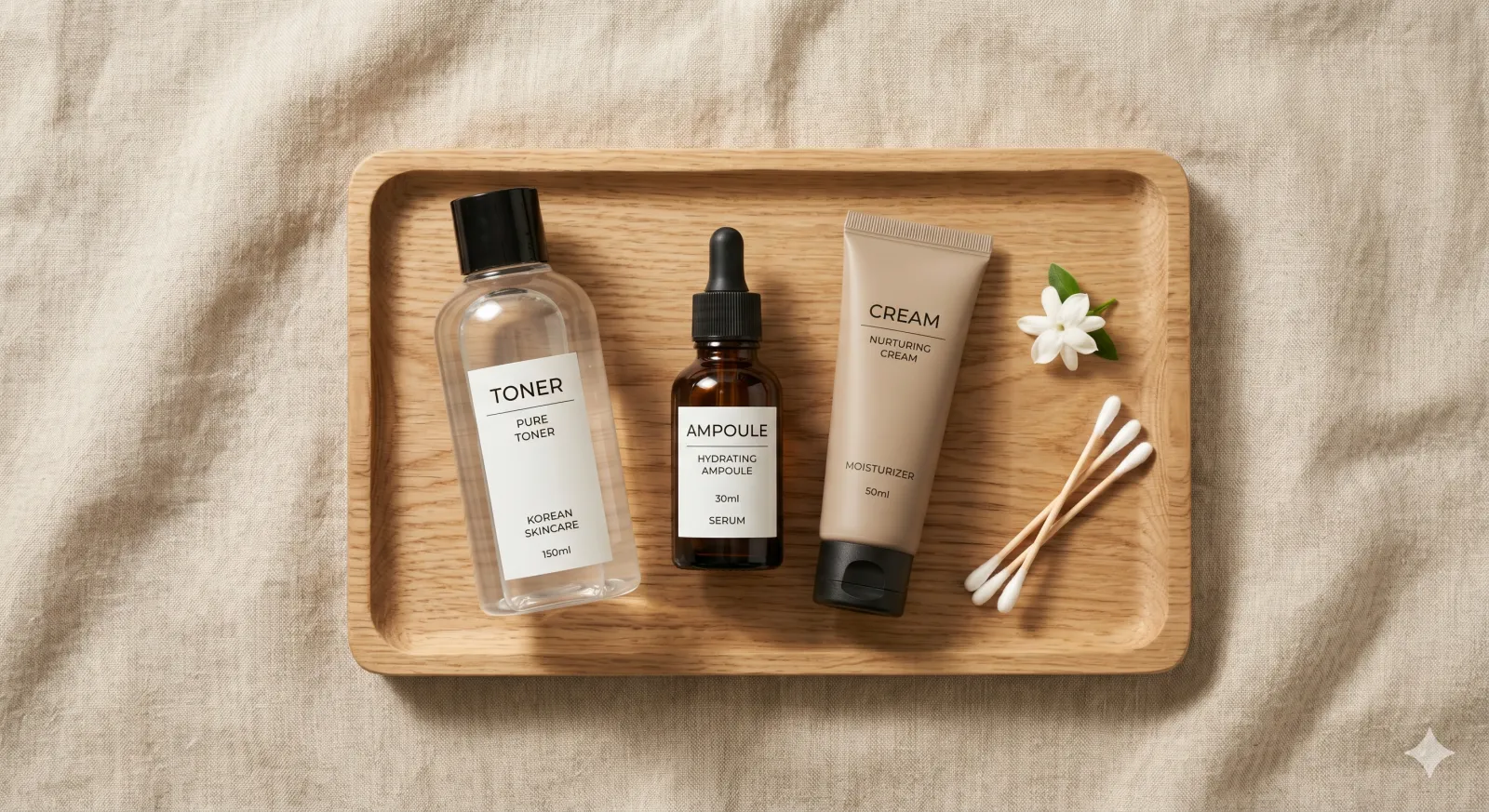
Korean skincare’s peptide-forward approach pairs naturally with Western derma brands for mature skin.
For a broader dermatologist-backed breakdown, the American Academy of Dermatology’s guide to skin care in your 40s and 50s is worth bookmarking.
Frequently Asked Questions
What’s a good anti-aging skincare routine for the 40s?
A vitamin C serum and SPF 30+ in the morning, with a retinol or peptide serum plus a ceramide moisturizer at night, covers the essentials. Consistency tends to matter more than complexity — a well-chosen two or three product routine used daily generally outperforms an elaborate routine used sporadically.
What are good anti-aging products for the 50s?
A high-concentration hyaluronic acid serum, a peptide-rich cream, and a gentle retinol product two to three nights a week are common recommendations. La Roche-Posay Redermic R and CeraVe Skin Renewing Night Cream are frequently recommended options for mature, potentially sensitive skin.
Are dermatologist-recommended products actually better?
Brands like La Roche-Posay and CeraVe generally go through more clinical testing and formulate with fewer unnecessary irritants than average drugstore lines. That tends to make them more reliable for mature skin that’s more reactive than it was in younger years, though individual skin response still varies.
Is a La Roche-Posay anti-aging set worth it?
For skin in the 50s and above, often yes — the line is built on thermal spring water with soothing properties, making it one of the more tolerable retinol-containing ranges for sensitive mature skin. Starting with a smaller size to confirm compatibility before committing to a full set is a reasonable approach.
Is Korean skincare effective for anti-aging?
Generally, yes. K-beauty’s focus on hydration and barrier health addresses two major contributors to visible aging: dehydration and a compromised barrier. Brands like Medicube, Beauty of Joseon, and Anua have built strong followings among 40s and 50s users because their layering approach often delivers hydration that single-product routines miss.
Not medical advice — check with a dermatologist before starting active ingredients like retinol, especially with sensitive or reactive skin.
Two or three well-chosen anti aging skincare products, used consistently, tend to outperform ten used occasionally. Start there. ✨
You May Also Like
 Olive Young Korea: 10 Best Korean Skincare Must-Haves
 I Tried 4 Korean Skin Treatments in Seoul — Here’s What’s Actually Worth It
 7 Red Light Therapy at Home Secrets for Ozempic Face & Acne
 Japanese Head Spa: 5 Benefits & At-Home Routine Guide
 How to Eat Korean BBQ: The Ultimate Guide That Actually Works
 Hormonal Acne Chin: 5 Proven Treatments That Actually Clear It
 Bingsu Guide: 5 Best Korean Summer Foods to Beat the Heat
 Hair Thinning Women Over 40: 5 Proven Ways to Stop It for Good