Not medical advice — check with a doctor before use if on photosensitizing medication, pregnant, or breastfeeding.
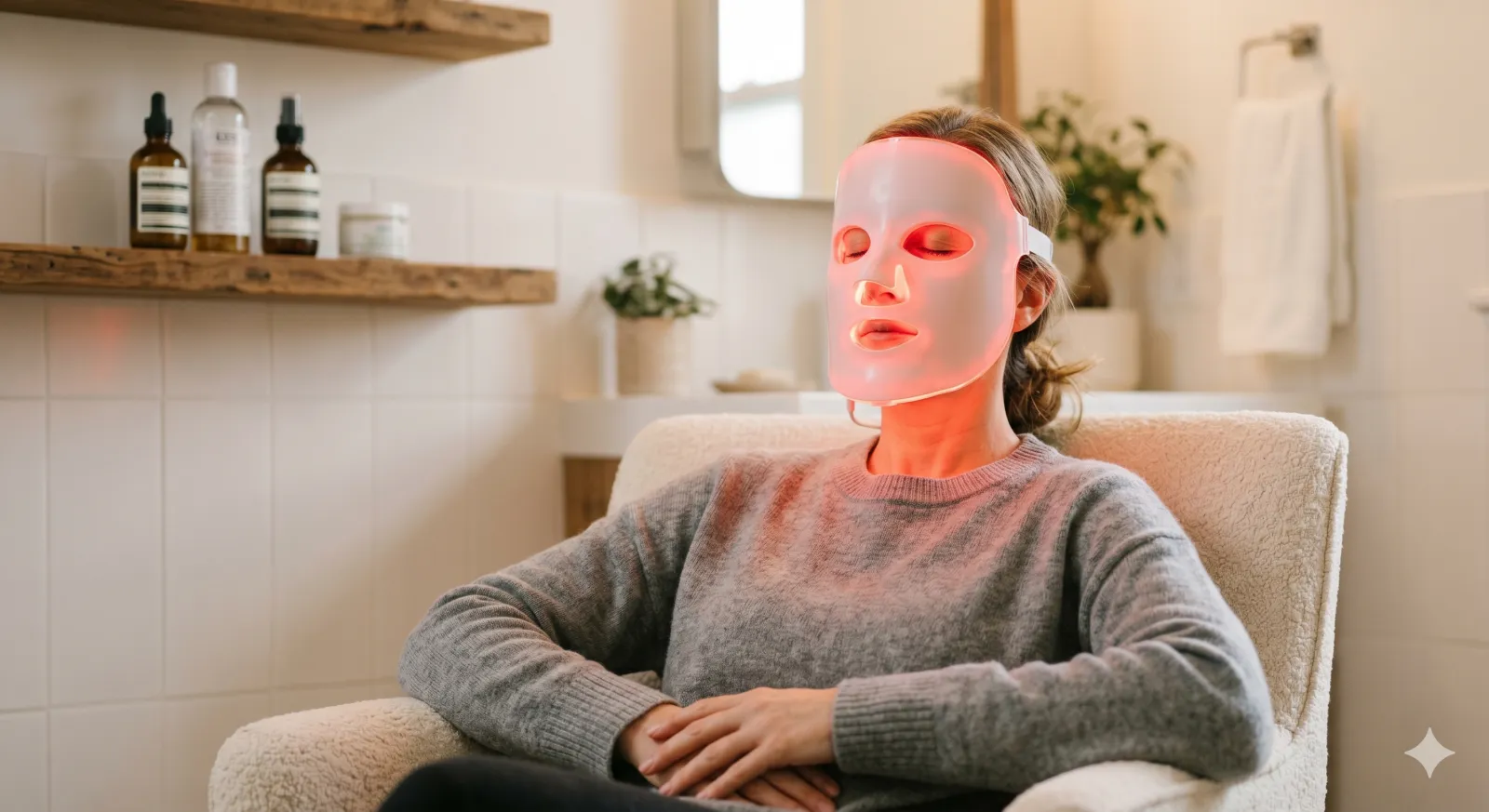
Red light therapy at home has seen a real surge in interest lately — but does the glow actually do anything for real skin concerns?
With thousands of devices on the market, it’s hard to know what’s legitimate, what’s overpriced, and what fits a specific concern. The science behind red light therapy itself is genuinely real, but results depend heavily on the device and how consistently it’s used.
The light isn’t the confusing part. Choosing a device backed by real evidence is — that’s what this covers: how it works, whether it can help with Ozempic face and sagging skin, and how Korean skincare brands like Medicube fit into the at-home LED space.
Key Takeaways
- Red light therapy works through photobiomodulation — evidence-based wavelengths (633nm, 830nm) stimulate collagen production and reduce inflammation
- The FDA has cleared specific at-home devices for wrinkle reduction and acne — not all LED gadgets are equivalent
- It can help with sagging skin (including Ozempic face) by boosting collagen and elastin, though it won’t restore lost volume on its own
- Consistency matters more than intensity — 3–5 sessions weekly for 8–12 weeks is the typical timeline for visible results
- Safe for most people, but eye protection and a few medication interactions are worth knowing about
What Does Red Light Therapy Actually Do?
The Science, in Plain Terms
Red light therapy at home delivers specific wavelengths of light — typically 630 to 850 nanometers — into skin cells. These wavelengths target mitochondria, the energy-producing part of each cell, and stimulate them to produce more ATP.
The downstream effects: collagen production increases, inflammation decreases, and cell regeneration speeds up. This is photobiomodulation, and it’s been studied for decades — not a recent gimmick.
Is It Real, or Overhyped?
It’s real, with an important caveat. NASA’s early research in the 1990s found that red LED light accelerated plant cell growth, which led to further study of wound healing and skin regeneration in humans.
Today, the FDA has cleared specific at-home devices for wrinkle reduction and acne treatment. The real distinction is between clinically validated devices using evidence-based wavelengths (633nm for collagen, 830nm for deeper tissue) and cheap LED gadgets that just emit reddish light without the same research behind them.
Board-certified dermatologist Dr. Andrea Suarez (“Dr. Dray”), who sits on Omnilux’s Scientific Advisory Board, has been vocal that sticking to evidence-based wavelengths is what actually gets results — a basic LED strip isn’t equivalent to a medical-grade device.
FACTLY9 Evidence Snapshot
Strong Evidence
- ✔ Fine lines and mild wrinkles
- ✔ Acne-related inflammation
Moderate Evidence
- ✔ Skin texture
- ✔ Firmness improvement over weeks of use
Limited Evidence
- • Ozempic face specifically (extrapolated from general firmness research, not studied as its own condition yet)
- • Deep skin tightening comparable to in-clinic procedures
- • Restoring lost facial volume
Can Red Light Therapy Help With Ozempic Face?
What It Can and Can’t Do
The rise of GLP-1 weight loss medications has left some people with a new concern: sagging, deflated-looking facial skin from rapid fat loss, often called Ozempic face.
Red light therapy won’t replace lost volume — that’s a job for fillers or time. What it can do is stimulate fibroblast cells to produce more collagen and elastin, which supports skin firmness and can reduce the appearance of sagging. Dermatologists generally position it as a non-invasive complement to other skin-tightening strategies, not a standalone fix.
For visible change, consistency matters most — 3 to 5 sessions weekly for 8 to 12 weeks is the typical range cited for meaningful improvement, with many people noticing early texture changes around week four.
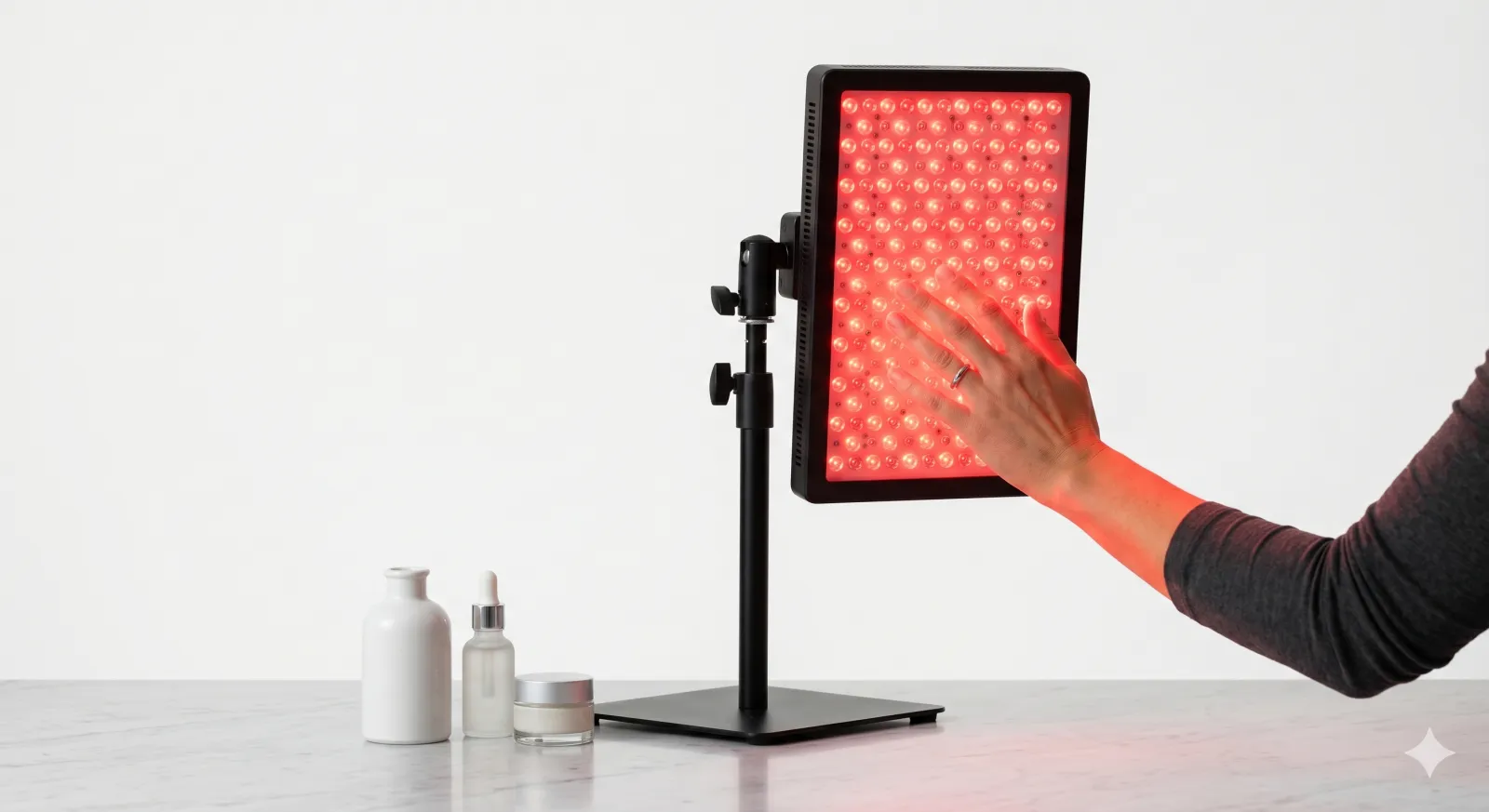
Choosing a Device: Mask vs. Panel
Top-Rated Masks
Masks target the face; panels cover more ground. Choosing between them mostly comes down to where the focus is and what the budget allows.
Omnilux Contour Face is widely considered a leading option among red light therapy masks — FDA-cleared, using 633nm and 830nm dual wavelengths across 132 LEDs in a flexible mask. Dr. Dray, an Omnilux Scientific Advisory Board member, has spoken publicly about using and recommending it as part of her own routine.
CurrentBody LED Mask is a well-regarded UK-based alternative with clinical trial data showing improvements in skin elasticity and firmness after several weeks of consistent use.
Solawave‘s wand format allows targeted treatment on fine lines around the eyes and mouth without committing to a full mask — a reasonable option for spot treatment rather than full-face coverage.
Panels for Broader Coverage
For treatment beyond the face — neck, décolletage, or full-body use — a panel tends to be a more efficient investment. Hooga and Mito Red are commonly cited options in the US market, offering red and near-infrared coverage at multiple power levels, often used for muscle recovery and joint support as well as skin.
The K-Beauty Connection
How LED Fits Into Korean Skincare
LED therapy has been part of Korean skincare clinics for years, and brands like Medicube have brought that technology into accessible at-home devices — part of why the category has grown globally.
Medicube’s AGE-R Booster Pro combines EMS (electrical muscle stimulation) with LED technology in one device, reflecting a broader Korean approach: layer deep hydration first, then use devices to help drive those ingredients further into the skin. Applying a hydrating toner, letting it absorb, then using a red light mask is a common sequence for getting more out of both steps.
Korean jjimjilbang (sauna) culture reflects a related, older approach to skin and circulation through heat rather than light. For shopping at the source, Seoul’s Olive Young stores and Medicube pop-ups are worth building into a trip.
💪 Pro Tip
Consistency is the real variable here. Ten minutes a day, three to five times a week, for at least four to twelve weeks, is what most of the visible results are actually built on — not the specific device brand.

Real Results and Risks
Setting Realistic Expectations
The before-and-after photos circulating online are generally real, but they represent weeks or months of consistent use — not a single session. Setting that expectation upfront is often what separates people who stick with it from those who give up after two weeks.
What Are the Downsides?
Red light therapy is considered one of the safer non-invasive skin treatments, but it’s not entirely without caveats.
Worth Knowing
Eye protection matters — direct exposure to high-intensity LED light can affect the retina, so use the protective goggles that come with a device. Anyone on photosensitizing medications (certain antibiotics, acne drugs, chemotherapy agents) should check with a doctor first. Combining retinol with light therapy the same night can increase skin sensitivity for some people. More isn’t better — using a device more than once daily may not enhance results. Most manufacturers advise against use during pregnancy or breastfeeding pending more research.
Dermatologist Dr. Dray on the anti-aging skin benefits of red light LED therapy.
For a foundational overview of the science, NASA’s research on medical uses of light is where much of this traces back to.
Good nutrition supports the same collagen-building process from another angle — a high protein meal prep routine supplies the amino acids skin needs. For the topical side, the anti aging skincare guide for 40s and 50s covers retinol and peptides in more depth.
Frequently Asked Questions
What exactly does red light therapy do?
It stimulates mitochondria in skin cells to produce more ATP, which supports collagen synthesis, reduces inflammation, and speeds cell regeneration. The process is called photobiomodulation — the same technology used in dermatology clinics, now available in at-home devices at a lower cost.
Is red light therapy real or overhyped?
It’s real for FDA-cleared devices using clinically validated wavelengths. The research traces back to NASA studies and has since been examined in peer-reviewed studies for wrinkle reduction and acne. The key is choosing devices using evidence-based wavelengths (633nm and 830nm) rather than inexpensive lights marketed as therapy devices without the same backing.
Can red light therapy help with Ozempic face?
It can improve skin firmness and reduce the appearance of sagging by supporting collagen and elastin production, which addresses part of what defines Ozempic face. It won’t restore lost volume on its own, but with consistent use over 8 to 12 weeks, many people notice improvement in skin tightness and texture.
Does red light really tighten loose skin?
With consistent use, yes for many people. Red light at 633nm activates fibroblast cells that produce collagen and elastin. Results build over weeks rather than days — clinical data for devices like Omnilux and CurrentBody show measurable elasticity improvements after several weeks of regular use.
How does LED fit into Korean skincare for acne?
Korean skincare typically layers deep hydration first, then uses LED devices to help support the skin further — blue light is often used for acne-related concerns while red light supports inflammation and collagen. At-home brands like Medicube have brought this clinic-style technology into daily routines.
Not medical advice — check with a doctor before use if on photosensitizing medication, pregnant, or breastfeeding.
The right device helps, but patience and consistency are what actually make it work. Start today, stay consistent. 💡
You May Also Like
 Transfer iPhone Photos to Computer: 5 Easy Methods
 iPhone Battery Health Tips: 7 Changes Worth Making Today
 Hormonal Acne Chin: 5 Proven Treatments That Actually Clear It
 I Tried 4 Korean Skin Treatments in Seoul — Here’s What’s Actually Worth It
 Gum Disease Treatment at Home: How to Stop Bleeding Gums Fast
 Hormone Test for Women: 7 Essential Panels You Need
 Dental Implant Alternatives: What Dentists Don’t Explain
 Oral Minoxidil for Women: Dosage, Side Effects & Results