Not medical advice — talk to your doctor before starting any supplement, especially with hormone-sensitive conditions or current medications.

The right supplement routine works from the inside out, not just at the surface.
That heat that starts in the chest, climbs the neck, and radiates through the whole body in seconds — if hot flashes have sent you searching for the best menopause supplements, this feeling needs no introduction.
Some supplements have real research behind them. A lot of what fills the wellness aisle doesn’t, or the evidence is more mixed than the marketing suggests. The shelves are full. The evidence isn’t — at least not for everything sitting on them. Here’s what’s actually supported, what’s genuinely uncertain, and what to skip.
Key Takeaways
- Black cohosh has the most research of any herbal option, but evidence is genuinely mixed — NAMS calls it insufficient, while several meta-analyses show modest benefit
- Soy isoflavones and magnesium glycinate have more consistent supporting evidence
- Evening primrose oil and dong quai lack solid evidence
- Always look for USP or NSF third-party certification — supplement purity isn’t FDA-verified
- Budget options start under $30; premium subscription formulas run $60+
Why Hot Flashes Feel Worse in Summer
When ambient temperatures rise, an already-sensitive internal thermostat has to work harder. Fluctuating estrogen levels make the hypothalamus more reactive, triggering the sweat response earlier and more intensely than usual — more frequent, more intense hot flashes that can derail a day.
Lightweight clothing and fans help at the surface. The more effective approach tends to work from the inside — understanding what the evidence actually supports, rather than experimenting with unproven products during the season symptoms are already worse.
What Has Real Evidence Behind It — and What’s Genuinely Mixed
A Closer Look at the Research
Not every bottle on the shelf has solid science behind it, and even the ones with the most research aren’t always as settled as marketing suggests.
FACTLY9 Evidence Snapshot — Black Cohosh
Current Consensus
- ✔ The most researched herbal option for hot flashes, but genuinely mixed — not a clear yes
Known
- ✔ Some meta-analyses (including a pooled analysis of 22 trials, ~2,300 women) found significant improvement in hot flashes vs. placebo
- ✔ Other systematic reviews found no significant difference from placebo
- ✔ Rare cases of liver toxicity have been reported, and independent testing has found a notable share of products don’t match their label claims
Official Position
- • The North American Menopause Society’s 2023 position statement calls the evidence insufficient to recommend black cohosh for vasomotor symptoms
Soy isoflavones and magnesium glycinate tend to have more consistent support across reviews, though effect sizes are generally modest rather than dramatic — most single-ingredient options reduce hot flash frequency meaningfully but rarely eliminate them.
| Supplement | Evidence Level | Typical Daily Dose |
|---|---|---|
| Black Cohosh | Mixed — NAMS says insufficient; some meta-analyses show benefit | 20–40mg standardized extract |
| Soy Isoflavones | Moderate, fairly consistent | 40–80mg |
| Magnesium Glycinate | Moderate for sleep; less direct evidence for hot flash frequency specifically | 200–400mg (at night) |
| Omega-3 Fatty Acids | Mixed — modest effect in some reviews, none in others | 1,000–2,000mg |
| Evening Primrose Oil | Weak — most reviews show no benefit over placebo | — |
| Dong Quai | Weak; may interact with blood thinners | — |
If temperature spikes are showing up alongside sleep disruption, magnesium glycinate for perimenopause sleep is worth a closer look — it’s better supported for the sleep piece than for hot flash frequency specifically, but the two often go together.
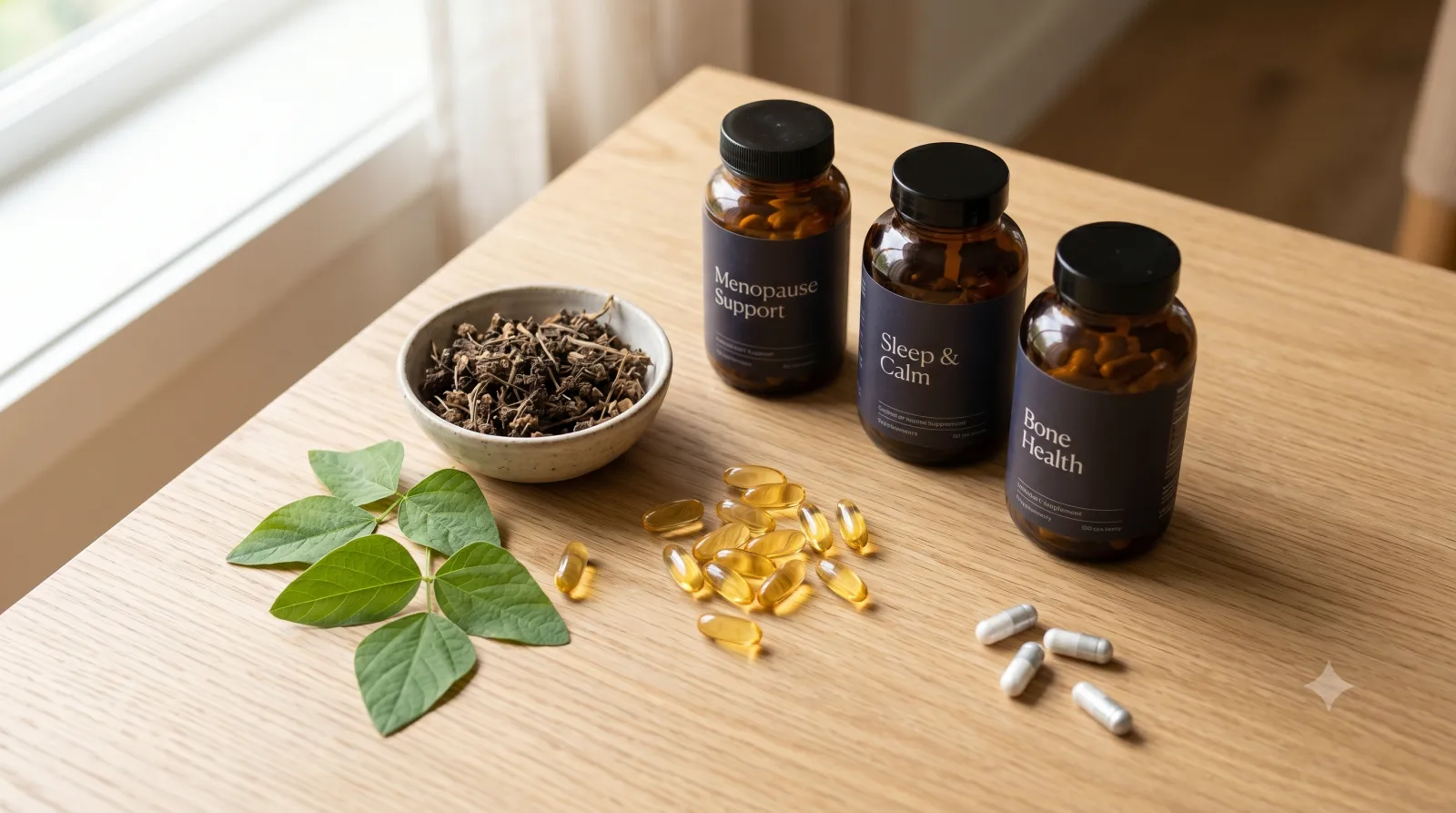
Popular Brands: What They Actually Offer
A Neutral Look at the Names Showing Up Everywhere
Several menopause supplement brands have become well-known through social media. Here’s what each is actually built around, without the marketing gloss.
Happy Mammoth (Hormone Harmony): Built around the gut-hormone connection and liver support for estrogen clearance. Some users report help with bloating and mood; like most proprietary blends, individual ingredient doses aren’t fully disclosed, so it’s hard to verify strength against the research above. Typically takes several weeks of consistent use before noticing anything.
Bonafide (Relizen): Uses purified pollen extract (Serelys), which has some published clinical trial data specific to hot flash relief and doesn’t rely on plant estrogens — a reasonable option for women who prefer to avoid phytoestrogens. Worth verifying with a doctor rather than assuming universal recommendation.
Nutrafol (Women’s Balance): Primarily marketed for hair health; the women’s balance formula also includes adaptogenic ingredients aimed at stress-related symptoms. Might make sense for someone dealing with hair thinning alongside hot flashes, though the hot-flash-specific evidence for this particular formula is limited.
Berberine: Primarily a metabolic health supplement, not a first-line hot flash option. Some women managing blood sugar find it helps indirectly, but it’s not built around vasomotor symptoms specifically.
💡 Pro Tip
Whichever brand is under consideration, look for USP or NSF certification on the label — that’s what actually confirms the product contains what it claims, at the stated dose. Marketing claims alone don’t verify that.
What to Skip
Ingredients That Don’t Hold Up
Wild yam root (standalone): Doesn’t convert to progesterone in the body. Despite common marketing claims, there’s no established mechanism by which oral wild yam relieves hot flashes.
Proprietary blends without disclosed amounts: If a label lists a “blend” without individual ingredient doses, there’s no way to know whether any component reaches a therapeutic level.
Products without third-party testing: Supplements aren’t FDA-regulated for efficacy the way medications are. Without independent verification, purity and potency aren’t guaranteed.
A Note on Black Cohosh Specifically
Independent testing has found a meaningful share of black cohosh products on the market don’t match their label claims, and rare but serious liver toxicity has been reported. Third-party certification matters more here than for most supplements on this list.
The North American Menopause Society (NAMS) recommends looking for USP or NSF International certification before purchasing any supplement.
Choosing the Right Option for a Budget
Under $30
Single-ingredient black cohosh standardized extract or magnesium glycinate powder — cost-effective and reasonable for mild to moderate symptoms.
$30–$60
Multi-ingredient blends targeting several perimenopause symptoms — soy isoflavones combined with B-vitamins for energy alongside temperature support is a common combination.
$60+
Clinically tested, subscription-based formulations like Bonafide or Nutrafol. Makes more sense for more severe symptoms, or when something like hair thinning is part of the picture too.

Understanding a hormone baseline helps in choosing supplements deliberately, not just the most popular ones.
Before investing in a premium regimen, understanding baseline hormone levels can make a real difference. A hormone test for women helps identify which phase is actually in play, rather than guessing.
When Supplements Aren’t Enough
Supplements offer meaningful relief for many women, but they’re not a universal fix. If night sweats are cutting sleep down to a few hours, or mood changes are affecting relationships and daily functioning, it may be time to look past supplements alone.
Both Mayo Clinic and Harvard Health Publishing note that low-dose hormone therapy, non-hormonal prescription medications, or cognitive behavioral therapy may be necessary for more complete symptom management.
Frequently Asked Questions
What vitamin deficiency causes hot flashes?
No single vitamin deficiency directly causes hot flashes, but low levels of vitamin D, vitamin B12, and magnesium can worsen hormonal fluctuations, fatigue, and temperature dysregulation during menopause. Addressing deficiencies supports overall nervous system function and may ease symptom severity somewhat.
What is the 3-day menopause reset?
It refers to a short-term dietary and lifestyle protocol aimed at reducing inflammation, stabilizing blood sugar, and supporting adrenal function to lower vasomotor symptom intensity. Results vary a lot between individuals, and it isn’t a clinically standardized term.
Do hot flash cooling bracelets actually work?
Wearable cooling devices deliver a localized cooling sensation to the wrist, which can interrupt heat perception and offer immediate comfort during a flash. They don’t change hormone levels or address the underlying cause, but as a short-term coping tool, many women find them genuinely helpful.
Not medical advice — talk to your doctor before starting any supplement, especially with hormone-sensitive conditions or current medications.
Start with one supplement that has real evidence behind it, give it 6–8 weeks, and track symptoms. Methodical beats overwhelming. 🌿
You May Also Like
 Hormone Test for Women: 7 Essential Panels You Need
 Hormonal Acne Chin: 5 Proven Treatments That Actually Clear It
 Dental Implant Cost Without Insurance: The Number Your Dentist Won’t Show You First
 Perimenopause Diet Nobody Tells You About — 7 Tips That Work
 High Cortisol Symptoms in Women: 10 Warning Signs to Know
 Braces vs Invisalign for Adults: The Honest Comparison Dentists Skip
 Gum Disease Treatment at Home: How to Stop Bleeding Gums Fast
 Dental Implant Alternatives: What Dentists Don’t Explain