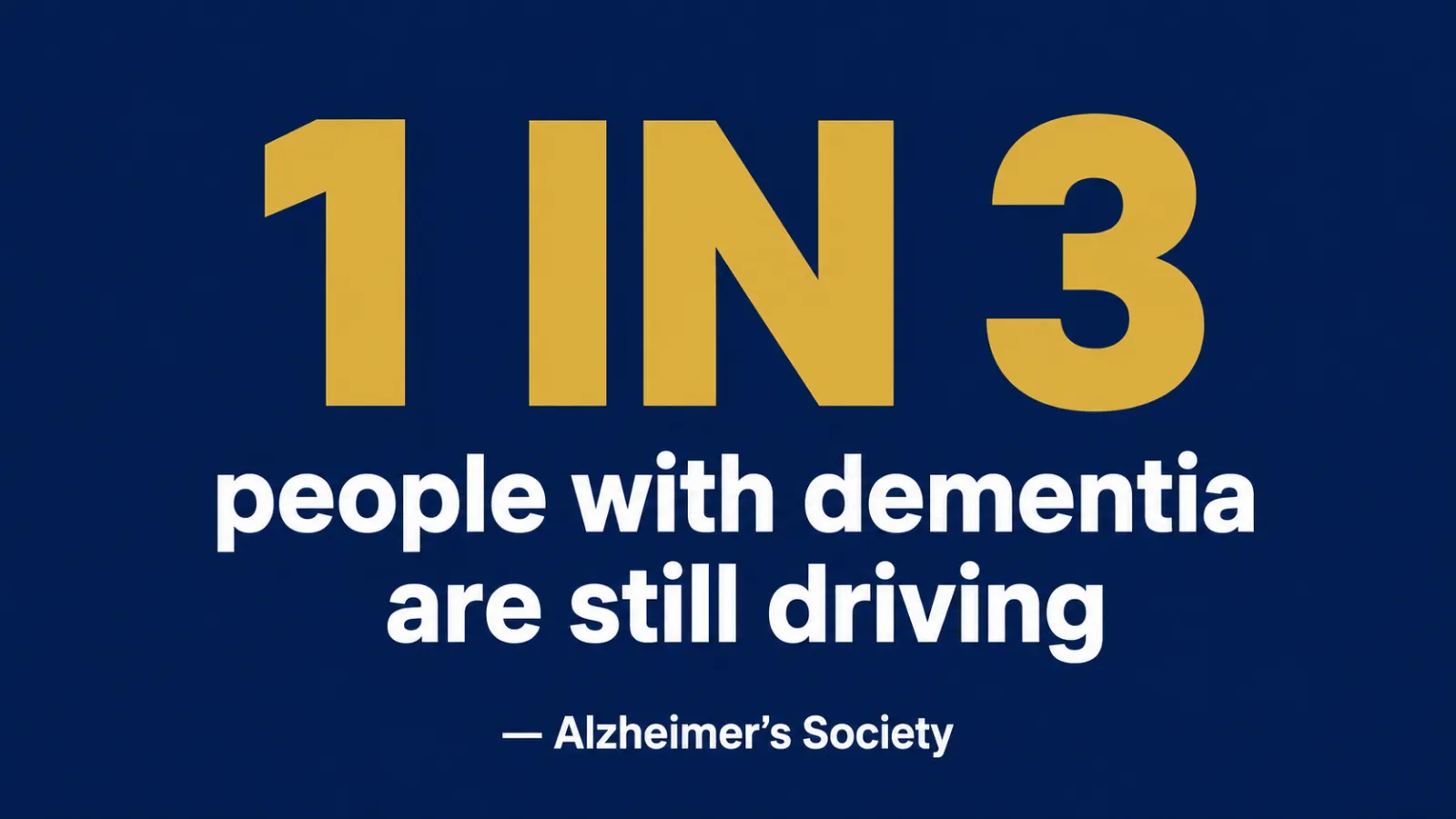
The car hasn’t changed. What changed is everyone’s silence around it.
If you’ve started researching dementia and driving, you’re already ahead of most families — many don’t look until something goes wrong. Somewhere in America, an adult child is rehearsing a sentence they don’t want to say out loud: “Dad, I don’t think you should drive anymore.” You might be rehearsing it right now.
You’ve noticed things. A scrape on the bumper nobody talks about. A familiar route that suddenly took forty extra minutes. You tell yourself it’s nothing — everyone misses an exit sometimes. But somewhere underneath that reassurance is a colder question: if you wait, and something happens, could you have stopped it? That’s the strange thing about dementia and driving — it rarely announces itself with one dramatic moment.
The Conversation Every Family Eventually Faces
You picture the moment you’ll bring it up. It plays out in your head at 2 a.m. — the hurt look, the silence, the accusation that you’re trying to take away the last thing that still feels like independence.
Here’s the surprise: the conversation isn’t actually the hardest part. Most families rehearse the confrontation and skip the planning. They spend weeks dreading a five-minute talk and zero minutes deciding what happens on day one without a car.
Dementia doesn’t take away someone’s ability to drive all at once. It erodes it in the exact skills you’d never think to test at a stoplight — sequencing, divided attention, reaction time under surprise. That’s why the decline is so easy to miss from the passenger seat.
Can You Still Drive If You Have Dementia?
You want a simple yes or no. The honest answer is more uncomfortable: a diagnosis alone doesn’t automatically end driving, and that ambiguity is exactly what keeps families stuck.
Here’s what actually determines it — not the diagnosis, but the function. Someone in the very early stage may still drive short, familiar daytime routes safely for a while. Someone in the moderate stage almost never should, regardless of how confident they feel behind the wheel.
That confidence is the trap. Dementia can affect the very insight needed to notice a decline in your own driving — so the people least aware of the risk are often the ones most certain they’re fine. That’s the core tension with driving and cognitive impairment: capability and confidence don’t always move together.
Does a dementia diagnosis automatically mean someone has to stop driving?
Not automatically. Some people with early-stage dementia may still be able to drive safely for a time. As dementia progresses, judgment, reaction time, and navigation typically decline until driving is no longer safe — often before the person recognizes the changes themselves.
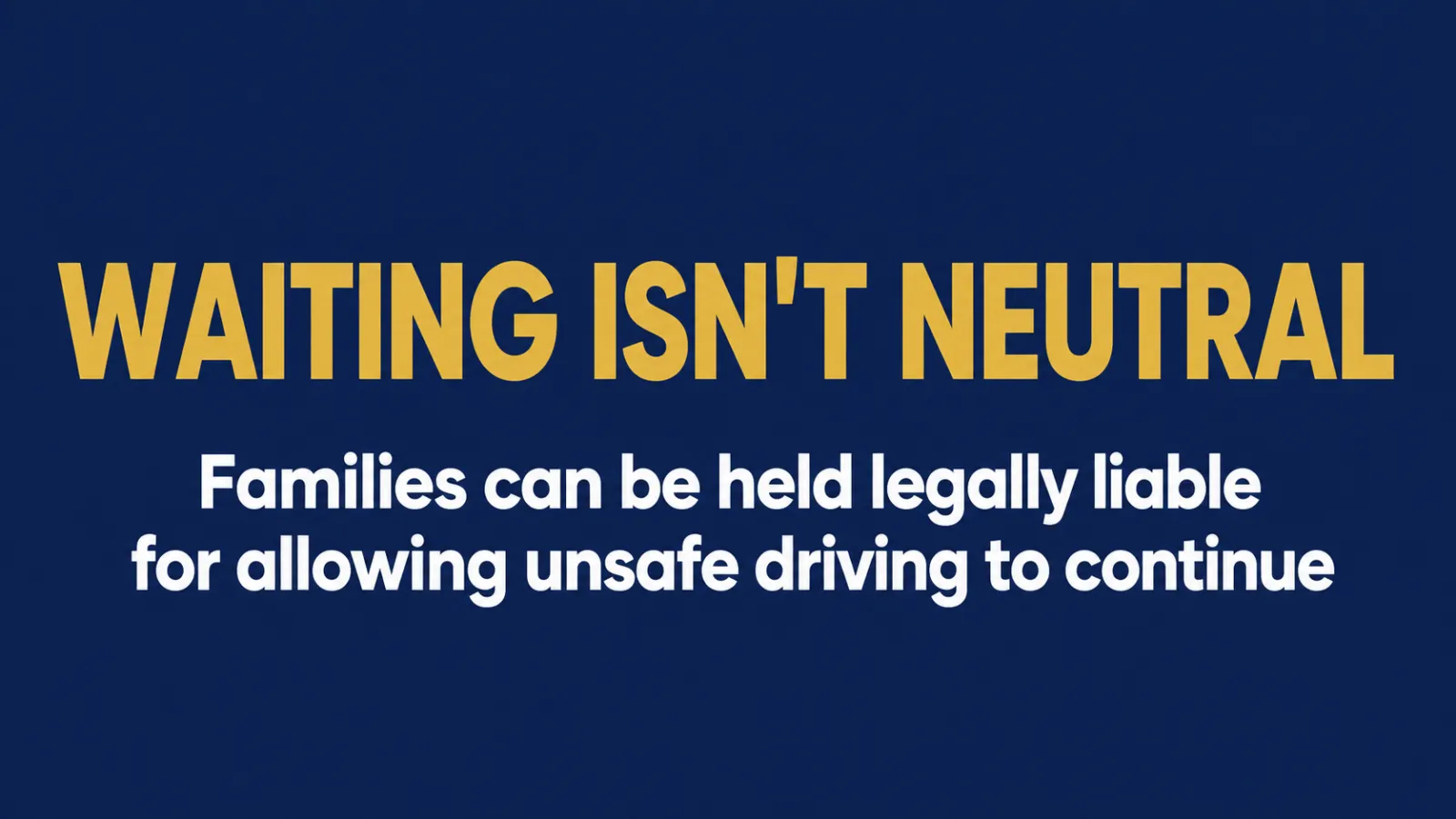
Waiting isn’t neutral — it carries its own risk.
The Warning Signs Most Families Miss
You’re watching for something dramatic — a near-miss, a call from the police. Most families never get that obvious a warning. What they get instead is quieter and easier to explain away. This is where this transition gets dangerous — not in a single failure, but in a pattern nobody’s tracking.
Most families aren’t waiting for a crash. They’re waiting for proof. That’s usually the mistake.
It’s rarely one frightening incident. It’s several small ones that begin to repeat.
- Getting lost on a route they’ve driven for years
- Confusing the gas and brake pedals, or braking too hard or too late
- Driving noticeably slower than traffic, or stopping without a reason
- Difficulty with lane changes, turns, or highway exits
- Returning from a routine drive later than expected, without explanation
- New dents or scrapes on the car they can’t fully account for
Any one of these could be a bad day. A pattern of them is the actual signal — and the pattern is usually visible months before anyone brings it up out loud.
▶ When Should Dementia Patients Stop Driving?
When Waiting Becomes a Legal Risk
You’ve framed this entirely as a safety decision. It’s actually also a legal one, and almost nobody tells families that before it’s too late.
Most lawsuits don’t begin because a family acted. They begin because a family waited.
What changes the calculation is this: in some circumstances, family members who knowingly allow a person with dementia to keep driving can be held legally responsible if that person causes an accident. It’s sometimes referred to as negligent entrustment — and it means the risk isn’t only to your parent or to strangers on the road. It can also be to you. This is the part of navigating driving safety that catches even careful families off guard.
That’s not meant to scare you into panic. It’s meant to reframe the delay. Every week you put off the conversation because it feels kinder isn’t neutral — it’s a week where the exposure sits with the whole family, not just the driver.
State rules vary on reporting, and some states require physicians to report a dementia diagnosis to the DMV, while others leave it to families to request a driving evaluation. Either way, a documented professional evaluation protects everyone — the record shows the decision was based on function, not assumption.
Pro Tip
For dementia and driving specifically, documentation is what turns a decision into a defensible one. Ask for a driving evaluation with a driver rehabilitation specialist (CDRS) or an occupational therapist trained in driving assessment — not just a conversation with the primary doctor. It produces an objective, dated record of driving capacity, which matters medically and can matter legally if the decision is ever questioned later.
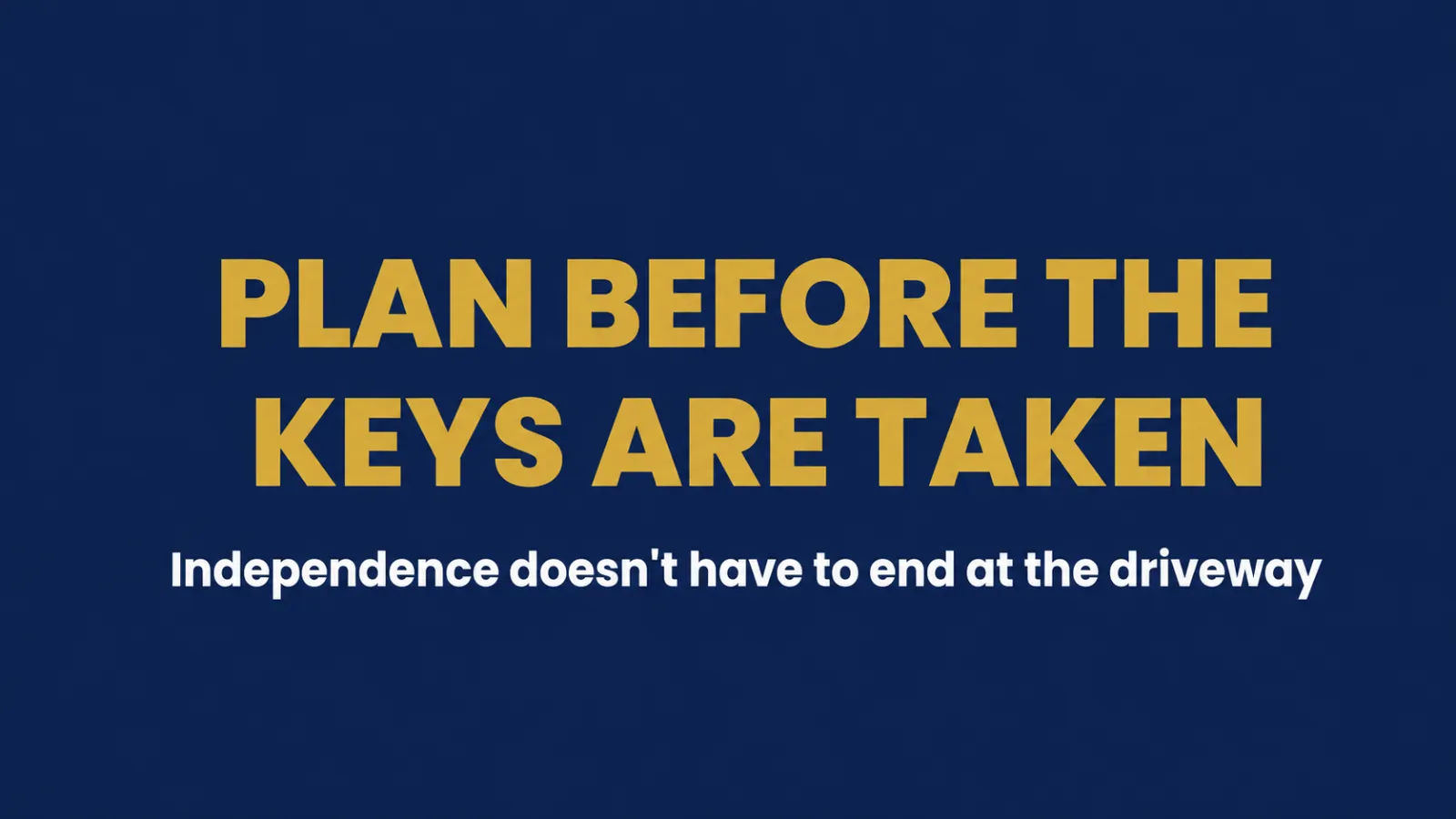
Plan before the keys are taken — not after.
How to Take the Keys Without Taking Away Dignity
You’re bracing for a fight. Most of the fight, though, comes from how the conversation starts — not from the decision itself.
Involve them early, before it’s an emergency. Frame it around safety for everyone, not incapacity. Bring in the doctor — a “do not drive” recommendation from a physician often lands better than the same words from an adult child, because it removes the sense of a family member unilaterally taking control.
If they resist, a driving agreement discussed earlier — while they still have insight — can make it easier to act later without it feeling like a betrayal. And if it comes to it, the last-resort options exist for a reason: relocating the car, disabling it, or involving the DMV directly.
The reframe worth keeping is this: you’re not ending their independence. You’re changing its shape before someone else — a police officer, a hospital, a courtroom — ends it for you both.
Life After Driving: What Independence Can Still Look Like
You picture life after the car as smaller. For most families, once the transition is planned instead of forced, it isn’t.
Rideshare services, community shuttles for older adults, and family rotation schedules can cover far more ground than people expect before they try it. The surprising part: many caregivers report the parent adjusts faster than the family does, especially when the option existed before the keys were taken — not after.
Many of the same safety instincts come up again later in the disease — for example, when wandering behavior becomes a concern. Planning ahead works the same way both times: earlier is always easier than reactive.
Sometimes protecting someone’s independence means asking them to leave the driver’s seat before life forces them out of it.
Key Takeaways
- A dementia diagnosis alone doesn’t automatically mean unsafe driving — function matters more than the label
- Small, repeated warning signs matter more than waiting for one dramatic incident
- Families can face legal exposure for knowingly allowing unsafe driving to continue
- A professional driving evaluation protects the person and the family, medically and legally
- Planning transportation before the keys are taken makes the transition easier for everyone
Frequently Asked Questions
Can You Still Drive If You Have Dementia?
Some people with early-stage dementia may still be able to drive safely for a time. As dementia progresses, judgment, reaction time, and navigation typically decline until driving is no longer safe — often before the person recognizes the changes themselves.
When Should Dementia Patients Stop Driving?
For dementia and driving, timing usually matters more than a specific age or diagnosis date. Most people with dementia should stop driving once cognitive changes begin affecting judgment, reaction time, navigation, or hazard awareness. Because progression varies, a professional driving evaluation is the safest way to determine when driving is no longer safe.
What Happens at a Driving Assessment for Dementia?
A dementia driving evaluation usually includes an in-clinic cognitive and vision screening, followed by a behind-the-wheel road test conducted by a Certified Driver Rehabilitation Specialist (CDRS) or an occupational therapist with specialized training in driving evaluation.
How to Get Someone With Dementia to Stop Driving?
Every family handles dementia and driving differently, but a few approaches work more often than others. Start the conversation early, involve their doctor for a “do not drive” recommendation, consider a driving agreement while they still have insight, and have alternative transportation ready before the car is taken away.
Can Family Members Be Held Liable for Allowing an Elderly Parent to Drive?
Yes. If family members knowingly allow a person with dementia to keep driving and that person causes an accident, they may be held liable under negligent entrustment laws, depending on state law and the specific circumstances.
Not Sure Where This Fits in the Bigger Picture?
Dementia and driving is just one decision point in a much longer caregiving journey. See how it connects to the stages ahead.
See the Full Dementia Care GuideYou May Also Like
 Dementia Wandering at Night: 5 Warning Signs to Know
 Dementia Stages: Why the Chart Never Quite Matches Reality
 When Is It Time for Memory Care? 5 Signs to Watch
 Dementia Care: A Complete Guide to Stages, Safety, and Support
 Back Pain From Sitting: Why Driving and Desk Work Hurt
 Glaucoma: 5 Fears Nobody Tells You About Going Blind
 Rheumatoid Arthritis in Hands: The Red Flag You’re Ignoring
 Cataract Surgery Cost: The Hidden Fees Patients Don’t Expect