Not medical advice — consult a licensed dermatologist before starting any new hair loss treatment.

Hormonal hair thinning tends to show up first along the part line, not the hairline.
A wider-looking part. More hair in the shower drain than feels comfortable to ignore. Hair thinning women over 40 experience is common, and if that’s familiar, here’s something worth hearing clearly.
Once a hair follicle closes completely, it doesn’t come back. Miniaturization — follicles gradually shrinking, producing thinner strands and shorter growth cycles — happens well before it’s visible. Many women don’t act until the change is already noticeable, by which point some density has already been lost.
The reassuring part: if it’s noticeable now, follicles are generally still active. Hair loss isn’t usually caused by one thing, so one solution rarely fixes it. This guide covers the real hormonal causes behind hair thinning women over 40 face, a practical treatment framework, which nutrients actually matter, and an honest look at Nutrafol, Hers, and Vegamour.
Key Takeaways
- Hair thinning after 40 is often driven by estrogen decline and DHT sensitivity — not just aging
- Follicles that fully close don’t regenerate, which is part of why earlier action tends to help more
- A combined approach works best: a DHT-addressing treatment, correcting actual nutrient deficiencies, and a consistent scalp routine
- Vitamin D and ferritin matter more than biotin for most women — a blood panel beats guessing
- Rosemary oil has one solid comparative study behind it (not decades of research like minoxidil), and requires no prescription
What’s Actually Happening to Hair After 40
When Estrogen Drops, DHT Has More Room to Act
Hair thinning in this age group isn’t random, and it isn’t something to just wait out — it has a fairly specific hormonal mechanism. According to the American Academy of Dermatology, research on female pattern hair loss suggests roughly a quarter of women show clinically detectable thinning by their late 40s, with that share rising toward about 40% by age 50.
As estrogen declines in perimenopause, its usual suppressive effect on androgens weakens. DHT (dihydrotestosterone), previously kept somewhat in check, binds more freely to follicle receptors and begins miniaturizing them — thick strands become finer, growth cycles shorten, and eventually some follicles stop producing hair.
This process is often described as fairly silent — by the time a widening part line is visible, a meaningful amount of density may already be gone, though the exact threshold varies by individual. Two other contributors are worth knowing: hypothyroidism, one of the more commonly missed causes of thinning in this age group, and chronically elevated cortisol, which can push follicles into a resting phase and cause a diffuse shed that typically shows up two to three months after a stressful event.
FACTLY9 Evidence Snapshot
Known
- ✔ Estrogen decline and DHT sensitivity are established drivers of female pattern hair loss
- ✔ Low ferritin and vitamin D are more consistently linked to hair thinning than biotin deficiency, which is rare
Cited but Variable
- • Exact percentages of women affected vary meaningfully by study — commonly cited figures range from about a quarter by the late 40s to roughly 40% by 50
- • The specific “percentage of density lost before it’s visible” is a widely repeated estimate rather than a precisely established figure
Is it normal to have thinning hair at 40?
Common, yes. Worth ignoring, no. A meaningful share of women notice hair changes by their mid-to-late 40s. Hair thinning at this stage tends to respond well to treatment when addressed before it becomes advanced — noticing it now generally means there’s still room to act.
A Practical Treatment Framework
Oral Minoxidil, Finasteride, and What’s Changed
A layered approach tends to work better than any single fix — addressing follicle activity, correcting actual nutritional deficiencies, and maintaining a scalp environment that supports regrowth.
Oral minoxidil is one of the bigger recent shifts. Topical minoxidil has been standard for decades, but many women stop within months since twice-daily application is hard to sustain. Low-dose oral minoxidil (0.625mg to 2.5mg daily) offers comparable results in a single pill, requires a prescription, and is increasingly offered as a first-line option by dermatologists — see our full guide to oral minoxidil for women for dosing and safety details.
Finasteride for women is also gaining ground, prescribed off-label for postmenopausal women with androgenetic alopecia. It blocks DHT conversion directly, which is a more upstream intervention — but it’s firmly contraindicated for anyone who could become pregnant and requires monitoring.
The Nutrient That Actually Matters
Nutrafol vs. Hers: An Honest Comparison
A common misconception: biotin isn’t usually the answer. True biotin deficiency is rare in developed countries, despite being the most heavily marketed hair-loss supplement. Vitamin D, ferritin (stored iron), and zinc correlate more consistently with female hair thinning.
A ferritin level below roughly 40 ng/mL is commonly associated with increased shedding, even within a “normal” lab range. A blood panel including ferritin, vitamin D, and TSH before buying any supplement is the more useful first step — supplementing what’s actually low rather than what’s heavily advertised.
| Nutrient | Impact on Hair | Best Sources |
|---|---|---|
| Vitamin D | Deficiency can shorten the growth phase and impair follicle cycling | Salmon, eggs, sunlight, D3 supplements |
| Ferritin (Iron) | Low levels are linked to increased shedding | Red meat, lentils, spinach |
| Zinc | Involved in hair protein synthesis and follicle repair | Oysters, pumpkin seeds, beef |
| Biotin | Relevant mainly with true deficiency — uncommon in most diets | Eggs, almonds, avocado |
Nutrafol combines saw palmetto (a natural DHT-pathway ingredient), ashwagandha (for cortisol), marine collagen, and biotin. A company-sponsored study reported improvements in hair growth and thickness after 6 months; independent reviews are more mixed, and reported side effects most often involve mild digestive discomfort. At roughly $88/month, calibrated expectations help.
Hers has grown quickly by removing the in-person dermatology visit barrier, offering online prescription access to minoxidil. Reviews at 3–6 months tend to be positive, but nearly all mention an initial shedding phase of four to eight weeks before new growth — normal, though it’s when a lot of people quit unnecessarily. Vegamour is a plant-based option for anyone avoiding minoxidil — generally slower results, but very few reported side effects.
What vitamin is lacking if hair is falling out?
Vitamin D and ferritin are the more clinically relevant deficiencies for most women — not biotin. A ferritin level under roughly 40 ng/mL can be linked to increased shedding even within a standard “normal” range. A blood panel before buying supplements is the more useful starting point.
A Daily Routine Worth Building
Rosemary Oil, the Right Shampoo, and a Few Minutes a Day
The more sustainable approach usually isn’t a single product — it’s a layered routine addressing DHT, nutrition, and the local scalp environment together.
Morning
A sulfate-free shampoo designed for thinning hair, ideally free of parabens and heavy silicones, which can build up on the scalp over time.
Evening
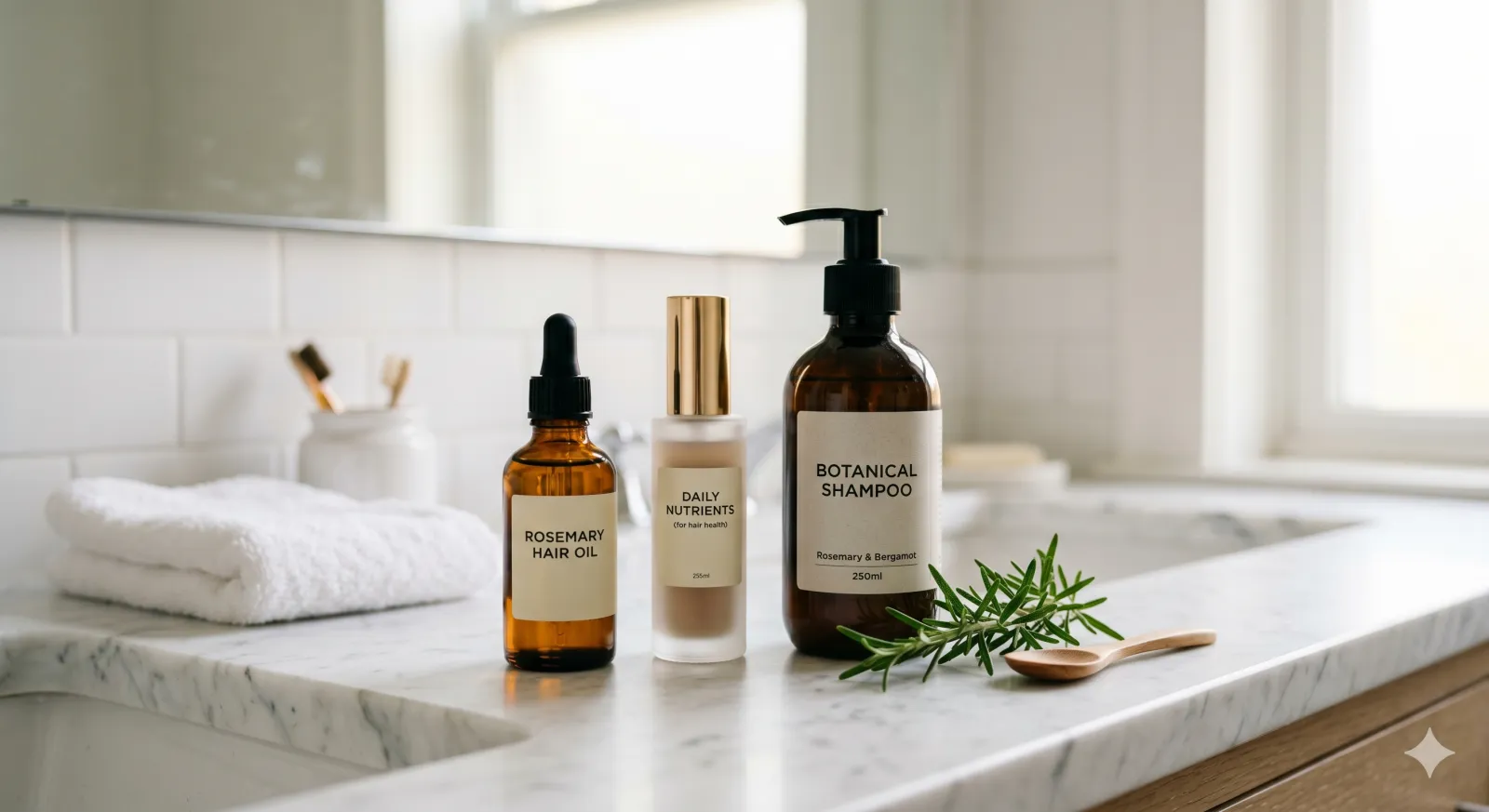
Rosemary oil is a reasonable addition to a daily routine. A single 2015 randomized trial found rosemary oil produced hair count improvements comparable to 2% minoxidil over 6 months, with less scalp irritation — a promising but singular result, not the decades of research behind minoxidil itself. Applying 3–5 drops to the scalp, massaging for a few minutes, and either leaving overnight or rinsing after 30 minutes is a common approach. A Japanese head spa routine at home combines follicle stimulation with deeper scalp care, and red light therapy at home has some evidence behind supporting the follicle growth phase as well.
Start This Week
- Take a part-line photo now — same angle, same light, monthly from here
- Book a blood panel: ferritin, vitamin D, TSH
- Order a sulfate-free shampoo and rosemary oil
- Book a dermatology appointment to discuss oral minoxidil
- Bookmark this guide for reference
Can Hair Grow Back After Thinning?
Timing Matters More Than Almost Anything Else
Often, yes — while follicles are still viable. Gradual miniaturization can frequently be slowed or partially reversed; complete follicle closure generally can’t be. Understanding that distinction is part of what separates people who see real recovery from those who don’t.
A typical minoxidil timeline: months one to three often bring a temporary shed as resting-phase hairs are pushed out to make room for new growth — the point where a lot of people stop, mistakenly thinking it isn’t working. Visible new growth often begins around month four, with density improvements more reliably assessed around six months and fuller results by twelve months of consistent use.
Hair and skin share hormonal drivers — the same estrogen decline behind hair thinning also affects skin collagen and elasticity. The anti-aging skincare guide for the 40s and 50s addresses both from a related angle.
💆 Pro Tip
On day one of any new treatment, take a photo — same lighting, same part position, every four weeks. Change here is gradual, and without a visual baseline it’s easy to judge progress against memory rather than reality.
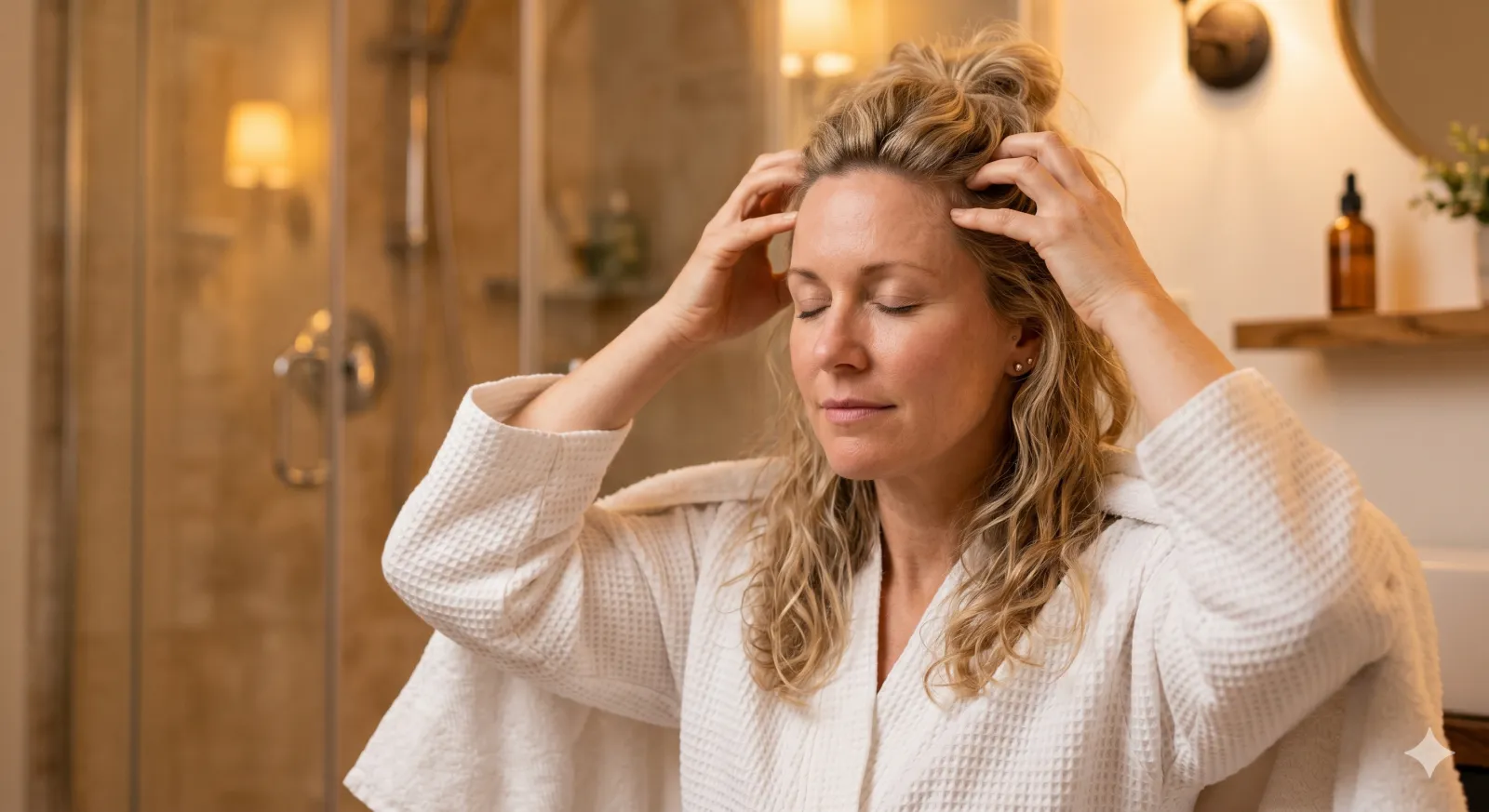
A dermatologist’s take on what actually works for hormonal hair thinning.
Frequently Asked Questions
Is it normal to have thinning hair at 40?
Common, yes. Something to ignore, no. A meaningful share of women notice hair changes by their mid-to-late 40s, often linked to declining estrogen and DHT sensitivity. It tends to respond well to treatment when addressed before it becomes advanced.
What’s a good treatment framework for thinning hair?
A DHT-addressing treatment (oral or topical minoxidil, or finasteride for eligible postmenopausal women), targeted supplementation based on actual blood work (vitamin D, ferritin, zinc), and a consistent daily scalp routine (sulfate-free shampoo plus rosemary oil). Combining all three tends to outperform any single approach.
What vitamin is lacking if hair is falling out?
Vitamin D and ferritin are the more clinically relevant deficiencies for most women, not biotin. A ferritin level under roughly 40 ng/mL can be linked to shedding even within a standard “normal” lab range. A blood panel beats guessing.
How should a woman in her 40s approach thinning hair?
Get a blood panel (ferritin, vitamin D, TSH), start a daily scalp routine with rosemary oil and a sulfate-free shampoo, and book a dermatology appointment to discuss oral minoxidil. Combining a prescription option with a consistent topical routine tends to produce faster, more sustained results for more significant thinning.
Can hair grow back after thinning?
Often, yes, if follicles are still active. Thinning at this age is usually gradual rather than sudden, which means there’s typically a real window for recovery. Minoxidil users generally see reduced shedding within a few months and new growth starting around months four to six. Starting earlier tends to leave more follicles able to respond.
Not medical advice — consult a licensed dermatologist before starting any new hair loss treatment.
Take a photo of the part line tonight. Order rosemary oil tomorrow. Book the dermatology appointment this week. 💇
You May Also Like
 Oral Minoxidil for Women: Dosage, Side Effects & Results
 Hormone Test for Women: 7 Essential Panels You Need
 High Cortisol Symptoms in Women: 10 Warning Signs to Know
 Japanese Head Spa: 5 Benefits & At-Home Routine Guide
 Best Menopause Supplements for Hot Flashes Over 50: Proven Options That Work
 Hormonal Acne Chin: 5 Proven Treatments That Actually Clear It
 Magnesium Glycinate for Perimenopause Sleep: What Works
 Gum Disease Treatment at Home: How to Stop Bleeding Gums Fast