More international visitors are adding a dermatology appointment to their Seoul itinerary. A Korean skin treatment may address concerns such as hyperpigmentation, melasma, active acne, acne scars, facial redness, wrinkles, or dry and congested skin.
But a famous procedure is not automatically the right procedure. Two people with what looks like the same dark spot or acne scar may need very different care. Skin type, medications, allergies, previous treatments, and travel plans all matter. Start with a diagnosis, not a package name or a promotional price.
Why Dermatology Is a Major Part of Korean Medical Tourism
According to Korea’s Ministry of Health and Welfare, about 2.01 million international patients visited Korea in 2025. Dermatology accounted for approximately 1.31 million visits, or 62.9% of all reported clinical specialties. Seoul received about 1.76 million international patients, representing 87.2% of the national total.

A consultation should come before any laser, injection, peel, or facial treatment in Korea.
1. Hyperpigmentation and Dark Spots
Hyperpigmentation is an umbrella term for areas of skin that become darker than the surrounding skin. Americans may search for “hyperpigmentation,” “dark spots on face,” “sun spots,” or “post-inflammatory hyperpigmentation.” These phrases do not always describe the same condition.
A dermatologist may examine whether pigment appears closer to the surface or deeper in the skin before discussing laser toning, a picosecond laser, topical medication, or another plan. Marks left after acne or inflammation may behave differently from freckles or age-related sun spots.
2. Melasma: Usually Managed, Not Simply “Erased”
Melasma often appears as symmetrical brown or gray-brown patches on the cheeks, forehead, bridge of the nose, or upper lip. Sun exposure, hormones, pregnancy, and genetics may all play a role.
In Korean dermatology, a clinician may consider conservative laser toning, a picosecond laser, barrier care, topical medication, or a combination plan. Melasma can return, and aggressive treatment may worsen pigmentation in some people. A responsible consultation should discuss recurrence, sun protection, expected improvement, and the risk of post-inflammatory hyperpigmentation.
3. Active Acne Requires the Right Diagnosis
Active acne is not the same as a basic cleansing facial. Blackheads, whiteheads, inflammatory pimples, and cystic acne may require different approaches. Depending on the diagnosis, a Seoul dermatologist may discuss prescription medication, extraction, a superficial peel, sebum management, light-based care, or laser treatment.
Tell the clinic about every acne medicine you take, including the exact name and dose. Also disclose allergies, pregnancy, or the possibility of pregnancy before treatment. A short trip is not a good reason to combine several aggressive procedures at once.
4. Acne Scar Treatment Depends on Scar Type
Ice-pick, boxcar, and rolling scars do not respond in the same way. A dermatologist may consider fractional laser treatment, radiofrequency microneedling, subcision, chemical reconstruction, or a staged combination. This is one reason an online “best treatment” list cannot replace an examination.
Acne scar treatment can cause redness, swelling, crusting, or temporary discoloration. Ask how your skin may look during the rest of your trip, especially if you have photos, outdoor activities, or a flight scheduled soon afterward.
5. Facial Redness and Rosacea
Frequent flushing, visible blood vessels, burning, or persistent facial redness may be related to rosacea, but not every red face is rosacea. A dermatologist may evaluate triggers and discuss medication, barrier care, or a vascular laser when appropriate.
Heat, alcohol, strong sunlight, strenuous exercise, and hot baths can aggravate facial redness in some people. If your Seoul plans include a jjimjilbang, hiking, nightlife, or long days outdoors, share that itinerary during the consultation. A rosacea treatment plan should fit both your diagnosis and your travel schedule.
6. Wrinkles, Skin Laxity, and Skin Boosters
Seoul clinics offer many wrinkle and firmness procedures, including botulinum toxin injections, ultrasound lifting, radiofrequency treatments, and injectable skin boosters. Botox-type products may be used for expression lines, while energy-based devices such as Ultherapy or InMode may be discussed for selected firmness or contour concerns.
Travelers also search for Rejuran Korea treatments. Rejuran is an injectable product, so ask about the exact product, treatment area, amount used, expected swelling or bruising, aftercare, and whether it is appropriate for your skin. Do not assume that every product marketed as a “skin booster” has the same ingredients or evidence.
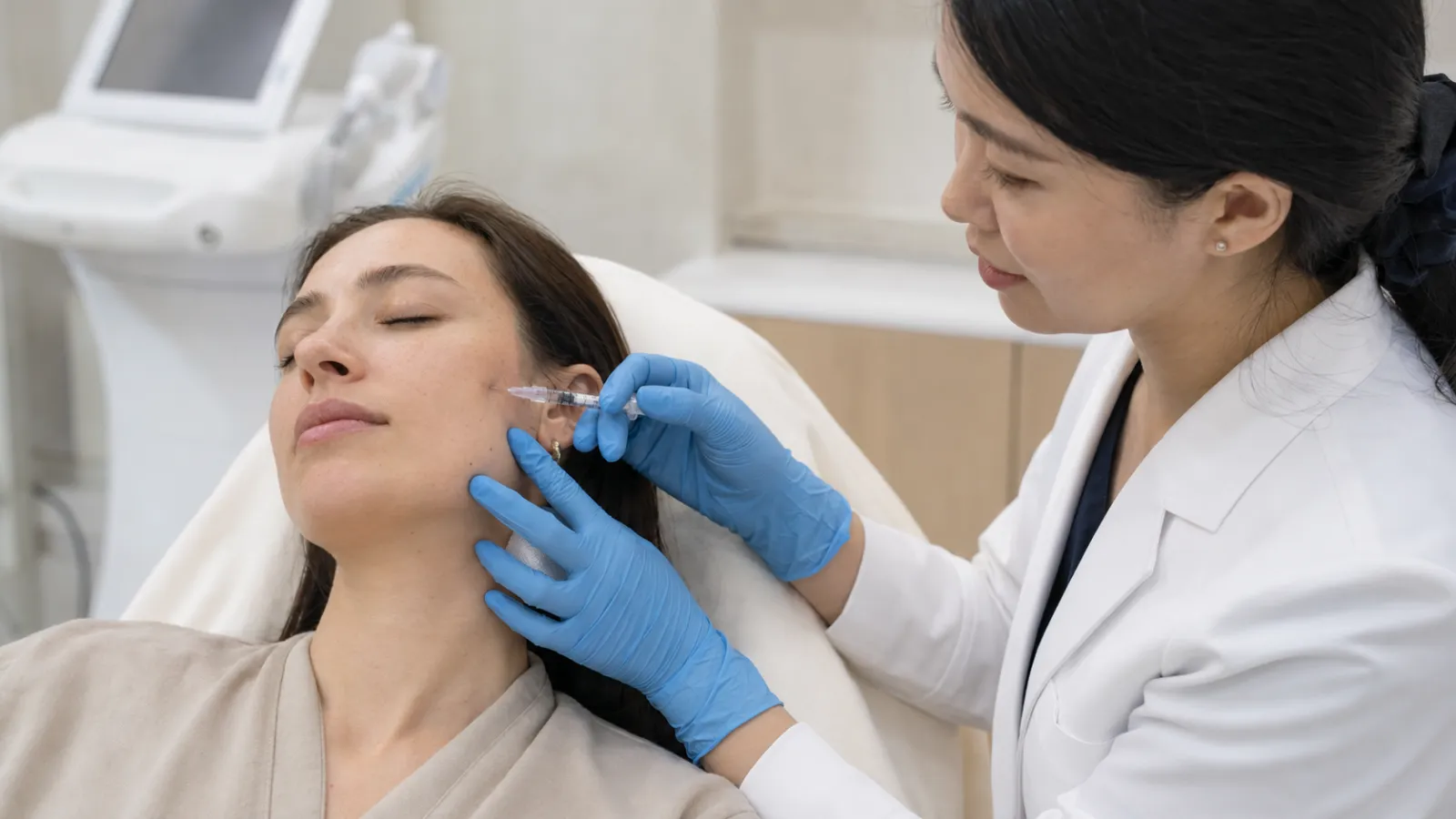
For an injectable Korean skin treatment, confirm the exact product, dosage, treatment area, expected downtime, and aftercare before proceeding.
7. Aqua Peel and Other Light Facials in Korea
Aqua Peel and hydro-facial-style services are commonly described as treatments that remove surface debris and dead skin while delivering hydration. These lighter facials in Korea may appeal to visitors who want a low-downtime experience after a long flight.
They are not treatments for deep acne scars, chronic melasma, or rosacea. Inflamed, injured, or highly sensitive skin may still react. Ask whether a facial is suitable before allowing exfoliation, suction, acids, or active ingredients to be used.

Low-downtime does not mean zero risk. Ask what products and devices will be used on your skin.
How Much Does a Korean Skin Treatment Cost?
There is no single Seoul price list. Cost can change by clinic location, doctor, device, product brand, dosage, treatment area, anesthesia, and aftercare. A promotional price on an English clinic page may apply only to first-time visitors, selected weekdays, or a limited treatment area.
Before paying for any facial treatment in Korea, request a written quote that answers the questions below.
| What to confirm | Why it matters |
|---|---|
| Consultation fee | It may be separate or credited toward treatment. |
| VAT | Confirm whether tax is included in the displayed price. |
| Product and dosage | Low prices may reflect a different brand, quantity, or treatment area. |
| Anesthesia and aftercare | Numbing, medication, masks, and follow-up may cost extra. |
| Cancellation and refund rules | Travel delays can affect an appointment. |
| Post-treatment contact | You need a clear way to ask for help after leaving the clinic. |
Rules for tourist VAT refunds on cosmetic procedures can change. Do not build your budget around a refund until the clinic and an official source confirm that your procedure is currently eligible.
How Foreign Visitors Can Check a Seoul Skin Clinic
An English website and WhatsApp button are useful, but they do not prove clinical quality. Before choosing a Seoul skin clinic, check the following:
- Confirm that the clinic is registered to serve or attract international patients.
- Ask whether a board-certified dermatologist will examine you and perform or supervise the procedure.
- Confirm whether the doctor speaks English or an interpreter will attend the consultation.
- Request the full price in writing before treatment.
- Ask for the exact device, product, dosage, and treatment area.
- Discuss common side effects, warning signs, downtime, and aftercare.
- Get a phone number or messaging contact for post-treatment concerns.
- Be cautious if several procedures are recommended before a proper examination.
Use Korea’s official Medical Korea system for registered international-patient institutions. You can also review the Korea Tourism Organization’s explanation of KAHF-accredited hospitals serving international patients. Registration or accreditation is an important check, but it does not replace your own consultation and cost review.
When Should You Schedule a Procedure During Your Seoul Trip?
There is no universally safe “day two or day three” rule. A light facial and an injectable or resurfacing laser can have very different recovery periods. The right date depends on the procedure, your medical history, the clinic’s follow-up plan, and when you leave Korea.
- After arrival: Recover from the flight and check whether your skin is unusually dry, irritated, or inflamed.
- Before booking: Send the clinic your travel dates, major activities, and departure time.
- Choose the treatment date: Base it on expected downtime and whether you can return to the clinic if needed.
- After treatment: Follow the clinic’s restrictions on sunlight, exercise, alcohol, swimming, saunas, makeup, and skincare products.
- Before departure: Leave enough time to contact or revisit the clinic if you develop an unexpected reaction.
What to Bring to the Consultation
- Passport or another accepted form of identification
- A list of current medicines and supplements
- Known allergies and previous treatment reactions
- Names or photos of prescription creams and active skincare products
- Your main skin concern, rather than only a requested product name
- Your complete Seoul itinerary and departure date
- The clinic’s emergency or aftercare contact details
Frequently Asked Questions
What skin treatments can foreign tourists get in Korea?
English-language clinic menus in Seoul commonly list care for pigmentation, melasma, active acne, acne scars, facial redness, wrinkles, skin laxity, and light facial treatments. Availability does not mean every option is appropriate for every visitor. Start with a dermatologist’s assessment.
Are Seoul dermatology treatments cheaper than in the United States?
Some procedures may be offered at lower prices, but advertisements are difficult to compare. Product brand, dosage, treatment area, doctor involvement, anesthesia, and aftercare can change the final cost. Request an itemized written quote.
Can I find an English-speaking dermatologist in Seoul?
Some clinics in Gangnam, Myeongdong, Hongdae, and other international-visitor areas provide English support. Confirm whether the doctor speaks English directly or whether an interpreter or coordinator will join the consultation.
Should I get a skin treatment on the last day of my Korea trip?
It is usually safer to leave time for recovery and follow-up rather than booking immediately before departure. The required interval depends on the exact procedure and your health, so ask the treating clinic for individualized advice.
How can foreigners verify a Korean dermatology clinic?
Check the official Medical Korea system for international-patient registration and review KAHF information where relevant. Also verify the doctor’s specialty, obtain a written quote, and ask about risks, recovery, and aftercare before paying.
Choose the Clinic Before You Choose the Package
The most famous or cheapest procedure is not automatically the best one for your skin or your trip. Verify the institution, speak with a qualified clinician, and get the total cost and recovery plan in writing.
Check registered institutions through Medical KoreaYou May Also Like
 Olive Young Korea: 10 Best Korean Skincare Must-Haves
 Free Seoul Metro Map & Tourist Maps: Official Downloads
 South Korea Travel Budget: One Month in Korea for $1,000
 Seoul to Jeju: Flights, Travel Time & Airport Guide
 Seoul Subway Map & Transfer Guide: 7 Rules for Seoul Travel
 Things to Do in Seoul: 15 Proven Picks Every First-Timer Needs
 Korea eSIM at Incheon Airport: Seoul Travel Guide
 Naver Maps English: 7 Tips to Navigate Korea Like a Local
 5 Best Areas to Stay in Seoul Near the Subway
 Apartment in Seoul: 5 Best Options for Foreigners