Not medical advice — consult your doctor or physical therapist before starting a new exercise routine, especially with an existing knee condition or recent injury.
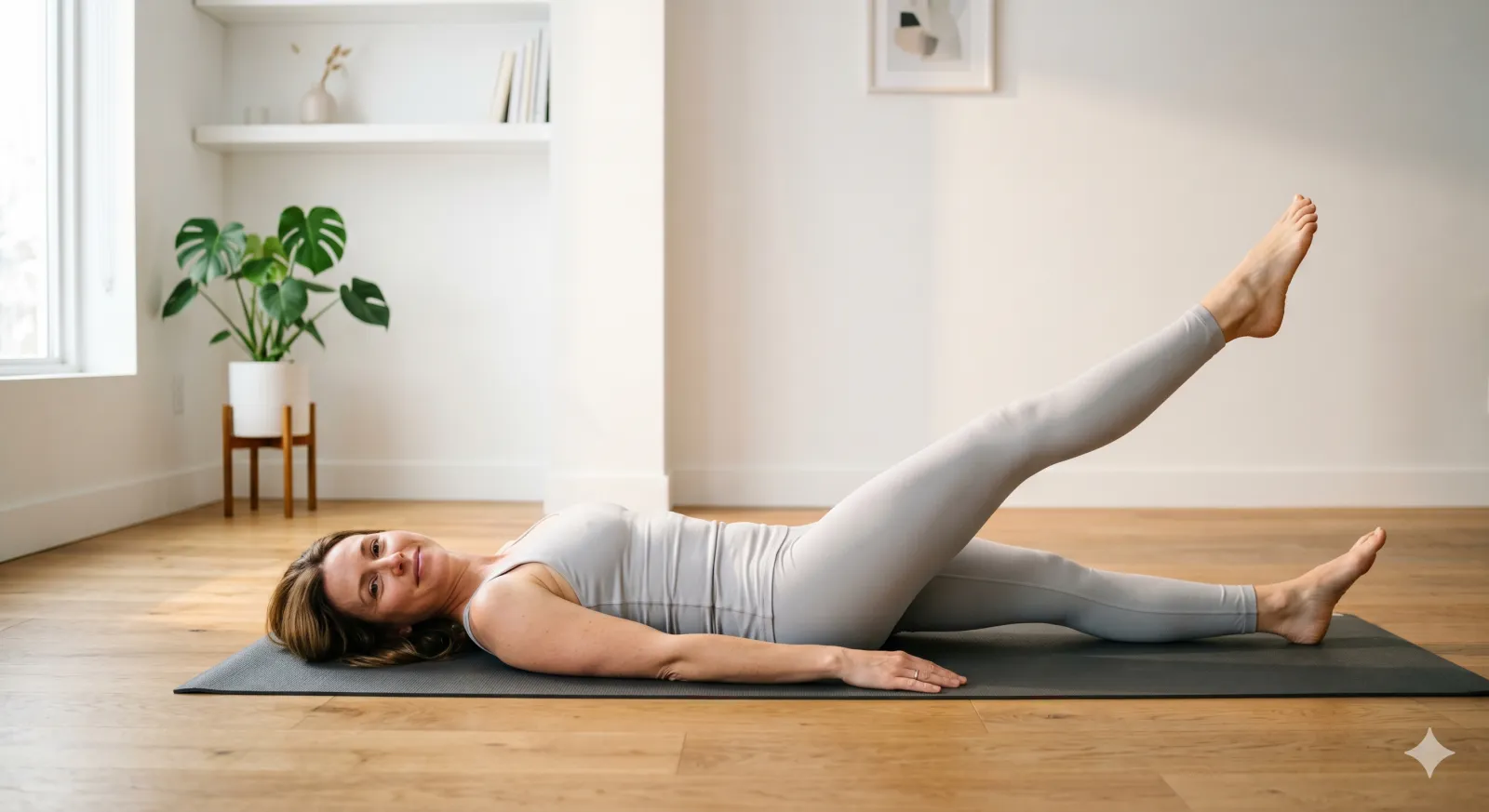
Straight leg raises are one of the safest quad strengthening moves for bad knees.
Starting to skip favorite activities because of stubborn joint pain? That familiar ache after the first few steps in the morning — the one that makes the stairs feel harder than they used to — is genuinely frustrating, and it’s worth understanding why it happens before it gets worse.
If the muscles around the knee aren’t actively strengthened, the pain tends to get worse over time. Start with one exercise today. Your knees won’t care how many you bookmarked. No gym or equipment needed — here are 7 to choose from.
Key Takeaways
- Resting too much can actually make knee pain worse over time
- The two muscle groups that matter most: quads and glutes
- If pain is active right now, start with isometric exercises — no joint movement needed
- A few minutes a day can help break the cycle for many people
- Sharp or stabbing pain means stop and talk to a physical therapist
Can You Fix Bad Knees With Exercise?
Why Movement Often Helps More Than Rest
According to Mayo Clinic, regular low-impact exercise is one of the more effective ways to reduce knee pain and improve joint function for many people, including those with arthritis.
Knee cartilage has no direct blood supply — it gets nutrients largely through movement. Bending and straightening the knee helps circulate nourishment into the joint. Physical therapists often describe this as movement acting like lubrication: when movement stops, cartilage and surrounding muscles can weaken, which tends to make pain worse.
That doesn’t mean pushing through sharp, stabbing pain — muscle soreness and joint pain are two different things, and telling them apart matters. For most people with aching, stiff, or mildly painful knees, gentle movement tends to be the more effective approach.
What’s the Biggest Mistake That Makes Knees Worse?
The Trouble With High-Impact Cardio
The most common misstep when starting a new knee routine is jumping straight into running, jumping jacks, or high-impact aerobics. Running loads the knee with several times body weight on every step — for a knee that’s already inflamed or weakened, that repeated impact can slow recovery.
The second common mistake is stretching without any strength work. Flexibility matters, but the quad muscles (front of the thigh) and glutes act as shock absorbers for the knee. When those muscles are weak, the joint takes on more of the load by itself.
The fix isn’t to stop exercising — it’s exercising differently. That’s what the seven routines below are built around.
Quad and Glute Exercises for Bad Knees
The Foundation Moves
These are the four worth learning first — no equipment needed, all doable at home.
Lie on your back with one leg bent and one leg straight. Slowly lift the straight leg to about 45 degrees, hold for 5 seconds, then lower. Zero knee movement, strong quad activation. Aim for 10 reps, 3 sets per leg.
Stand with your back flat against a wall and slide down to a comfortable angle (start around 45 degrees, not 90). Hold for 20–30 seconds. This isometric move builds quad and hamstring strength without joint impact.
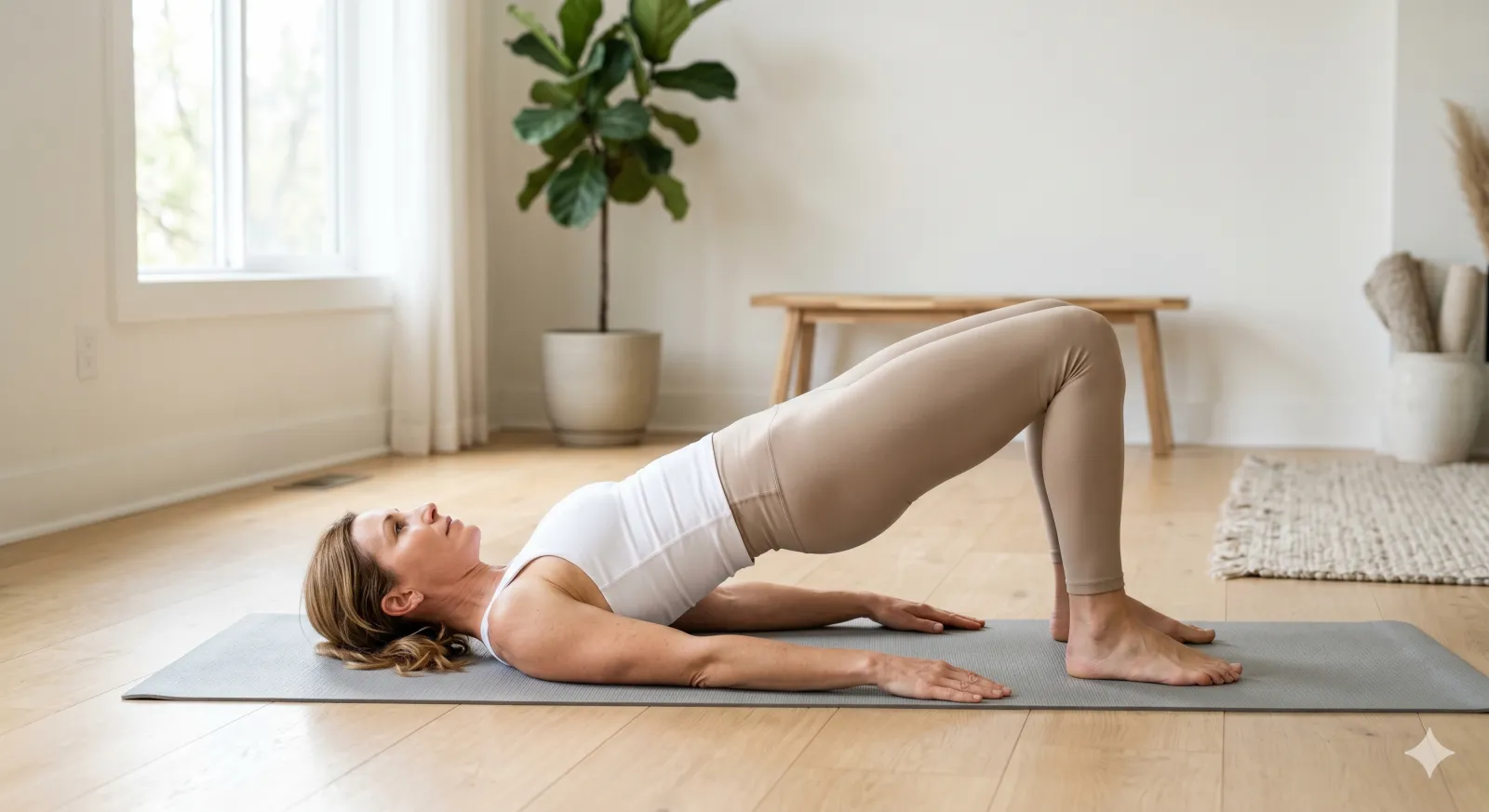
Lie on your back, knees bent, feet flat on the floor. Press through your heels and lift your hips toward the ceiling, hold 2 seconds at the top, then lower slowly. Stronger glutes help redistribute load away from the knee joint.
Lie on your side with knees bent, feet together. Slowly rotate your top knee open like a clamshell. This targets the gluteus medius, which helps stop knees from caving inward when walking or climbing stairs. 15 reps each side is a solid starting point.
Can I do squats with bad knees?
Regular deep squats put real pressure on already-sensitive joints. Starting with wall sits or chair-assisted squats is a gentler entry point — increase range of motion gradually, only when it feels ready and pain-free.
💡 Pro Tip
Sharp, stabbing pain during any of these exercises means stop immediately. Switch to an isometric exercise instead — these keep the joint still while still building muscle.
How to Stop Knees From Hurting As You Age
Daily Knee Mobility Exercises
Strength is only half the equation. The other half is mobility — keeping joints moving through their full range. Past the 40s and 50s, morning stiffness tends to stop being a minor inconvenience.
Lie on your back with legs straight. Slowly slide one heel toward the glutes as far as comfortable, then slide back out. This is one of the first exercises physical therapists often prescribe after knee surgery, and it works just as well for everyday stiffness.
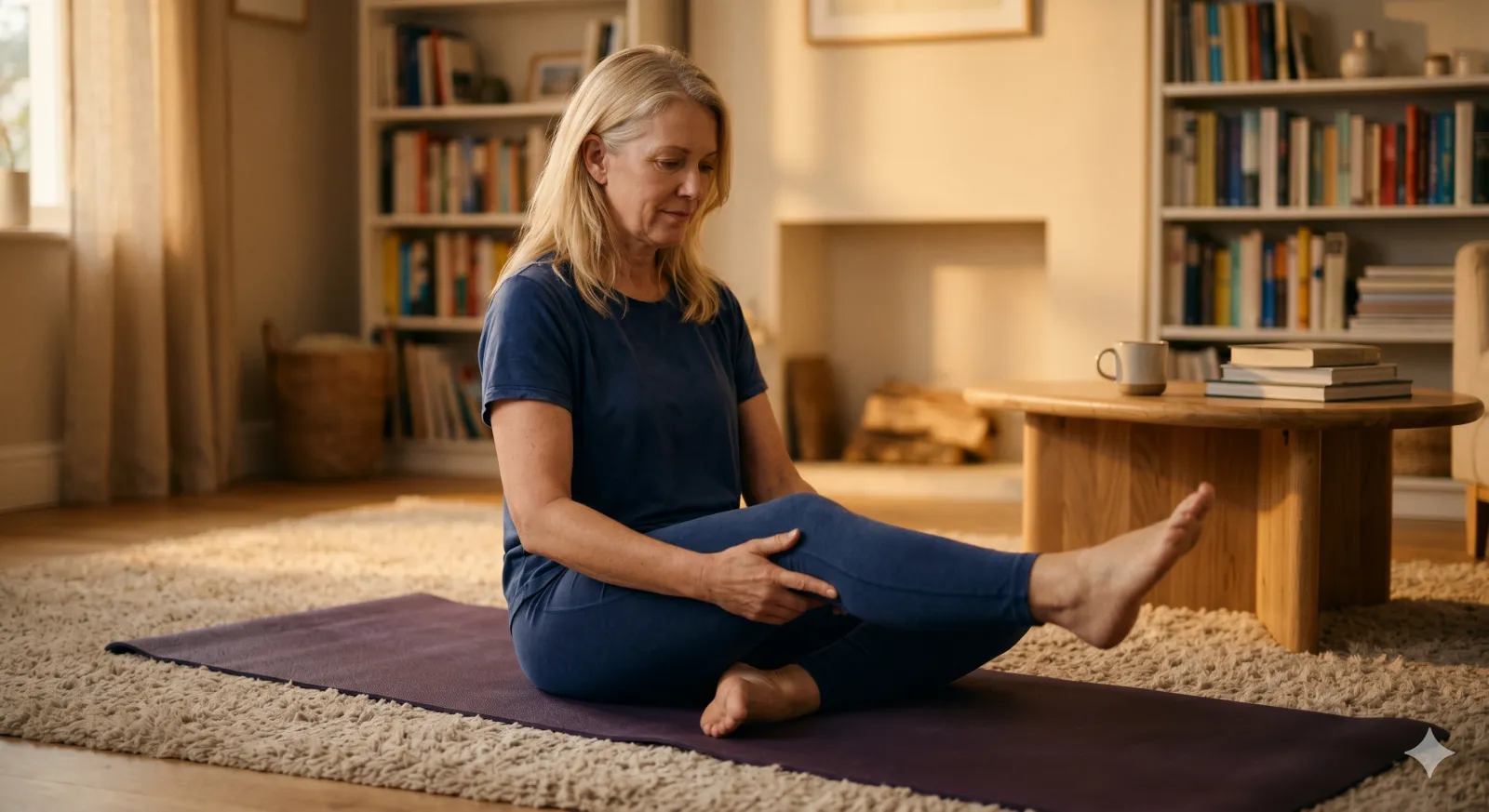
Sit in a chair and slowly straighten one leg until it’s parallel to the floor. Hold for 5 seconds, then lower slowly. Works at a desk, on the couch, anywhere seated — a low-impact option that fits into a busy day.
Reduced joint mobility with age is often less about aging itself and more about reduced movement. A few consistent minutes each morning can genuinely change how joints feel within a few weeks.
For another low-impact routine that builds real strength, wall pilates for beginners pairs well with everything here.
What Do Experts Recommend for Knee Pain?
The Case for Isometric Exercise
AARP highlights isometric exercises as one of the more reliably recommended options for knee pain management — strengthening the muscle without moving the joint at all, which matters during a flare-up or for anyone nervous about making things worse.
Sit on the floor with legs extended. Place a rolled towel under one knee. Press the back of the knee down into the towel, squeezing the quad hard, and hold for 10 seconds. No knee bending required. 3 sets of 10 each side.
Starting here makes sense if pain has been active lately — building toward the other six exercises as strength and confidence grow. Consistency matters more than intensity.
Alongside physical recovery, nervous system regulation exercises can be a useful complement, since tension patterns often make pain feel worse than it needs to.
FACTLY9 Evidence Snapshot
Based on the clinical guidance cited above (Mayo Clinic, AARP) and this article’s own explanation of joint mechanics — not a substitute for a doctor or physical therapist’s assessment of your specific knee.
FACTLY9 7-Day Knee Strength Starter
Start Today
- Do 10 Straight Leg Raises on each leg right now
- Try a 20-second Wall Sit against a wall
- Add Heel Slides to the morning routine before getting out of bed
- Start a simple pain journal — note which movements cause discomfort
- If pain is severe or persists past 2 weeks, book a physical therapy appointment
Frequently Asked Questions
Can I do these exercises every day?
The gentler moves — Heel Slides, Seated Knee Extensions, and Isometric Quad Squeezes — are generally fine daily. For more demanding moves like Glute Bridges and Wall Sits, every other day gives muscles time to recover.
Are there foods that help with knee pain?
Omega-3-rich foods like salmon, anti-inflammatory ingredients like turmeric, and vitamin C-rich produce all support joint health. Managing weight through diet also reduces the load on the knees with every step.
How do I know if an exercise is safe for my knees?
A general rule of thumb: pain at a 2/10 or below during an exercise is usually fine — that’s muscles working. Pain at 4/10 or above, or any swelling afterward, means backing off or stopping the exercise.
Should I wear a knee brace while exercising?
A light compression sleeve can add stability and reduce swelling during workouts. It’s worth not relying on it as a crutch, though — building the muscles around the knee is what creates long-term stability. The brace is support, not a solution.
When should I see a doctor about knee pain?
If pain has lasted more than 2 weeks, if the knee is swollen or warm to the touch, or if bearing weight on it is difficult, it’s worth seeing a doctor. Earlier attention tends to lead to better outcomes.
Not medical advice — consult your doctor or physical therapist before starting a new exercise routine, especially with an existing knee condition or recent injury.
Every day without strengthening is a day the muscles get a little weaker and the joint works a little harder. Pick one exercise from this list and do it today. 🦵
You May Also Like
 Female Lower Back Pain: What Your MRI Might Be Missing
 Somatic Exercises for Weight Loss: Free 28-Day Plan
 Wall Pilates for Beginners: The Free 28-Day Challenge Plan
 7 Free Nervous System Regulation Exercises at Home
 Chronic Sciatica: Is It Permanent or Are You Actually Healing?
 High Cortisol Symptoms in Women: 10 Warning Signs to Know
 Back Pain From Sitting: Why Driving and Desk Work Hurt
 Rheumatoid Arthritis in Hands: The Red Flag You’re Ignoring