Not veterinary advice — always check with your vet before changing your cat’s diet.
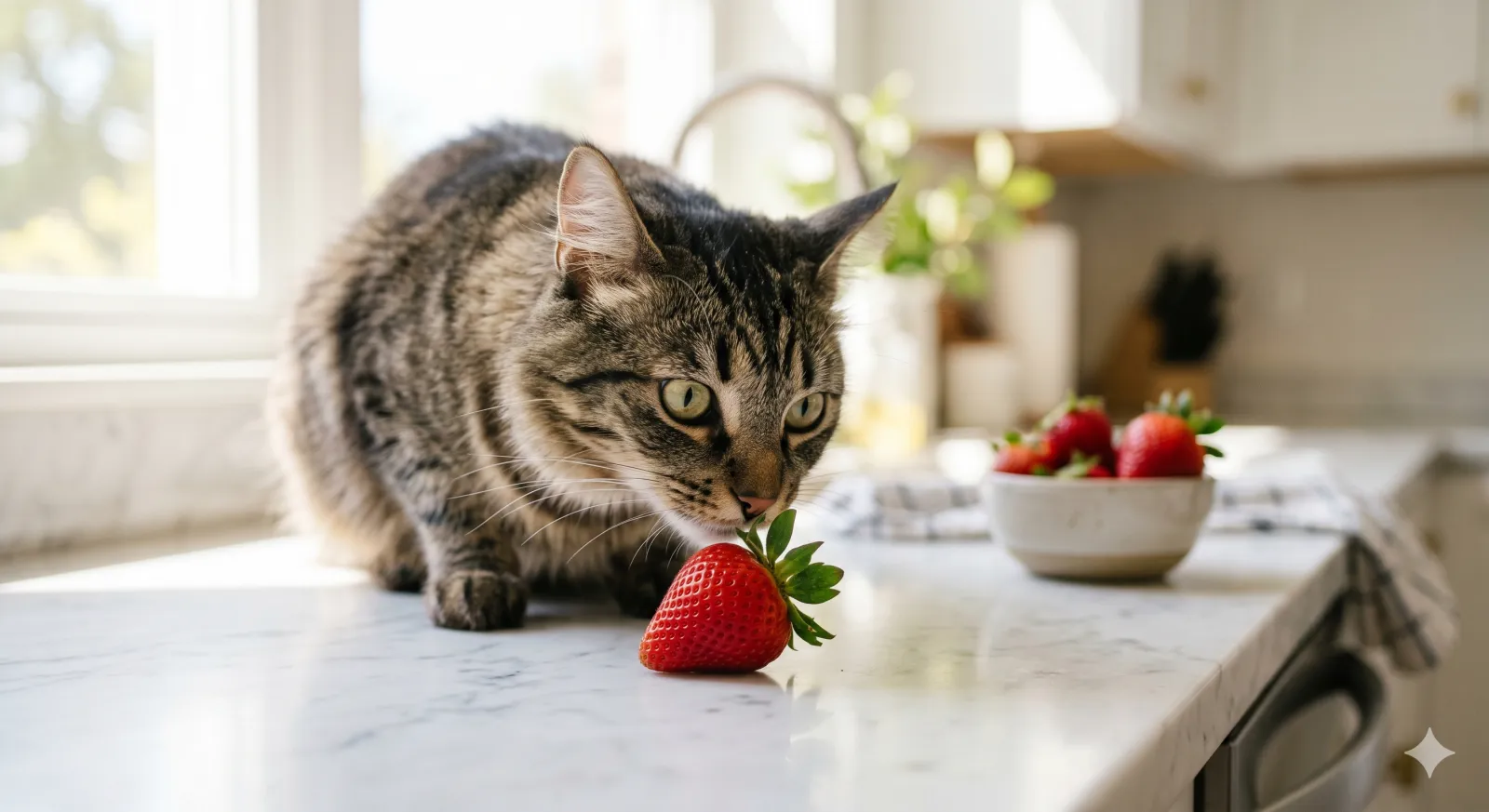
Can cats eat strawberries? Yes — but only in small amounts, with the leaves and stem removed.
You’re sitting down with a bowl of strawberries and your cat walks over, sniffs one, and looks at you like they’re waiting for permission. The short answer is yes — strawberries are non-toxic to cats. But there’s a meaningful difference between “not toxic” and “safe to serve any way you like.” The leaves need to come off. The portion needs to stay small. And a few situations call for skipping it entirely.
The five rules below cover which parts to remove, how much is too much, and how strawberries compare to other fruits your cat might encounter.
Quick Answer — Strawberries and Cats
- Strawberries are non-toxic to cats and safe in small amounts
- Cats can’t taste sweetness, so fruit is never a dietary need
- Wash thoroughly, remove all leaves and the stem, cut into small pieces
- No more than half a small strawberry per serving, once or twice a week
- Overfeeding sugar can contribute to obesity or diabetes over time — cats with existing health conditions need vet approval first
Can Cats Eat Strawberries? Here’s What the Science Says
Strawberries appear on the ASPCA’s non-toxic plant list for cats. Unlike grapes or raisins — which can trigger acute kidney failure even in tiny amounts — strawberries contain no compounds that poison cats. The flesh provides small amounts of vitamin C, folate, potassium, and antioxidants, along with high water content that can offer a mild hydration boost on warm days.
None of those nutrients are essential for cats, though. Understanding what cats eat naturally explains why — and it changes how you think about fruit as a treat entirely.
Why Cats Don’t Actually Need Fruit
Cats are obligate carnivores. Their bodies are built to run on animal protein and fat — not carbohydrates or fruit sugars. Unlike humans or dogs, cats lack the taste receptors that register sweetness. When your cat sniffs a strawberry, they’re responding to moisture and scent, not flavor. Your cat doesn’t need fruit. It needs your judgment about how much and how often.
Regularly? No — but as an occasional treat with proper preparation, a small amount won’t hurt a healthy adult cat. The word “preparation” is doing a lot of work in that sentence. Here’s exactly what it means.
How to Safely Feed Strawberries to Your Cat
Preparation is where most mistakes happen. The strawberry flesh is fine. Everything around it — the leaves, the stem, the green cap — needs to go before anything reaches your cat. Dried strawberries, strawberry jam, and strawberry-flavored treats are also off the table: the sugar concentration is far too high, and some products contain xylitol, which is toxic to cats.
Fresh, washed, leaf-free, stem-free, cut into small pieces — that’s the only version that belongs anywhere near your cat’s food bowl.
Are Strawberry Leaves Poisonous to Cats? And How Much Is Too Much?
Strawberry leaves are not classified as toxic by the ASPCA — but they’re rough, fibrous, and hard for cats to digest. Eating them can cause stomach upset, vomiting, or diarrhea. Remove the leaves completely, including the green cap, before offering any piece to your cat. The same applies to the stem.
Vets consistently recommend no more than half a small strawberry per serving, no more than once or twice a week. Treats of any kind — including fruit — should stay under 10% of your cat’s total daily calorie intake. For diabetic, overweight, or senior cats, check with your vet before offering strawberries at all. If you’re also thinking about what plants your cat might be nibbling on at home, always double-check a plant’s toxicity before bringing it into a house with cats — many common houseplants aren’t as safe as they look.

Leaves off, stem gone, cut small — that’s the whole prep routine.
Can Cats Eat Strawberries With Other Fruits? Safe vs. Toxic List
It’s worth knowing where strawberries sit on the wider fruit safety spectrum. A handful of fruits are fine in small amounts. Several are genuinely dangerous — and the dangerous ones can cause serious harm even in tiny quantities.
Blueberries and strawberries are both non-toxic, but offering two fruit types at once doubles the sugar load. Stick to one at a time, in small amounts. Raspberries follow the same rule — safe in moderation, stems removed. Watermelon is also fine with seeds and rind completely removed. For a full breakdown, our guide on cats and watermelon covers everything you need to know.
What Fruit Is Toxic to Cats — and Why Butter Is Also a Problem
Grapes and raisins are at the top of the danger list. Even a small amount can cause acute kidney failure in cats — the exact mechanism isn’t fully understood, which makes them even more dangerous. Never leave either within reach. Citrus fruits — oranges, lemons, limes, grapefruit — contain citric acid and essential oils that are toxic to cats, even in the skin and leaves of the plant.
Butter isn’t toxic, but it’s extremely high in fat for a different reason entirely. Adult cats lose most of their lactase enzyme after kittenhood, making dairy difficult to digest. High-fat foods can trigger pancreatitis. The standard for any treat stays the same: low sugar, low fat, non-toxic, and served in small amounts.
The 5 Vet Rules for Feeding Strawberries to Cats
Five simple rules are genuinely all it takes to turn a potentially risky situation into a safe treat. Thirty seconds of prep makes the difference.
Rule 1: Remove all leaves, stems, and the green cap. They’re not toxic but they cause digestive upset.
Rule 2: Wash thoroughly under cold water to remove pesticide residue.
Rule 3: Cut into very small pieces — smaller than you think necessary. Cats have small throats and choking is a real risk with whole berries.
Rule 4: No more than half a small strawberry per serving, once or twice a week maximum.
Rule 5: If your cat is diabetic, obese, senior, or has any health condition — ask your vet first. For general fruit safety guidelines, the ASPCA toxic and non-toxic plant list is one of the most comprehensive references available.
First-Time Feeding Checklist
The first time you give your cat strawberry, start with one piece the size of a fingernail. Watch for the next 24 hours — no vomiting, no diarrhea, no lethargy means you’re clear to try again. Most cats lose interest after one bite. Owners usually worry more than the cat does. If your cat sniffs it and walks away, that’s completely normal. Cats can’t taste sweetness, so indifference is just biology. After that first test, just stick to the five rules every time.
🌿 Pro Tip
Take the strawberry out of the fridge about 10 minutes before serving. Very cold food can cause digestive discomfort in cats. Room temperature is easier on their stomachs. While you’re at it, prep a few extra pieces, store them in a small airtight container, and you’ll have ready-to-serve cat-safe strawberry pieces for the next couple of days — no prep required at treat time.

A cat expert breaks down the full strawberry safety question — benefits, risks, and how to serve it right.
Frequently Asked Questions
What happens if my cat eats a strawberry?
If your cat ate a small piece of prepared strawberry, they’ll most likely be completely fine — strawberries are non-toxic. If they ate the leaves or stems, mild stomach upset is possible but serious harm is unlikely. If they ate a large amount, monitor for vomiting or diarrhea. If symptoms persist beyond 24 hours, contact your vet.
How much strawberry can a cat eat?
No more than half a small strawberry per serving, once or twice a week. Treats of any kind should stay under 10% of your cat’s total daily calorie intake. For a small cat, one or two bite-sized pieces is genuinely enough. More than that introduces unnecessary sugar with no nutritional benefit for a carnivore.
Can cats eat strawberries and blueberries?
Both are non-toxic to cats. However, offering both at the same time doubles the sugar intake from a single treat session. Stick to one fruit type per serving and keep portions small either way. Blueberries and strawberries are both in the “safe but not necessary” category for cats.
Are strawberry leaves poisonous to cats?
Not technically toxic — but they cause digestive irritation and should always be removed before serving. Strawberry leaves are fibrous and tough for cats to process. The same applies to the stem and green cap. Remove everything except the clean red flesh, cut into small pieces, and you’re good.
What fruit is toxic to cats?
Grapes and raisins are the most dangerous — even tiny amounts can cause acute kidney failure and the safe threshold is essentially zero. Citrus fruits (oranges, lemons, limes, grapefruit) contain citric acid and essential oils that are toxic to cats, including the skin and leaves of citrus plants. Coconut and coconut oil can also cause digestive upset and fluid imbalance in larger amounts. When in doubt, check the ASPCA non-toxic plant and food list before offering anything new.
Not veterinary advice — always check with your vet before changing your cat’s diet.
This summer, if your cat is eyeing your strawberries, go ahead and share one small, leaf-free piece. Follow the five rules, and you’re both good. 🍓
You May Also Like
 Can Cats Eat Blueberries? Safe Serving Guide
 Can Cats Eat Watermelon? 5 Proven Vet Rules You Must Know
 Can Cats Eat Grapes or Raisins? The Kidney Risk Every Owner Must Know
 Can Cats Eat Peanut Butter? The Xylitol Risk You Must Check First
 Bingsu Guide: 5 Best Korean Summer Foods to Beat the Heat
 Vegetables Dogs Can Eat: A Complete Safety Guide
 Dementia Care: A Complete Guide to Stages, Safety, and Support
 Jjimjilbang Seoul: The Complete Guide for First-Timers