Not veterinary advice — always check with your vet before changing your dog’s diet.
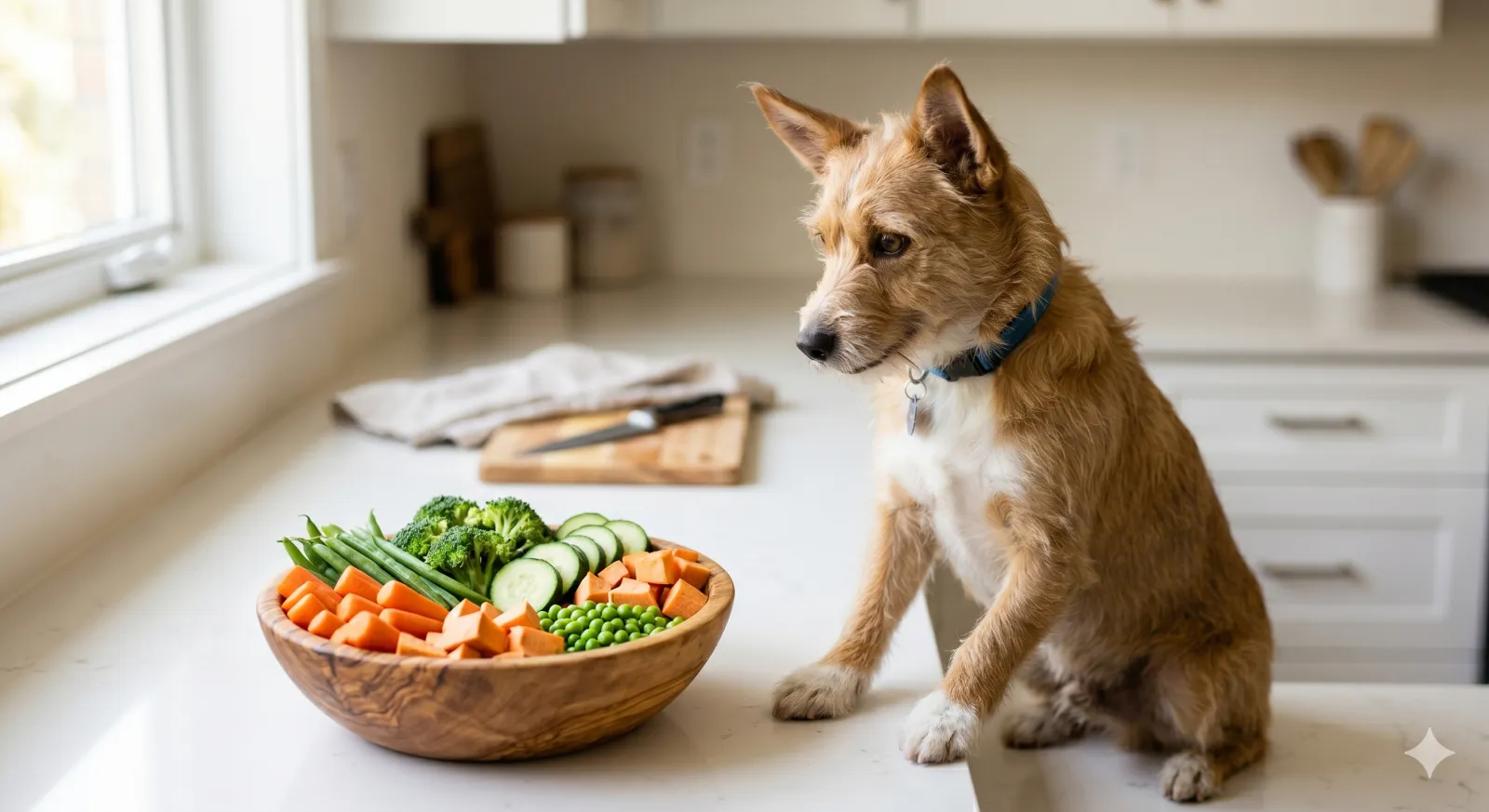
Ten vegetables are safe for dogs when washed, unseasoned, and cut small.
Your dog is sitting next to you in the kitchen, eyeing the carrots you’re chopping, and you’re not sure whether to share. The short answer is yes — many vegetables are genuinely good for dogs. But a few common ones, like onions and garlic, can cause serious harm even in small amounts.
This guide covers the 10 safest vegetables for dogs, the ones to keep away from your pet entirely, how often to serve them, and how to prepare everything correctly.
Quick Answer — Vegetables and Dogs
- Safe (washed, unseasoned, small pieces): carrots, peas, green beans, broccoli, sweet potato, cucumber, pumpkin, celery, spinach in small amounts, plain white mushrooms
- Never feed: onions, garlic, chives, leeks, avocado, raw potato, wild mushrooms, corn cobs
- Treats — including vegetables — should stay under 10% of daily calories
- Introduce anything new one at a time, then watch for 24 hours
What Vegetables Can Dogs Have? Here’s Why It Matters
Unlike cats, which are obligate carnivores, dogs are omnivores — their digestive systems can extract nutrients from both animal and plant sources. Vegetables provide fiber, vitamins, antioxidants, and minerals that support immune health, digestion, and coat quality. They’re also low in calories, which makes them ideal treats for dogs managing their weight.
That said, vegetables should never replace a complete, balanced dog food. The general rule from vets and the AKC is that treats — including vegetables — should make up no more than 10% of your dog’s total daily calorie intake. The other 90% should come from their regular food.
How to Prepare Vegetables for Dogs — The Right Way
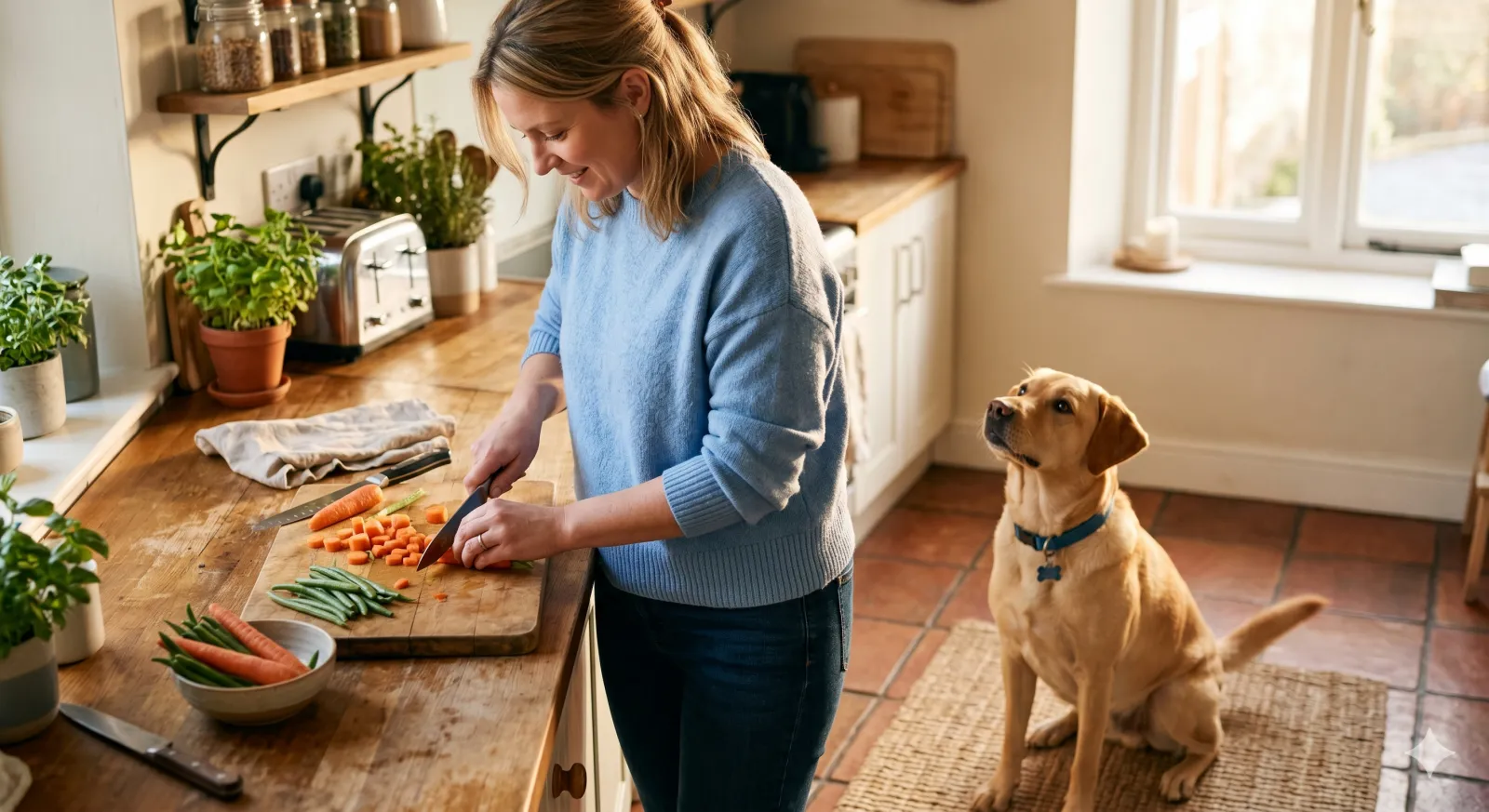
Three rules apply every time: wash thoroughly, cut into small pieces, and serve plain. No salt, no butter, no garlic, no seasoning of any kind. Many vegetables that are perfectly safe for dogs become dangerous the moment you add flavoring. Steam or boil vegetables lightly if you want to improve digestibility — but plain is always the safest approach.
Always introduce any new vegetable one at a time and in a small amount. Watch your dog for 24 hours. No vomiting, no diarrhea, no lethargy? You’re clear to continue. If your pet also shares your home with a cat, our guide on what cats can eat covers the same careful approach for feline-safe foods.
What Are the Best Vegetables for Dogs? 10 Safe Picks
These are the best vegetables for dogs, all confirmed safe by the AKC and veterinary nutritionists. Each one offers different nutritional benefits, and most can be served raw or lightly cooked depending on your dog’s preference.
1. Carrots — Rich in beta-carotene and vitamin A. Safe raw or cooked. Great for dental health — frozen carrots make an excellent chew treat on warm days.
2. Peas — Packed with protein, fiber, and vitamins B and K. Fresh or frozen peas are fine. Avoid canned peas — the sodium content is too high.
3. Green Beans — Low calorie and high fiber. One of the best picks for weight management. Plain, unsalted, and unflavored only.
4. Broccoli — High in vitamins C and K. Give in small amounts only — too much causes gas and can irritate the stomach.
5. Sweet Potato — Excellent source of fiber, vitamin A, and vitamin C. Always cooked — never raw. No skin, no butter, no sugar.
6. Cucumber — Mostly water, which makes it ideal for hydration. Remove seeds and slice into small pieces. Great for hot days.
7. Pumpkin — Outstanding for digestive health. Helps with both diarrhea and constipation. Use plain canned pumpkin or freshly cooked — not pie filling.
8. Celery — Contains vitamins A, C, and K. Also helps freshen dog breath. Cut into small pieces to avoid choking.
9. Spinach — Rich in antioxidants and iron. Small amounts only — high oxalic acid content can cause kidney issues in large quantities. Dogs with kidney disease should avoid it entirely.
10. White Mushrooms — Plain store-bought white mushrooms are safe. Wild mushrooms are never safe — avoid entirely regardless of appearance.
Can Dogs Eat Peas and Carrots Together?
Yes — peas and carrots are one of the most popular combinations on this list. Fresh or frozen peas with raw or lightly steamed carrots make a nutritious, low-calorie snack. Just skip the canned versions — the sodium levels are too high for regular dog treats. A small handful mixed into their food or served separately as a treat works perfectly.
Can Dogs Eat Sweet Peas From the Garden?
No — and this is an important distinction. Sweet peas (Lathyrus odoratus) are ornamental garden plants and are toxic to dogs. They are completely different from edible green peas (Pisum sativum), which are among the safest options on this list. If you have sweet peas growing in your garden, keep your dog away from them entirely.
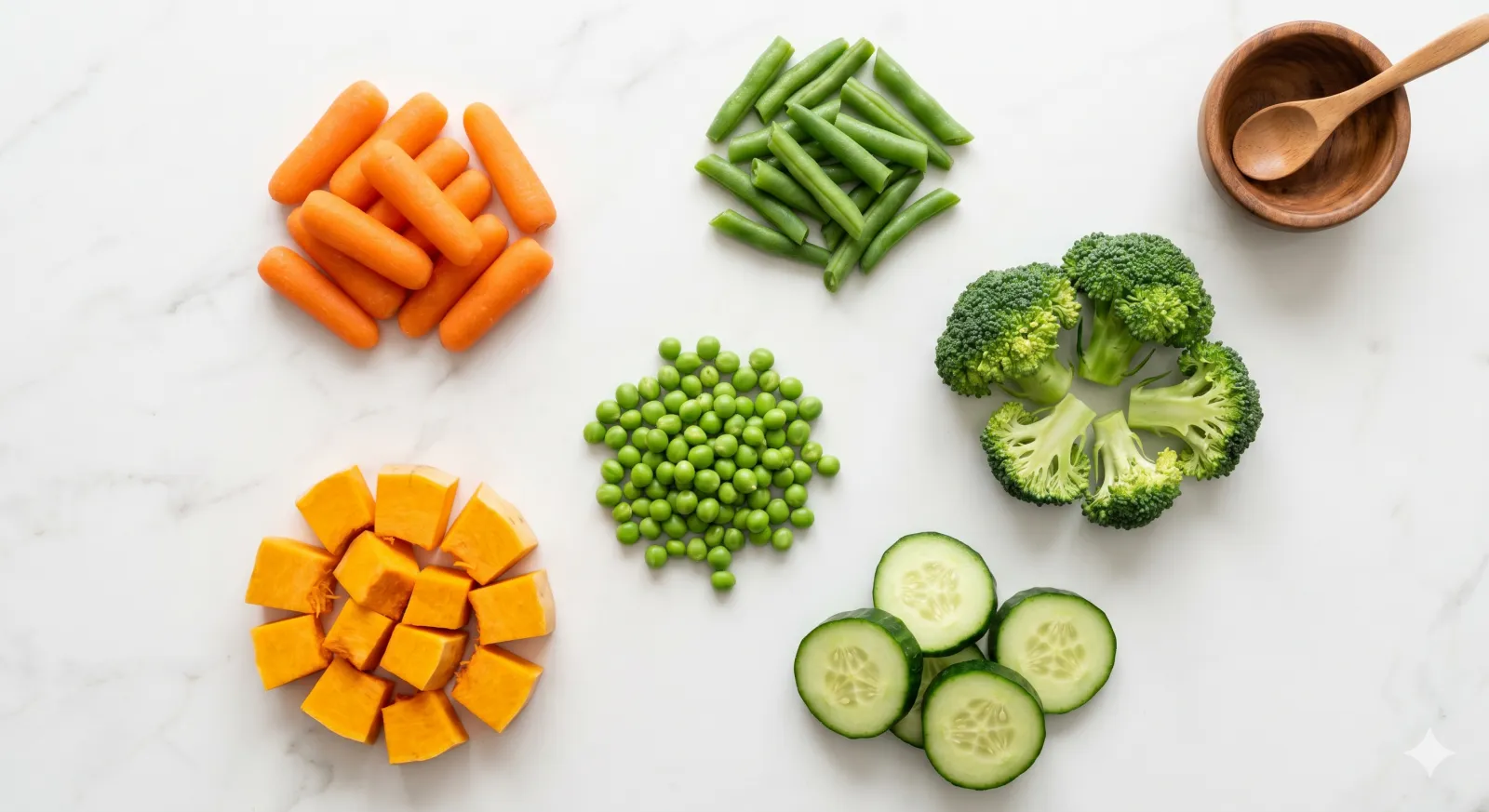
Carrots, peas, and green beans cover most of what a dog actually needs from a vegetable treat.
Vegetables Dogs Should Never Eat
Some vegetables are completely different from the ones that cause serious harm. The list below should never be offered — not even in small amounts, and not even when cooked or hidden in other foods.
Onions, Garlic, Chives, Leeks — All members of the allium family. They damage red blood cells and cause hemolytic anemia. Powdered forms are the most dangerous — even small amounts of garlic powder in food can be harmful. Symptoms appear 24–48 hours after ingestion: vomiting, lethargy, pale gums.
Avocado — Contains persin, a fungicidal toxin that causes vomiting and diarrhea in dogs. The pit is also a serious choking and intestinal blockage hazard.
Raw Potato and Potato Leaves/Stems — Contain solanine, which is toxic to dogs. Cooked, plain potato in small amounts is generally fine — but raw potato and any green parts of the plant are off limits.
Wild Mushrooms — With around 100 toxic species in North America alone, wild mushrooms are never safe. Store-bought plain white mushrooms are fine — anything foraged or found outdoors is not.
Corn Cobs — Corn kernels are fine in small amounts, but the cob itself is a serious intestinal blockage risk. Never give your dog a whole or partial corn cob.
What Happens If a Dog Eats Onion?
Onion contains thiosulfate, which destroys red blood cells in dogs and causes hemolytic anemia. Symptoms typically appear 24 to 48 hours after ingestion and include vomiting, diarrhea, weakness, rapid breathing, and pale or yellowish gums. That’s where things turn serious fast — contact your vet immediately if your dog has eaten any form of onion. Some common household plants are toxic to pets too, so it’s worth checking a plant’s safety before bringing it into a home with dogs.
What Vegetables Can Dogs Eat Every Day?
Carrots, cucumber, and green beans are the three vegetables dogs can eat every day without concern. They’re low in calories, high in fiber, and gentle on digestion. A few small pieces as a daily treat is perfectly safe for most healthy adult dogs.
Broccoli and spinach don’t belong in the daily category — broccoli can cause stomach irritation in larger amounts, and spinach contains oxalic acid that can accumulate over time. Occasional treats of these vegetables are fine; daily feeding is not recommended.
Can Dogs Eat White Rice With Vegetables?
Yes — plain white rice with cooked vegetables is one of the most commonly recommended meals for dogs with upset stomachs. Vets frequently suggest bland rice with cooked carrots and pumpkin to help settle digestion. No seasoning, no butter, no sauces. Plain white rice with one or two plain cooked vegetables — like carrots or pumpkin — is easy to digest and gentle on a recovering stomach.
🌿 Pro Tip
Freeze carrots whole and give them to your dog as a chew treat. Wash thoroughly, cut into appropriately sized sticks for your dog’s size, and freeze. The cold temperature soothes teething discomfort in puppies, keeps adult dogs occupied, and provides dental benefits — all with virtually zero calories. That’s all your dog needs, and freezing them makes treat time even easier.
How to Prepare Vegetables: Raw vs Cooked
Not every vegetable on this list is prepared the same way — and getting this right matters. Some are perfectly fine raw. Others are safer and more digestible when cooked.
| Prep Style | Vegetables |
|---|---|
| Serve raw | Carrots, cucumber, celery, peas |
| Cook before serving | Sweet potato, potato (if offering at all), pumpkin |
| Either way is fine | Green beans, broccoli, spinach |
What to Do If Your Dog Won’t Eat Vegetables
Every dog is different. Some will happily crunch on a raw carrot stick. Others will sniff it and walk away. Most dogs that refuse a vegetable once will take it if it shows up on top of their regular food instead of alone. If your dog refuses, don’t force it — there’s no nutritional requirement that makes vegetables mandatory. Try lightly steaming the vegetable to bring out the natural aroma, or place a small piece on top of their regular food.
For the complete AKC reference on vegetables dogs can eat, the AKC nutrition guide on safe and toxic foods for dogs is one of the most comprehensive vet-backed resources available.
A practical guide to cooking vegetables for your dog — preparation tips and serving ideas.
Frequently Asked Questions
What veggies can dogs eat daily?
Carrots, cucumber, and green beans are the safest options to give every day. They’re low in calories, high in fiber, and well-tolerated by most dogs. Keep portions small — a few pieces as a treat, not a meal replacement. Broccoli and spinach should be occasional treats only, not daily staples.
What vegetables are safe to feed my dog?
The safest options include carrots, peas, green beans, broccoli (small amounts), sweet potato (cooked), cucumber, pumpkin, celery, spinach (occasional), and plain white mushrooms. Always wash thoroughly, cut into small pieces, and serve plain with no seasoning, salt, or butter.
What veggies should dogs not eat?
Never feed dogs onions, garlic, chives, or leeks — all cause red blood cell damage and anemia. Avocado contains persin, which causes vomiting and diarrhea. Raw potato and potato plant parts contain solanine. Wild mushrooms can cause organ failure. Corn cobs are a serious intestinal blockage risk.
Why can’t dogs have cooked carrots every day?
Actually, cooked carrots are fine daily in small amounts. The concern with any single food given every day is variety and balance. As long as vegetables stay under 10% of daily calorie intake and your dog’s regular food provides complete nutrition, a few cooked carrot pieces each day is perfectly safe.
Can puppies eat the same vegetables as adult dogs?
Most of the vegetables on this list are fine for puppies in smaller portions, but their digestive systems are more sensitive. Introduce one vegetable at a time, in tiny amounts, and wait 24 hours before trying another. Skip anything fibrous or hard to chew until their teeth are fully in, and check with your vet before adding any new food to a growing puppy’s diet.
Not veterinary advice — always check with your vet before changing your dog’s diet.
If there’s a carrot or cucumber in your fridge right now, that’s really the whole guide in one sentence: wash it, cut it small, skip the seasoning, and share a piece with your dog. 🥕
You May Also Like
 Can Cats Eat Peanut Butter? The Xylitol Risk You Must Check First
 Can Cats Eat Grapes or Raisins? The Kidney Risk Every Owner Must Know
 Cheap Meal Prep: Stop Wasting $125 a Month on Food
 Meal Prep on a Budget: 10 High-Protein Recipes
 Can Cats Eat Strawberries? A Complete Safety Guide
 Can Cats Eat Blueberries? Safe Serving Guide
 High Protein Meal Prep: 10 Easy Ideas to Eat Well All Week
 Can Cats Eat Watermelon? 5 Proven Vet Rules You Must Know