Not veterinary advice — if you suspect your cat has eaten something toxic, contact your vet or the ASPCA Animal Poison Control Center at (888) 426-4435 immediately.
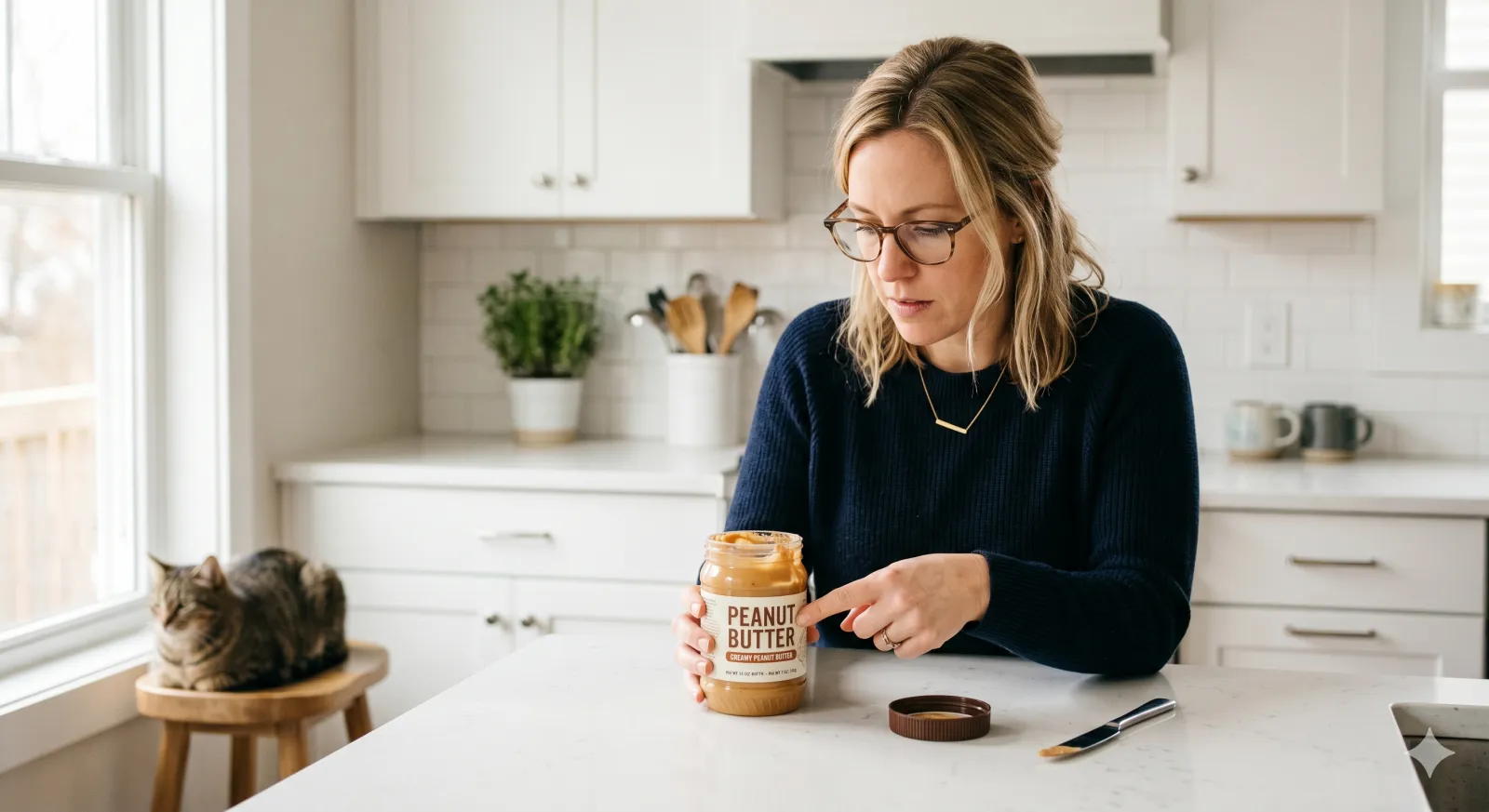
Peanut butter isn’t the emergency it’s often made out to be for cats — but it’s still worth checking the label.
Your cat just snuck a lick of peanut butter off your spoon. Can cats eat peanut butter safely, or is this worth worrying about? The short version: it isn’t the crisis it’s often made out to be, but it’s not a treat worth reaching for either. There’s one ingredient worth knowing about — and the actual risk it poses to a cat is different from what most articles say.
Here’s what the evidence actually shows, what to watch for, and what makes a genuinely better treat.
Key Takeaways — Can Cats Eat Peanut Butter
- Not recommended — peanut butter has no nutritional value for cats and is dense in fat and sugar
- Xylitol is dangerous for dogs, but current veterinary evidence shows cats don’t have the same reaction — this is a real and important species difference
- Even so, a xylitol-containing product isn’t worth the risk given how limited the cat-specific research still is
- Regular peanut butter (no xylitol) isn’t an emergency, but it isn’t a healthy treat either
- Safer alternatives exist — blueberries, watermelon, and plain cooked chicken are better choices
Does Peanut Butter Have Any Nutritional Value for Cats?
Why Cats Don’t Need Peanut Butter
Cats are obligate carnivores. Their bodies are built to run on animal protein, not plant-based sources. The protein in peanut butter doesn’t get used the way meat protein does — it’s mostly wasted calories.
And the calories aren’t small. Peanut butter is dense with fat and sugar. A single teaspoon accounts for a meaningful chunk of a cat’s daily calorie needs. For a small animal, that adds up fast, and regular servings can contribute to obesity and pancreatitis over time.
Peanut butter offers nothing a cat actually needs. That’s the case even before getting into the one ingredient worth understanding properly.
Is Peanut Butter Toxic for Cats? What the Evidence Actually Shows
Xylitol: A Real Risk for Dogs, a Different Picture for Cats
Xylitol is an artificial sweetener used in sugar-free and “diet” products, including some peanut butter brands — and it’s really the central issue when it comes to peanut butter and cats. In dogs, it’s genuinely dangerous — it triggers a rapid insulin release that can crash blood sugar within 30 to 60 minutes and, in higher doses, cause liver damage. That part of the warning is accurate and well documented.
What most articles get wrong is applying that same danger directly to cats. The real question isn’t whether xylitol is scary — it’s whether cats react to it the same way dogs do. Current research says no. A 2018 study published in the Journal of Veterinary Pharmacology and Therapeutics gave six healthy cats doses up to ten times what would be considered toxic in dogs, and found no significant drop in blood sugar or liver enzyme changes. The Merck Veterinary Manual confirms that dogs are the only domestic species known to develop hypoglycemia or liver injury from xylitol, and that cats are not considered at risk. Veterinary toxicology sources describe xylitol as having a wide margin of safety across mammals, with dogs standing out as the clear exception. The ASPCA and FDA support the same conclusion.
That doesn’t mean xylitol gets a free pass. The research sample is still small — one study looked at just six cats — so individual sensitivity can’t be fully ruled out, and there’s no harm in keeping xylitol products out of reach on principle. But going to an emergency vet the moment a cat licks sugar-free peanut butter isn’t supported by what’s currently known. Monitoring is the reasonable response, not panic.
Does peanut butter kill cats?
Regular peanut butter in a small lick, no. Products containing xylitol aren’t confirmed dangerous to cats the way they are to dogs, based on current evidence — but that evidence is still limited, so treating any xylitol exposure with caution and a call to your vet is reasonable. The bigger everyday concern with peanut butter is fat and calories, not xylitol.
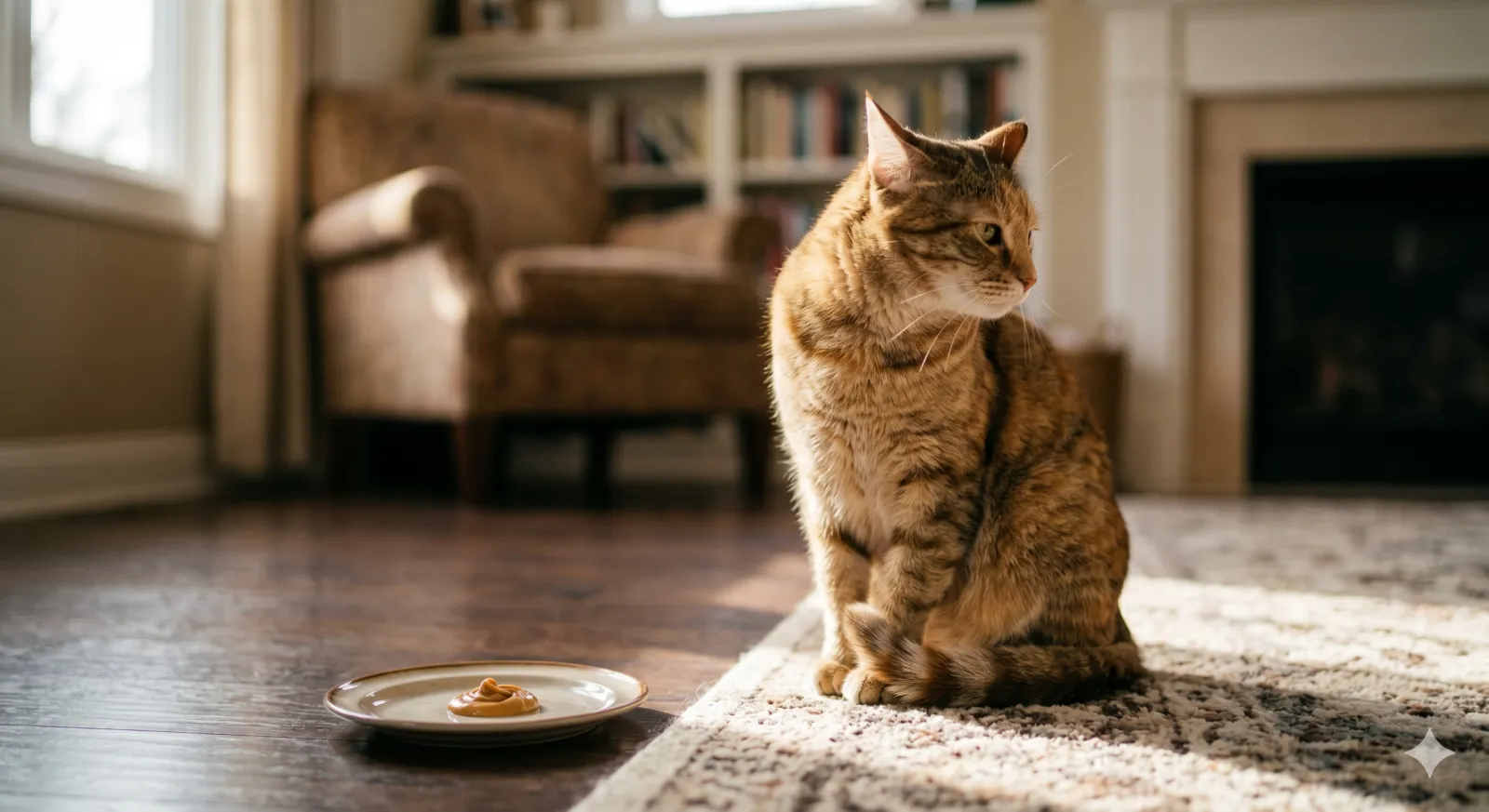
Most cats show little interest in peanut butter to begin with — it’s not a flavor they’re drawn to.
What Happens If a Cat Eats Peanut Butter?
What to Actually Do
If your cat got into the jar, check the label for xylitol or “birch sugar” — it doesn’t always appear under its own name. That check alone answers most of what people are really asking when they wonder if peanut butter is safe for their cat after the fact. If xylitol is there, a call to your vet is a sensible precaution, even though the acute emergency risk in cats appears much lower than in dogs.
Either way, watch your cat for the next 12 to 24 hours for vomiting, diarrhea, unusual lethargy, loss of appetite, or a bloated, painful-looking belly. Any of those — even one — is worth a call to your vet.
✅ Action Checklist
- Check the label for xylitol or birch sugar
- Xylitol present → call your vet as a precaution, monitor closely
- No xylitol → still watch for 12–24 hours
- Vomiting, lethargy, or appetite loss → call your vet
- Move peanut butter somewhere your cat can’t reach it, regardless
Can Cats Eat Peanut Butter and Jelly?
Why PB&J Is Worse Than Peanut Butter Alone
If plain peanut butter isn’t worth the risk, PB&J makes it worse for an unrelated reason. Many jams and jellies contain grapes or raisins, which are genuinely toxic to cats and well-documented as a cause of acute kidney damage — this one is a real emergency, unlike the xylitol concern above. Add the extra sugar from the jelly, and there’s nothing about a PB&J sandwich that belongs anywhere near a cat.
Fact Check
Many general pet-safety videos, including the one above, group cats and dogs together on xylitol. The dog part is accurate — the cat part is where a 2018 feline-specific study changes the picture. Caution either way is still the safer call.
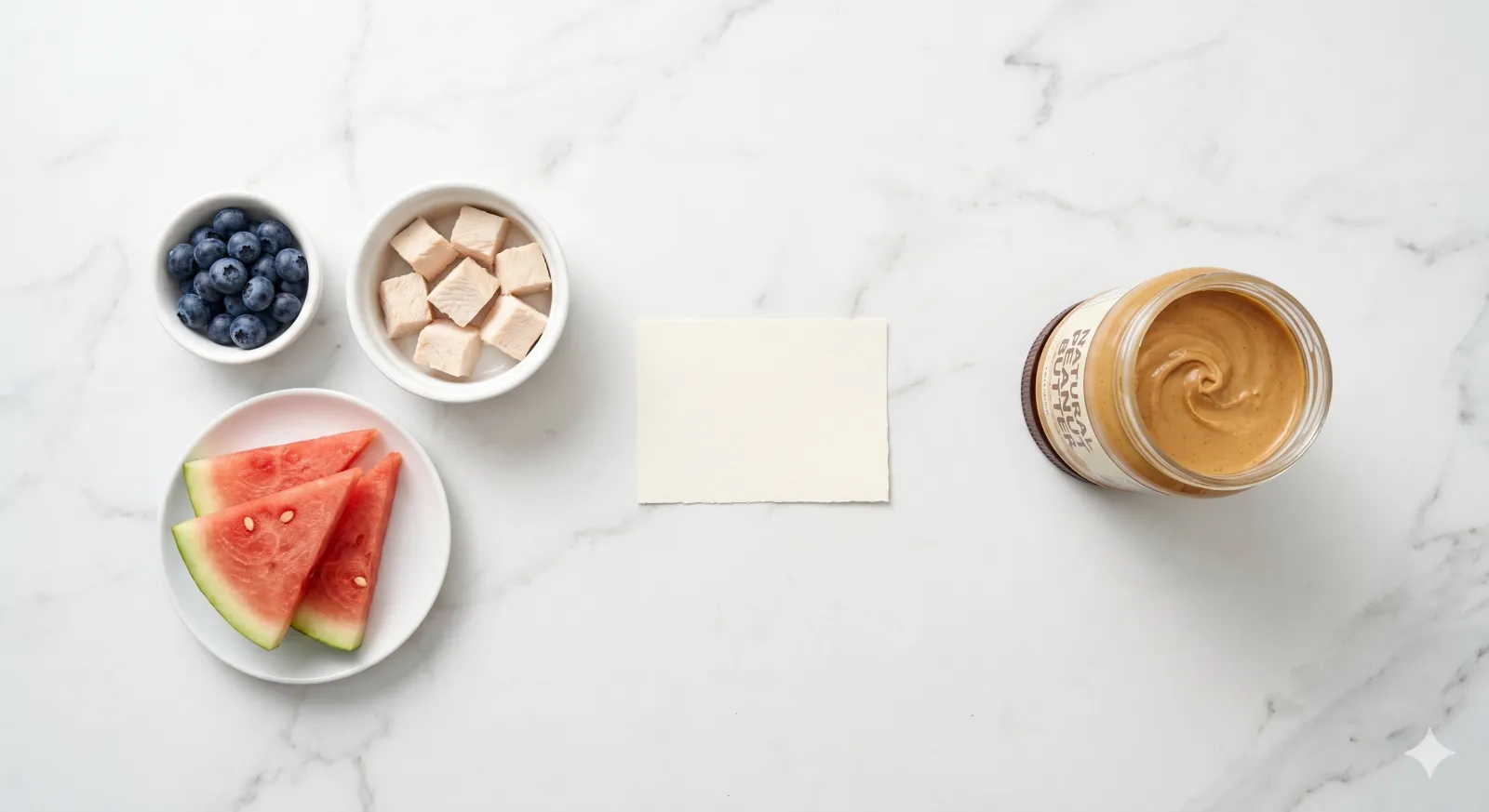
Blueberries, watermelon, and cooked chicken are all safer treat choices than peanut butter.
What Can You Give Your Cat Instead of Peanut Butter?
Safe Treat Options That Actually Make Sense
A cat wanting a treat doesn’t mean the answer has to be no — it just means picking something that’s actually good for them.
Plain cooked chicken breast is the gold standard. No seasoning, no sauce, just lean protein a cat’s body is built to process. A small piece goes a long way.
Blueberries are one of the few fruits cats can have in small amounts, low in sugar compared to most fruit and carrying some antioxidants. See our guide on whether cats can eat blueberries.
Watermelon (seeds and rind removed) is another safe option, especially in summer — the high water content helps with hydration. Read can cats eat watermelon for the full breakdown.
Some common household plants are toxic to cats too, so it’s always worth checking a plant’s safety before bringing it home.
💡 Pro Tip
The mistake is usually much simpler than people expect: assuming “sugar-free” means safer. Flip the package over and check the ingredient list — xylitol and birch sugar hide in sugar-free and diet products across every food category, not just peanut butter. The label is the only honest answer.
Frequently Asked Questions
Can cats eat peanut butter at all?
It’s not recommended. A tiny lick of xylitol-free peanut butter is unlikely to cause an emergency, but peanut butter offers no nutritional benefit for cats and carries real risks over time — obesity, pancreatitis, and digestive upset. If you’re asking whether it’s fine to give as a regular treat, the honest answer is there’s no good reason to make it one.
Is peanut butter toxic for cats?
Regular peanut butter isn’t toxic in small amounts, though it’s not healthy as a regular treat. Peanut butter containing xylitol is well documented as dangerous for dogs, but current research shows cats don’t have the same severe reaction — the evidence is still limited, so caution and a check-in with your vet is reasonable, but it isn’t the same level of emergency it is for dogs.
What happens if a cat eats peanut butter?
Check the label for xylitol or birch sugar. If present, call your vet as a precaution. Either way, monitor your cat for 12 to 24 hours for vomiting, lethargy, appetite loss, or bloating, and call your vet if anything seems off.
What human food can I give my cat as a treat?
Plain cooked chicken breast is the safest and most nutritionally appropriate option. Small amounts of blueberries and seedless watermelon are fine occasionally too. Always introduce anything new gradually and in small amounts.
Is sugar-free peanut butter safer for cats?
Not necessarily — sugar-free peanut butter is more likely to contain xylitol than regular peanut butter. “Sugar-free,” “no sugar added,” and “keto” labels are worth checking closely. Even though cats appear far less sensitive to xylitol than dogs, there’s no reason to seek it out.
Not veterinary advice — if you suspect your cat has eaten something toxic, contact your vet or the ASPCA Animal Poison Control Center at (888) 426-4435 immediately.
Go check that peanut butter jar. That’s really the whole answer to whether peanut butter is safe for your cat — if it lists xylitol or birch sugar, there’s no harm in moving it out of reach, even though the cat-specific risk looks lower than most articles claim. 🐾
You May Also Like
 Can Cats Eat Strawberries? A Complete Safety Guide
 Can Cats Eat Grapes or Raisins? The Kidney Risk Every Owner Must Know
 Can Cats Eat Watermelon? 5 Proven Vet Rules You Must Know
 Vegetables Dogs Can Eat: A Complete Safety Guide
 Can Cats Eat Blueberries? Safe Serving Guide
 Cheap Meal Prep: Stop Wasting $125 a Month on Food
 Foreigner Housing Korea: 4 Must-Know Platforms for Expats
 Do 2 Cups of Beans a Day Really Work Like Ozempic? The GLP-1 Bean Trend, Explained