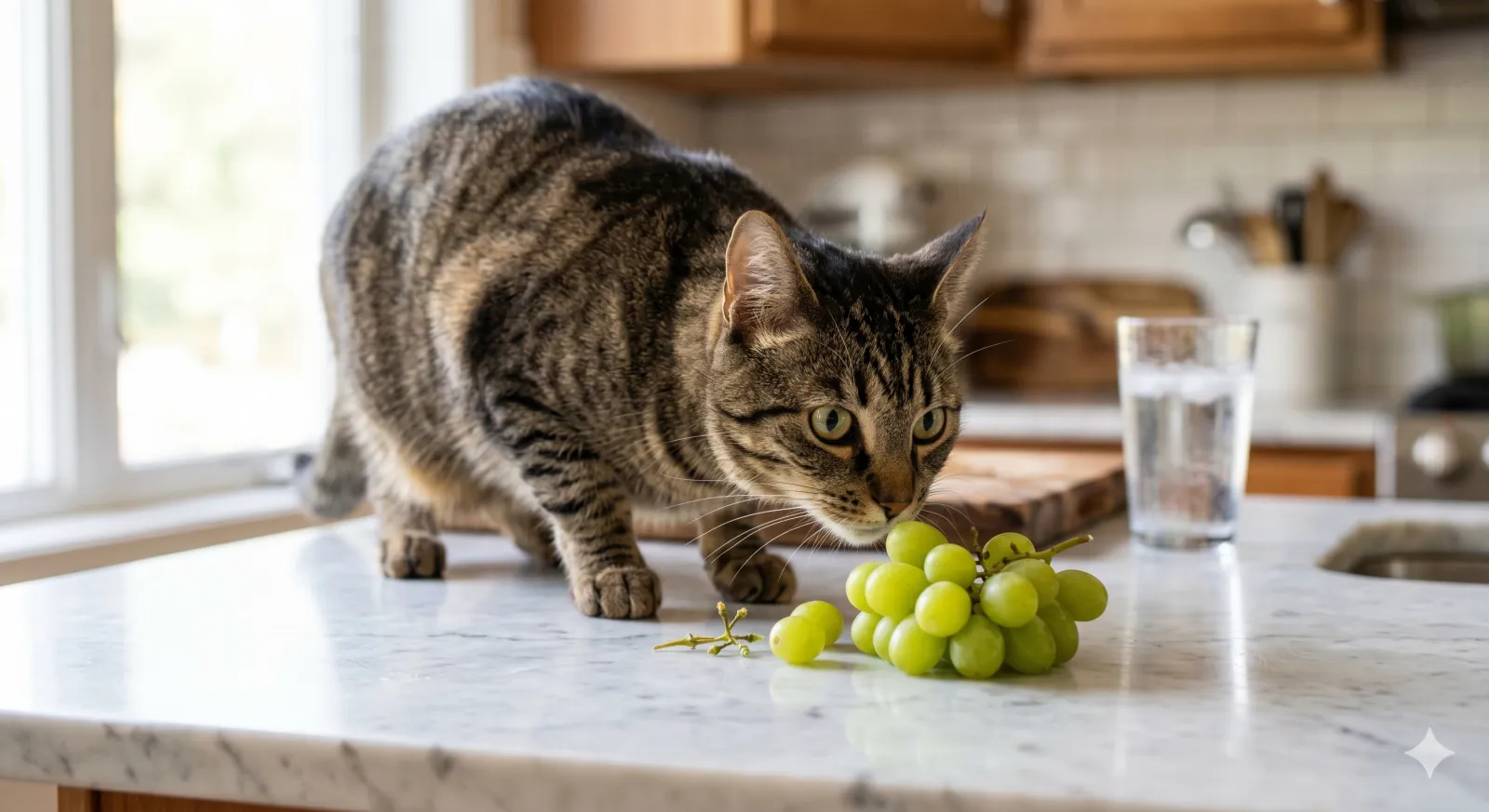
Grapes look harmless, but vets treat any amount as a potential emergency for cats.
No — and this isn’t a “moderation” situation. If your cat just snuck a grape off the counter, the honest answer is to stop reading and call your vet.
Fresh, dried, peeled, juiced — every form is off-limits, in every variety. The mechanism behind why grapes affect some cats and dogs this way still isn’t fully understood, which is exactly why there’s no safe amount anyone can point to.
The evidence today points to less certainty than most articles let on, and there’s still real value in knowing what’s confirmed, what’s guessed, and what to actually do if your cat ate one.
Key Takeaways — Grapes and Cats
- Grapes and raisins are treated as toxic to cats — avoid every variety and every form
- The exact toxic compound is still unidentified, and cat-specific cases are less studied than dog cases
- Documented cases of kidney injury in cats do exist, even if uncommon — there’s no way to predict which cats are affected
- Raisins concentrate whatever the toxin is during drying, so treat them with the same caution as fresh grapes
- Immediate vet contact is the safest response — don’t wait and watch for symptoms
Are Grapes Toxic to Cats? What’s Actually Confirmed
Why the Evidence Is Less Clear-Cut Than It’s Often Presented
Most vets treat grapes as toxic to cats — every variety, every form, every part of the fruit. That said, the real question isn’t whether caution makes sense; it’s how solid the underlying evidence actually is. Here, honestly, it’s mixed. Grape toxicity is well documented in dogs. In cats, it’s a genuine gray area: some older reviews and even a past ASPCA post described grapes as non-toxic to cats, while other veterinary sources, including case reports cited by PetMD, describe confirmed kidney injury in cats after grape ingestion.
Tartaric acid is the leading suspect for what makes grapes harmful, but that’s still a hypothesis, not a confirmed mechanism — and it hasn’t been specifically confirmed in cats the way symptoms have been tracked in dogs. Because the cause isn’t nailed down, there’s no dose anyone can call “safe,” and individual sensitivity appears to vary a lot between animals.
According to the ASPCA Animal Poison Control Center, grapes and raisins are currently listed among foods to keep away from pets. Given the uncertainty, that’s the reasonable place to land — not because every ingestion ends badly, but because there’s no reliable way to know in advance which cat might be affected.
Does this mean my cat is definitely in danger?
Not necessarily. A 2022 study tracking grape ingestion in dogs and cats found that serious kidney injury was rare — only 1 of 108 animals developed it, and that one survived. Most cats that eat grapes don’t develop kidney damage. The catch is that there’s no way to know in advance which cat might be the exception, which is why vets still recommend treating any ingestion as urgent.
FACTLY9 Evidence Snapshot
Current Consensus
- ✔ Avoid grapes and raisins completely — every vet source agrees on this, even amid the uncertainty below
Known
- ✔ Kidney injury has been documented in cats, though it’s uncommon
- ✔ All grape varieties and forms carry the same treatment recommendation
Still Unknown
- • The exact toxic compound and mechanism
- • Why some cats are affected and most aren’t
- • Any established “safe” dose or threshold
Why Might Grapes Be Risky for Cats? The Kidney Connection
Can One Grape Cause Serious Harm?
It’s possible, though uncommon based on the data available. Grape toxicity, where it does occur, targets the kidneys — and severe cases can potentially develop from a fairly small amount in a sensitive individual.
Vomiting, diarrhea, lethargy, and loss of appetite are the typical early signs described in affected animals — largely based on dog case data, since cat-specific timelines are less documented.
In dogs, kidney values can start shifting within the first day even while the animal seems to stabilize. Whether cats follow the same pattern isn’t well established, but vets monitor for it as a precaution.
Reduced or absent urination, extreme lethargy, dehydration, and abdominal pain can signal kidney failure. This is uncommon, but it’s the outcome vets are trying to catch early.
Raisins are worth extra caution — since they’re dried, whatever compound is responsible ends up more concentrated by volume. Any product containing raisins (trail mix, granola bars, fruit cake) is worth keeping well out of reach.

Every grape variety and raisin product is treated the same way — there’s no known safe form or amount.
My Cat Ate a Grape — What to Actually Do
My Cat Only Licked One — Will They Be Okay?
A lick carries less risk than swallowing a whole grape, based on what’s understood about dose. But “less risk” isn’t “no risk,” and there’s no reliable threshold to lean on.
Step 1: Note how many grapes, what time, and whether it was fresh fruit, raisins, or a product containing either.
Step 2: Call your vet or ASPCA Poison Control. Don’t wait for symptoms to appear before reaching out.
Step 3: Don’t induce vomiting on your own — without guidance, this can cause additional harm.
Step 4: Follow your vet’s instructions and monitor for the signs above over the next couple of days.
🚨 Emergency Checklist
- Note exactly how much was eaten and when
- Call your vet or ASPCA Poison Control at (888) 426-4435
- Don’t induce vomiting without vet instruction
- Watch for vomiting, lethargy, or reduced urination over the next couple of days
- If any symptoms appear, go to an emergency vet without delay
- Move grapes, raisins, and grape-containing products out of reach going forward
Editor’s Note
Videos and articles on this topic often present grape toxicity in cats with more certainty than the current evidence actually supports. The caution is still warranted — but it’s worth knowing that documented severe cases in cats are uncommon, even though they do happen and can’t be predicted in advance.
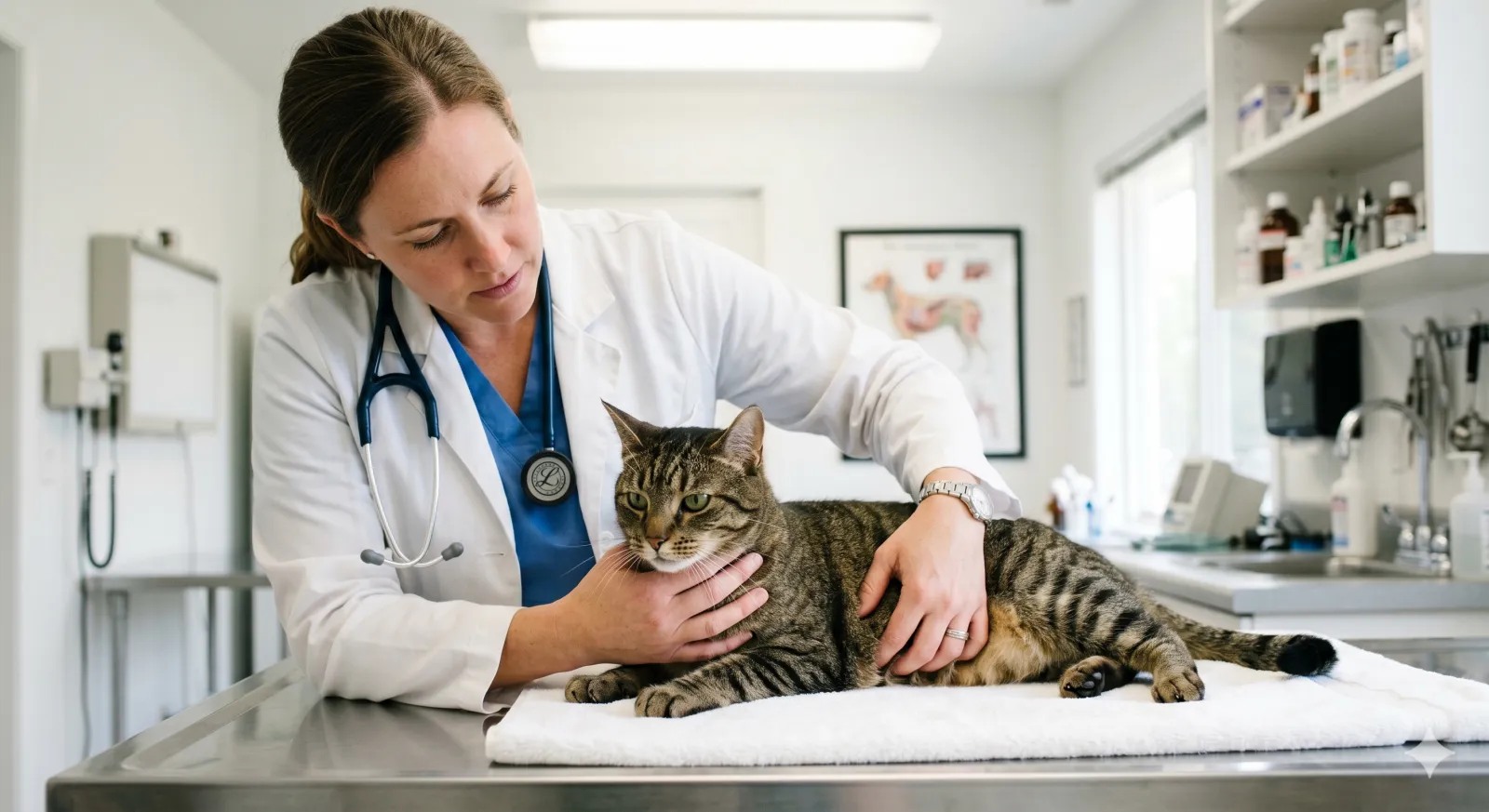
What Other Fruits Can Cats Not Eat?
Other Household Fruits Worth Knowing About
Grapes are the top concern, but a few other fruits deserve the same caution.
Treated as high-risk. No safe amount established. All varieties and forms.
Lemons, oranges, grapefruit. Essential oils and limonene cause digestive upset and nervous system effects.
Pits, stems, and leaves contain cyanide compounds. The flesh alone can still cause digestive upset.
Compounds in the sap and leaves cause skin irritation and gastrointestinal issues.
On the safer side, small amounts of blueberries, seedless watermelon, and strawberries are generally considered low-risk. Even with safe fruits, cats are obligate carnivores and don’t need fruit in their diet — moderation still applies. For another common kitchen hazard, our guide on can cats eat peanut butter is worth a read too.
💡 Pro Tip
Grapes and raisins hide in more places than expected — granola bars, trail mix, fruit cake, oatmeal cookies, and some cereals all commonly contain raisins. Whatever the toxic compound is, it doesn’t disappear when grapes are baked or dried. Reading labels is worth the extra ten seconds.
Frequently Asked Questions
Can cats eat grapes at all?
No — vets recommend avoiding grapes and raisins entirely, regardless of variety, quantity, or form. There’s no established safe dose, and any ingestion is worth treating as a potential concern.
Will one grape hurt my cat?
Usually not, based on the data available — severe reactions appear uncommon. But individual sensitivity varies, and there’s no way to predict which cats might be affected, so even a single grape is worth a call to your vet.
Can one grape cause serious harm to a cat?
In rare cases, yes. Documented kidney injury from grape ingestion in cats exists, though it appears to be uncommon. Outcomes improve with early veterinary attention, which is why immediate contact is recommended over a wait-and-see approach.
My cat licked a grape — will they be okay?
Most likely, yes — a lick carries meaningfully less risk than swallowing a whole grape. Still, call your vet and describe exactly what happened rather than assuming it’s automatically fine.
What fruits can cats not eat?
Grapes and raisins top the list. Citrus fruits, cherries, and figs are also worth avoiding. Safer options in small amounts include blueberries, seedless watermelon, and strawberries.
Not veterinary advice — if your cat has eaten grapes, raisins, or any potentially toxic substance, contact your vet or the ASPCA Animal Poison Control Center at (888) 426-4435 immediately.
Move the grapes and raisins somewhere your cat can’t reach. It takes thirty seconds, and there’s no good reason not to. 🍇
You May Also Like
 Can Cats Eat Blueberries? Safe Serving Guide
 Can Cats Eat Strawberries? A Complete Safety Guide
 Can Cats Eat Watermelon? 5 Proven Vet Rules You Must Know
 Can Cats Eat Peanut Butter? The Xylitol Risk You Must Check First
 Vegetables Dogs Can Eat: A Complete Safety Guide
 Foreigner Housing Korea: 4 Must-Know Platforms for Expats
 Korea Subway Transfer System: 7 Rules Every Visitor Must Know
 XLOOKUP vs VLOOKUP: 5 Reasons to Switch Now