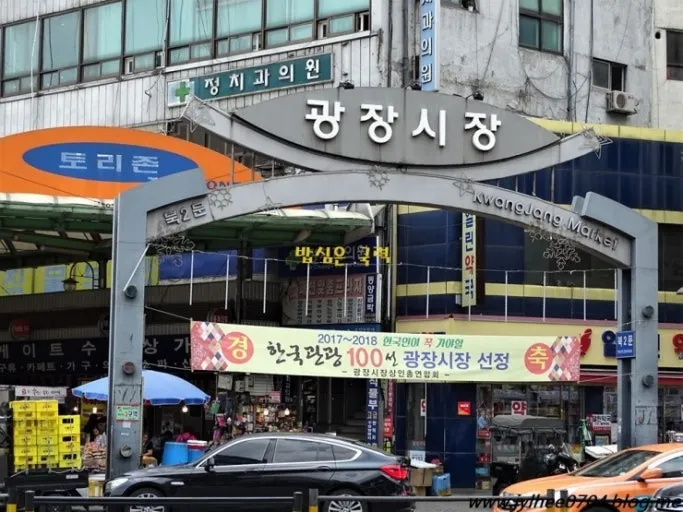
Seoul has modern malls, stylish cafés, and polished shopping districts, but Gwangjang Market Seoul offers something very different. This is a place where you can sit beside local diners, watch mung bean pancakes sizzling on a griddle, order a plate of yukhoe, and walk through one of the city’s best-known traditional market areas.
For generations, this was not simply a tourist attraction. It was part of everyday Seoul life. Office workers and ordinary residents would meet after work, order inexpensive food and a bottle of soju, and talk about work, family, money, the news, or whatever was happening in their lives.
That atmosphere is still part of the appeal today. You are not only coming here to eat. You are stepping into a busy local market culture that has existed long before Gwangjang became an international travel stop.
What Is Gwangjang Market?
Gwangjang Market is a traditional market in Jongno, central Seoul. It is known today for its food alley, but the wider market also includes clothing, textiles, household goods, traditional products, and many small businesses.
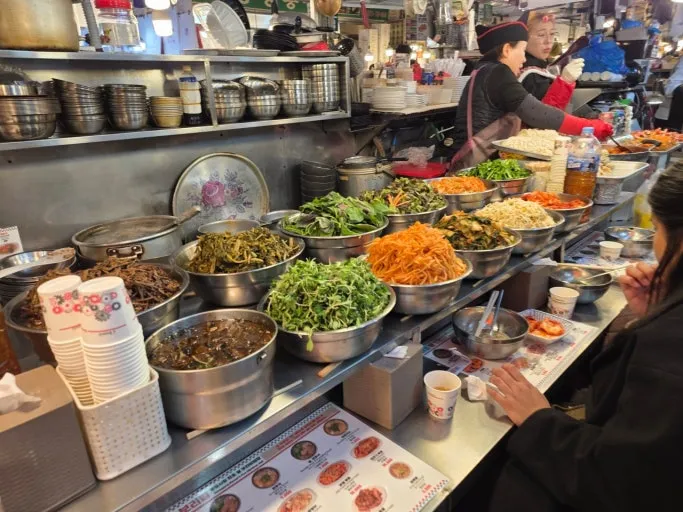
For first-time visitors, however, the food section is usually the main attraction. Walk into the market and you will quickly see small counters packed with diners, frying pans covered with bindaetteok, bowls of vegetables for bibimbap, and stalls serving gimbap, tteokbokki, dumplings, and other Korean street food.

One useful tip is not to sit down at the first stall you see. Walk around for a few minutes, look at what people are eating, compare menus, and then decide what you want to try.
Korean Street Food Inside the Market
The food alley is loud, crowded, and informal. Vendors prepare food just a few feet from diners, while people sit on simple stools and eat shoulder to shoulder.

You do not need to order a large meal at one place. One of the best ways to enjoy the market is to share several dishes and move between different stalls.
What to Eat at Gwangjang Market
Bindaetteok: Korean Mung Bean Pancake
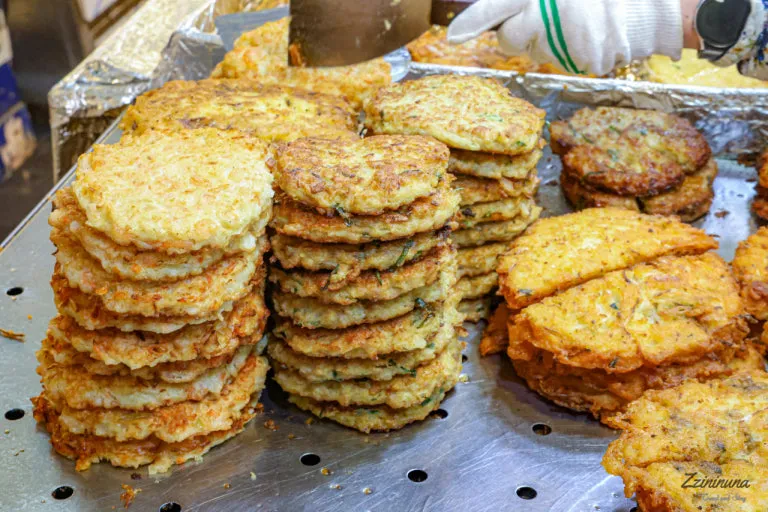
Bindaetteok is one of the foods most closely associated with the market. Ground mung beans are made into a thick batter and fried on a large griddle until the outside becomes crisp while the inside stays soft.
If Korean market food is new to you, this is an easy place to start. You can see the pancakes being cooked in front of you, and they are usually large enough to share.
Yukhoe: Korean-Style Seasoned Raw Beef
Yukhoe is another famous dish associated with the area. It is raw beef that is thinly sliced or cut into strips and seasoned before serving. It may be served with pear, sesame seeds, and an egg yolk, depending on the restaurant.
If you are uncomfortable eating raw meat, there is no need to try it simply because it is famous. But for visitors who already enjoy dishes such as beef tartare, yukhoe can be one of the most distinctive foods to experience here.

Yukhoe Bibimbap
If you want something closer to a full meal, yukhoe bibimbap combines rice, vegetables, seasoning, and raw beef in one bowl.
It can be a practical choice for travelers who want to try yukhoe but also want rice and vegetables rather than ordering raw beef by itself.
Mayak Gimbap, Tteokbokki and Eomuk
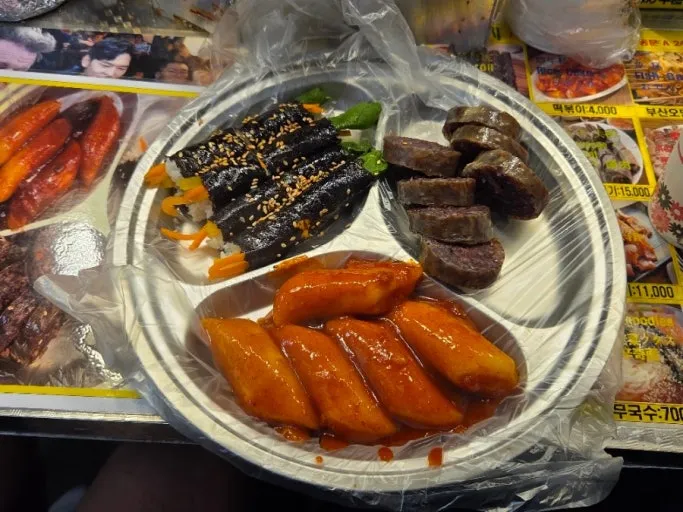
Smaller foods are ideal when you want to taste several things in one visit. Mayak gimbap is a small version of Korean gimbap, while tteokbokki is made with chewy rice cakes in a spicy red sauce.
You may also see eomuk, Korean fish cake, served beside them. The word mayak literally means “drug,” but the nickname does not refer to actual drugs. It is an informal way of saying the small gimbap is so tasty that people keep reaching for another piece.
How Much Does Food Cost?
There is no single official food price for the entire market. Each restaurant or stall sets its own menu and prices, so always check the menu before ordering.
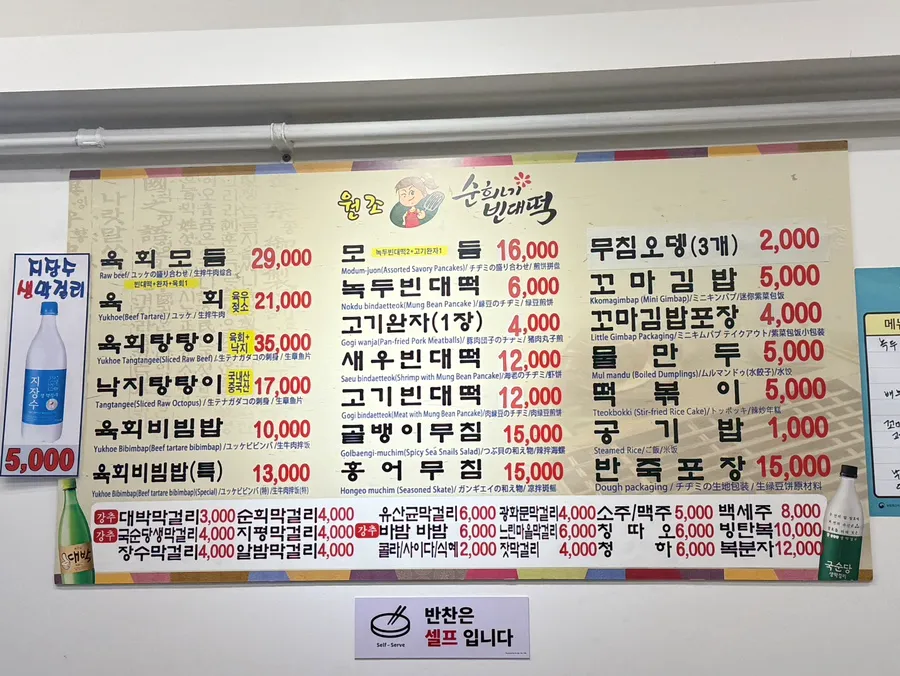
As one real-world example, a menu board photographed at one stall listed the following prices:
| Menu Item | Example Price |
|---|---|
| Yukhoe assortment | KRW 29,000 |
| Yukhoe bibimbap | KRW 10,000 |
| Shrimp bindaetteok | KRW 12,000 |
| Three pieces of seasoned eomuk | KRW 2,000 |
Ordering all four items in this example would total KRW 53,000. These are sample prices from one business, not fixed prices across Gwangjang Market. Menus and prices can change.
Can You Pay by Card?
Card payments are available throughout the market, including major cards such as Visa and Korean BC Card.
Cash can still be useful, especially when shopping for goods rather than ordering food. Some traditional market vendors prefer cash, and in some situations a seller may offer a small discount when you pay in cash.
Gwangjang Market Opening Hours
Food Alley: 9:00 AM–11:00 PM
Food Alley Days: Open daily
The food alley operates daily from 9:00 AM to 11:00 PM. However, Gwangjang Market is made up of many independent businesses, and individual restaurants, textile shops, and other stores may keep different hours.
If you are visiting for one particular restaurant or stall, check its current hours before making a special trip.
What Is the Best Time to Visit?
For the liveliest atmosphere, visit when the food stalls are fully operating and people are beginning to fill the market.
Lunch and dinner periods can become crowded. If you want easier photos and more room to walk, arriving before the busiest meal period can make the experience more comfortable.
Evening is especially interesting if you want to understand the market’s old social role. Long before it became an international tourist destination, ordinary Seoul residents and office workers came here after work to eat inexpensive food, drink soju, and talk.
They talked about their jobs, complained about difficult days, discussed family, money, news, and everyday problems. In that sense, the market was not only a place to shop. It was also a neighborhood social space.

How to Get to Gwangjang Market
Address: 88 Changgyeonggung-ro, Jongno-gu, Seoul
Nearest subway: Jongno 5-ga Station, Line 1
Alternative: Euljiro 4-ga Station, Lines 2 and 5
The easiest route for many travelers is Seoul Subway Line 1 to Jongno 5-ga Station. The market is only a short walk from the station.
Travelers using Lines 2 or 5 can also reach the area from Euljiro 4-ga Station.
Google Maps can help you locate the market, but travelers should also know about Naver Map. Naver may be unfamiliar outside Korea, but it is one of the country’s most widely used map services and can be particularly useful for finding Korean restaurants, shops, and local destinations.
New to Naver Map? Read our Naver Maps English guide for foreign visitors.
Coming From Myeongdong?
Gwangjang Market is also easy to combine with a day in central Seoul. If you are staying around or shopping on Myeongdong Shopping Street, you can visit the market as part of the same day’s itinerary rather than treating it as a separate trip across the city.
Myeongdong offers a polished shopping atmosphere, while the market gives you a completely different side of Seoul. Seeing both in one day is a simple way to experience the contrast between modern shopping districts and traditional market life.
Walk Along Cheonggyecheon Stream After the Market
Do not rush back to your hotel after eating. Cheonggyecheon Stream runs close to the market and makes an easy next stop.
The contrast is part of the experience. One moment you are walking through a noisy, crowded food alley surrounded by frying pans, vendors, and diners. A short time later, you can be walking beside the water through the center of Seoul.
A simple route for first-time visitors is:
Myeongdong → Gwangjang Market → Cheonggyecheon Stream
If you visit the market for an early dinner, a walk along Cheonggyecheon Stream at night can be a relaxed way to finish the day.
First-Time Visitor Tips
- Walk around the food alley before deciding where to sit.
- Share several dishes instead of ordering one large meal.
- Check menu prices before ordering.
- Bring a card, but keeping some Korean won in cash can still be useful.
- Avoid bringing large luggage into the busiest food alleys if possible.
- Expect crowds around popular lunch and dinner times.
- Ask before taking close-up photos of individual vendors.
- Use Naver Map as well as Google Maps when traveling around Korea.
Is Gwangjang Market Worth Visiting?
Yes, especially if this is your first trip to Seoul and you want more than famous landmarks and shopping malls.
The appeal is not just a checklist of foods. It is the sound of pancakes frying, the tightly packed stools, conversations between diners, bottles of soju on small tables, busy vendors, and generations of Seoul life compressed into a few crowded market alleys.
Try a bindaetteok, share some gimbap or yukhoe, watch how people eat and talk around you, and then walk toward Cheonggyecheon.
That combination can show you a side of Seoul that is difficult to experience inside a department store or a modern tourist attraction.
Frequently Asked Questions
What is Gwangjang Market famous for?
Gwangjang Market is famous for its traditional market atmosphere and Korean foods such as bindaetteok, yukhoe, mayak gimbap, tteokbokki and bibimbap. It is also known as a long-time gathering place for Seoul residents and office workers.
Is Gwangjang Market a good place for someone trying Korean food for the first time?
Yes. Bindaetteok is a gentle starting point since it is cooked, familiar in texture to a savory pancake, and easy to share. Yukhoe and yukhoe bibimbap are better suited to travelers who are already comfortable with raw beef dishes like tartare. Ordering a few small plates instead of committing to one large dish is the easiest way to test the water.
What time does Gwangjang Market close, and is it open on holidays?
The food alley is open daily from 9:00 AM to 11:00 PM, with no regular closing day. Individual restaurants, textile shops, and other businesses inside the wider market may keep different operating hours, so check the latest information if you are visiting a specific shop or restaurant.
Is Gwangjang Market cash-only, or has it moved to card payments?
Card payments, including Visa and Korean BC Card, are accepted throughout the market today, so it is no longer a cash-only destination. Carrying some cash is still worth it for goods stalls rather than restaurant counters, since a small cash discount is sometimes negotiable there but rarely on a printed food menu.
How do I get to Gwangjang Market from Myeongdong?
Gwangjang Market is in Jongno and is easy to combine with a Myeongdong itinerary. You can travel by subway or taxi, and after visiting the market, Cheonggyecheon Stream is also nearby for an easy walk.
You May Also Like
 5 Best Areas to Stay in Seoul Near the Subway
 Things to Do in Seoul: 15 Proven Picks Every First-Timer Needs
 South Korea Travel Budget: One Month in Korea for $1,000
 How to Eat Korean BBQ in Seoul
 Myeongdong Shopping Street & Night Market Guide
 Free Seoul Metro Map & Tourist Maps: Official Downloads
 Korea Convenience Store Guide: CU, GS25 & Tourist Tips
 3 Korean Summer Foods: Bingsu, Naengmyeon & Samgyetang
 Seoul Subway Map & Transfer Guide: 7 Rules for Seoul Travel
 USD to KRW Currency Converter: Korean Won Exchange Rate